THYSIASTERY Game Cover

About THYSIASTERY

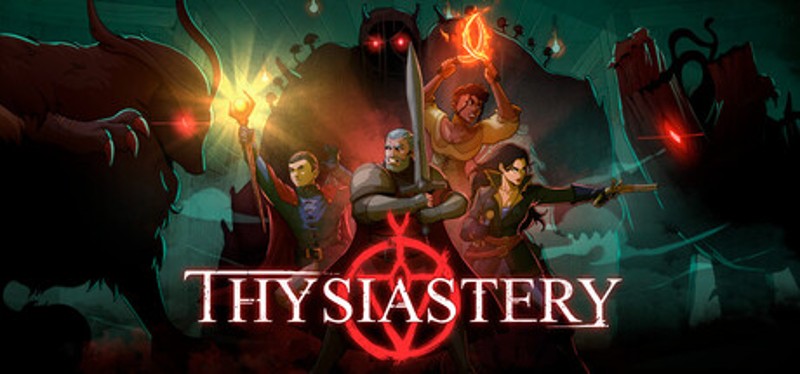
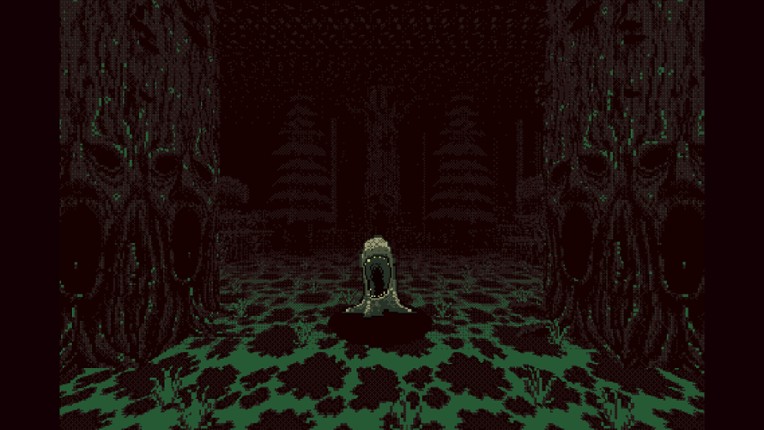
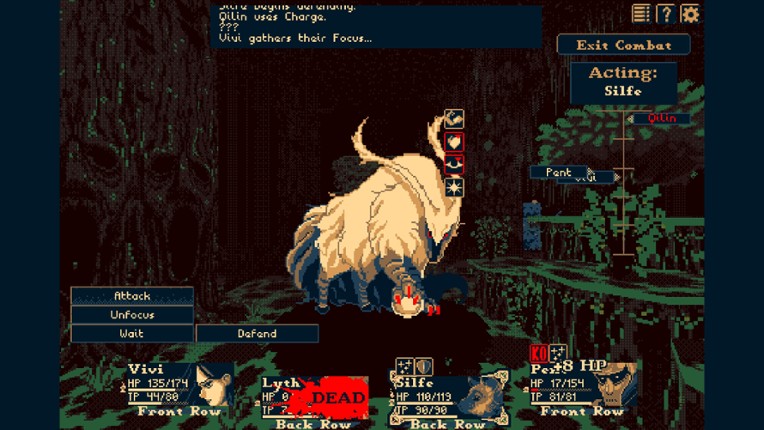
THYSIASTERY is a single player tactical role playing game with horror, fantasy and dark fantasy themes. It was developed by DIRGA and was released on March 9, 2026. It received positive reviews from players.

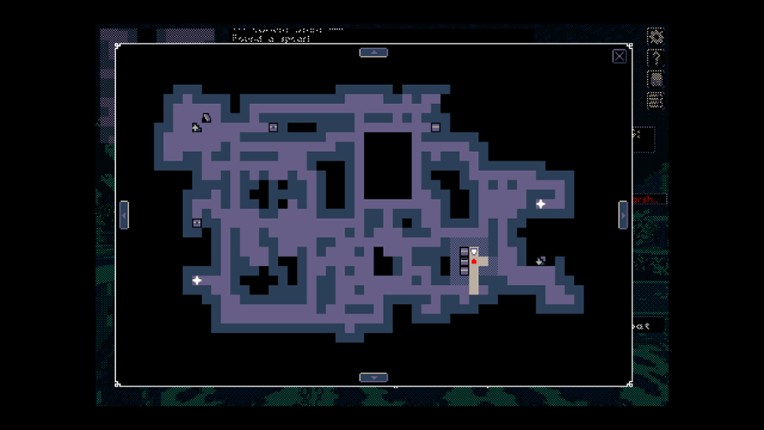
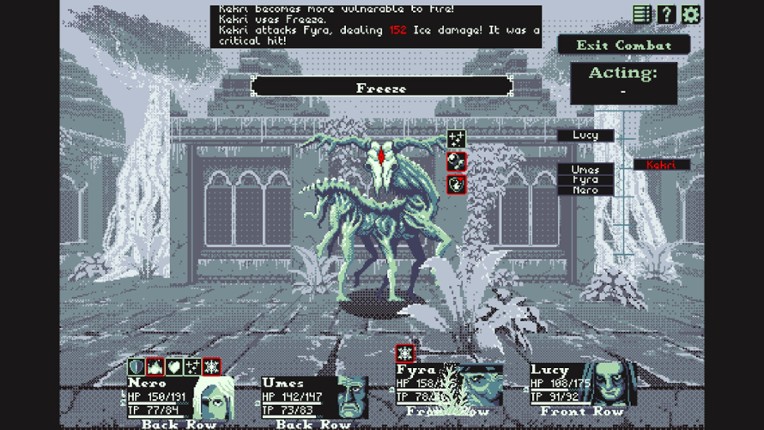
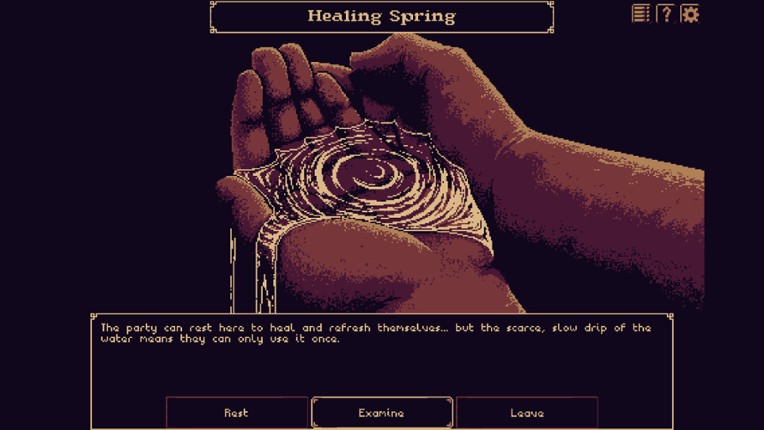
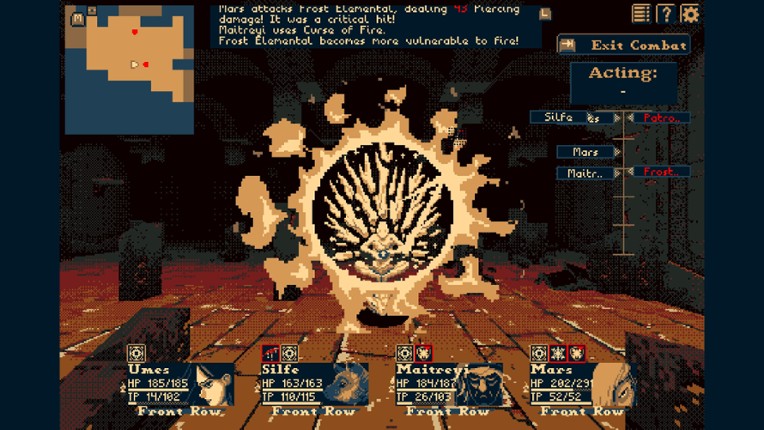
THYSIASTERY is a turn-based, dungeon crawling roguelike role-playing game rendered in a retro-inspired art style. Play as a group of bearers of the Brand that have been drawn into the vast and enigmatic Labyrinth. Save, ally with, rely on and learn from characters you encounter whilst exploring in hopes of finding a way out. Discover buried forests, underwater cities and other ancient secrets as y…
Skip Games Like THYSIASTERY

Games Like THYSIASTERY

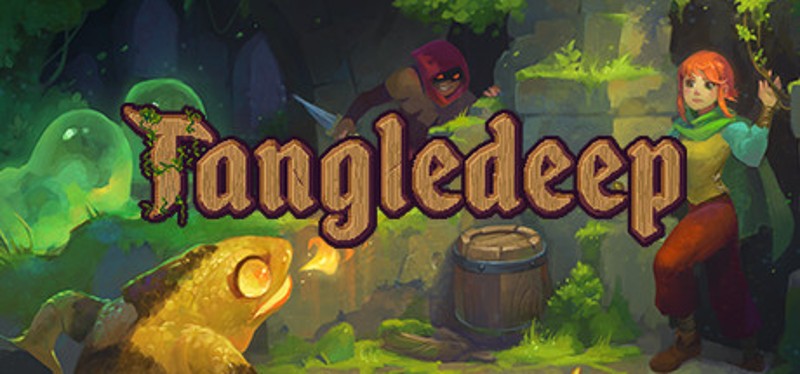
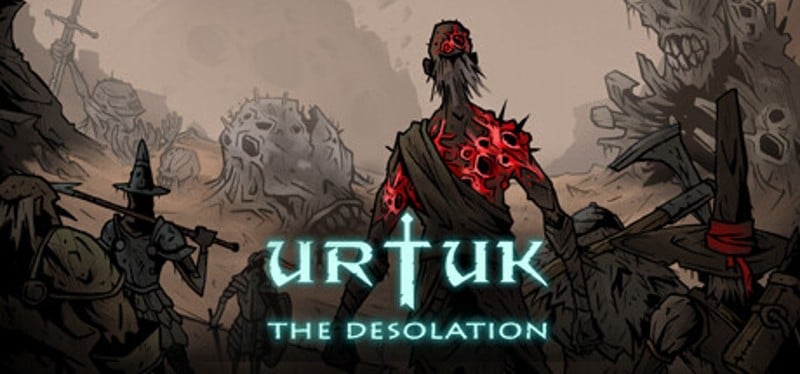
Looking for games like THYSIASTERY? Here are top tactical role playing recommendations with a horror, fantasy and dark fantasy focus, selected from player-similarity data — start with The Last Spell, Tangledeep or Urtuk: The Desolation.
Skip User Reviews

Reviews

88%Audience ScoreBased on 184 reviews
gameplay15 positive mentions
grinding3 negative mentions

  • Strong old-school dungeon crawler atmosphere with striking pixel art, ominous music, and immersive sound design that create a tense and engaging experience.
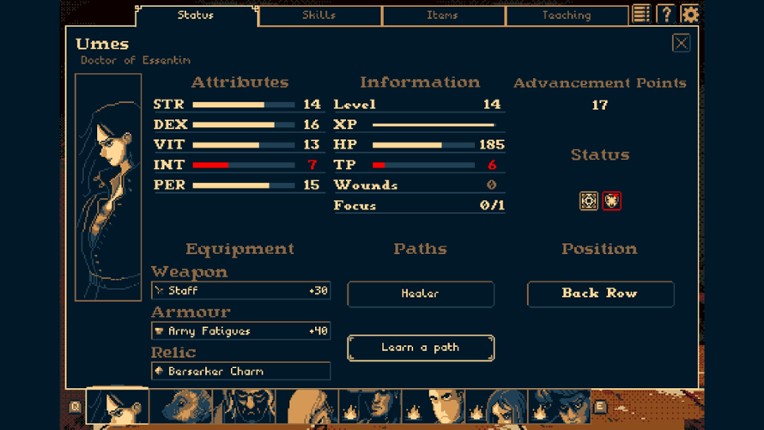
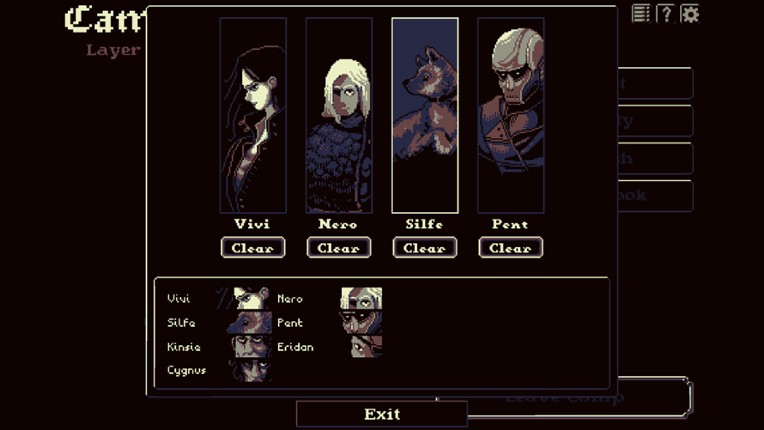
  • Innovative and deep skill system allowing party members to learn and teach abilities to each other, enabling diverse build combinations and strategic flexibility.
  • Challenging but fair roguelike mechanics with meaningful permanent consequences, rewarding knowledge acquisition and tactical decision-making.
  • High reliance on RNG that can cause frustrating difficulty spikes, unbalanced encounters, and runs that may feel unfair or random rather than skill-based.
  • Some UI and quality-of-life issues, including clunky controls, lack of clear information on mechanics, and tedious menu navigation that hinder the gameplay flow.
  • Limited narrative and content variety, with minimal lore exposition, repetitive procedural maps, and a short overall game length that may reduce long-term replay value.
  • gameplay

    65 mentions Positive Neutral Negative
    23% positive mentions, 72% neutral mentions, 5% negative mentions

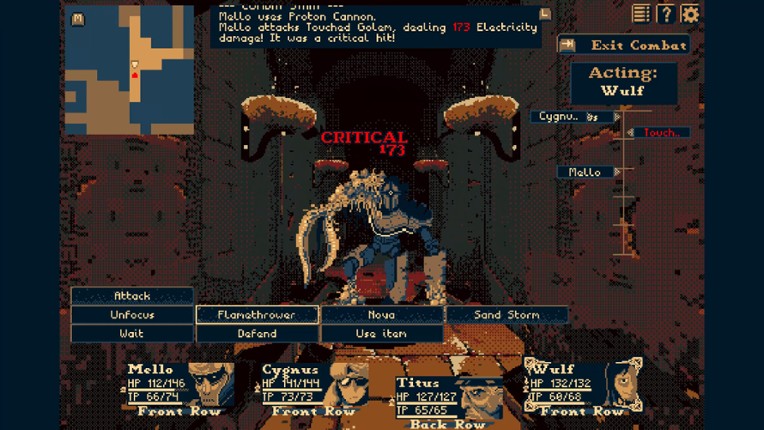
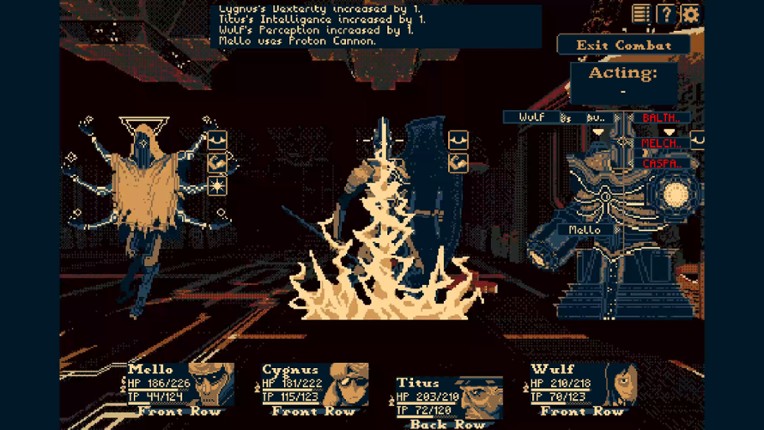
    The gameplay is a mechanically rich, old-school dungeon crawler roguelike with a focus on strategic turn-based combat, permadeath, and a unique skill-teaching system between party members. While some find the mechanics rewarding and the challenge well-balanced, others note occasional clunkiness, opaque systems, and pacing issues such as the time limit mechanic. Overall, fans of complex tactical RPGs and atmospheric roguelikes will likely enjoy the depth and creativity offered, though newcomers may face a learning curve.

    • “Traditional roguelike mechanics can be intimidating, particularly when permanent character loss is involved, so being able to adjust the challenge allows different types of players to engage with the underlying systems.”
    • “The game also introduces an interesting cross–party skill teaching system, allowing party members to learn abilities from each other, which is a genuinely creative mechanic.”
    • “Party members can die permanently and the later areas (called "layers" in-game, but "stratums" in the achievements) can get brutal, but the early areas are tuned to give you ample time to use the game's wide skill learning/teaching mechanics to shape your randomized group of party members into something you can work with.”
    • “Items are super boring, leveling and "skillpoints" are lame, taking time to learn something or from someone is a lame mechanic.”
    • “Another point is the unnecessary clunkiness of the tag-out mechanic.”
    • “Unfortunately, whether it is RNG or some of the core mechanics, the current systems in place reduced my desire to do repeat playthroughs.”
  • graphics

    56 mentions Positive Neutral Negative
    45% positive mentions, 50% neutral mentions, 5% negative mentions

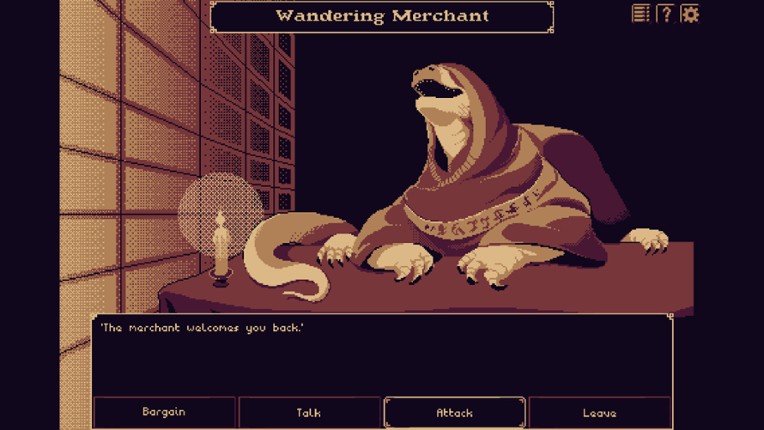
    The graphics feature a distinctly retro, pixel-art style with restrained, atmospheric color palettes that reinforce the game's bleak and eerie mood. While lacking modern visual complexity, the art and visual design are widely praised for their charm, detailed creature designs, and effective evocation of a dark fantasy setting. Overall, the aesthetic is highly appreciated by fans of classic dungeon crawlers and contributes significantly to the immersive, ominous atmosphere.

    • “The art-style is wonderful and I am immeasurably glad that we have so many options for palettes to choose from, approximately 10 or 15 if I remember correctly. It's a small thing but essential, as it ensures the game is playable by those who might find the default palette unpleasant, albeit most palettes are solid regardless.”
    • “The graphics are really suited to this kind of game and truly encapsulate a world steeped in botanical occultism and techno-sorcery.”
    • “Love the art style - both the enemy sprites as well as the different areas being made of different colour palettes - although some more variations of wall/obstacle tiles would be nice (especially in the first area).”
    • “It doesn't even have visuals on par with Eye of the Beholder (from 1991!), but it is a bit better graphically than Zork.”
    • “But I don't know if I can survive the graphics.”
    • “Letterbox and upscaled graphics are okay, but not entirely convincing.”
  • atmosphere

    33 mentions Positive Neutral Negative
    42% positive mentions, 49% neutral mentions, 9% negative mentions

    The game consistently earns praise for its rich, oppressive, and immersive atmosphere, blending dark fantasy, unsettling imagery, and retro-styled visuals with an eerie soundtrack. Reviewers highlight its ability to create a haunting, suspenseful mood that enhances exploration and survival elements, making it feel both polished and authentically old-school. Overall, the atmosphere is regarded as a standout feature that deeply enriches the dungeon crawling experience.

    • “Its combination of dark fantasy, unsettling imagery, and mysterious locations gives the adventure an atmosphere that feels appropriately hostile and unpredictable.”
    • “This game has an atmosphere that is unnerving for a dungeon crawler; it's not a fantasy romp and kill, eat and move, it's a survival in the horrors of a twisted labyrinth and you feel like you are being hunted.”
    • “Its gloomy visual palette and oppressive darkness give the dungeon crawler a powerful atmosphere.”
    • “The game’s art direction, atmosphere, and creative ideas show real promise, but the balance issues and punishing combat design overshadow those strengths.”
    • “The atmosphere, controls, and art are right up my alley. (implied mixed)”
    • “While the game is light on storytelling, the atmosphere really carries it.”
  • music

    32 mentions Positive Neutral Negative
    47% positive mentions, 44% neutral mentions, 9% negative mentions

    The music in the game is widely praised for its eerie, ominous, and atmospheric qualities, perfectly complementing the dark, foreboding tone of the gameplay and visuals. Reviewers highlight its mix of haunting ambient sounds and intense combat tracks, which heighten immersion and mood, making it ideal for playing in quiet, late-night settings. Overall, the soundtrack is considered a standout element that enriches the game's oppressive and suspenseful atmosphere.

    • “The music is ominous and leaves one with a haunted feeling as they make their descent into the bottom of evil's lair.”
    • “The soundtrack has this binaural, echoey, foreboding doom feeling that really contributes to the game!”
    • “My only gripe is that I can't find anywhere to listen to the soundtrack.”
    • “A basic soundtrack reinforces mood building up the feeling of tension with each step the party takes.”
    • “The music blends creepy ambient noises with fittingly intense combat music as you swap between being actively in combat and exploring.”
  • story

    14 mentions Positive Neutral Negative
    21% positive mentions, 58% neutral mentions, 21% negative mentions

    The story is deliberately minimal and indirect, favoring atmospheric, dark gothic world-building and lore revealed through item descriptions and visual storytelling rather than explicit exposition. While light on traditional quests or puzzles, its mysterious, dark-souls-inspired narrative style appeals to players who appreciate subtle, esoteric plots and a strong, immersive mood over elaborate storytelling.

    • “The plot is mysterious and esoteric, but there's a lot of style and implied lore.”
    • “The setting, characters, and story are all very dark gothic and cool.”
    • “The items have interesting descriptions that speak to a larger lore, Dark Souls style—you'll figure out the plot background through the items and descriptions more than through the actual gameplay.”
    • “There are no real quests or puzzles.”
    • “Similarly, while Thysiastery tells a story, it is told extremely indirectly and more through visual storytelling rather than through exposition.”
    • “While the game is light on storytelling, the atmosphere really carries it.”
  • replayability

    7 mentions Positive Neutral Negative
    43% positive mentions, 14% neutral mentions, 43% negative mentions

    The game offers strong replayability through diverse build paths, randomized elements, and flexible character development, making each run feel unique despite its relatively short length. Players can adjust difficulty and strategies across runs, retaining only knowledge between sessions, which enhances long-term engagement. However, a few fixed control points may slightly detract from the otherwise varied experience for some users.

    • “A lot of different build paths; good replayability; good for super short sessions.”
    • “Yeah, Wizardry and many games like it were great and fun back in the day, but this game is great now and the replay value is endless.”
    • “The only thing you keep between runs here is knowledge and the ability to make your runs more difficult as you clear it, so there's definitely some good replay value to be had here if you're worried about it being too short.”
    • “So much of the game is randomized that the few control points stick out like a sore thumb and actually damage the replay value for me.”
    • “A lot of replayability if you don't mind dying from bad runs.”
    • “Gen factors and x7 unlockable starting parameters that increase difficulty help shape some variation in experience, lightly contributing to replay value.”
  • optimization

    4 mentions Positive Neutral Negative
    75% positive mentions, -25% neutral mentions, 50% negative mentions

    The game offers smooth performance on portable devices with a natural pacing, though players may need to lower demanding visual settings to balance battery life and consistency. Additionally, some challenges, like Sanctum 4 enemies, require highly optimized builds, reflecting a classic, old-school design approach.

    • “Its viewpoint and methodical pacing also translate naturally to portable play, although demanding visual settings can still make sensible performance adjustments worthwhile for players prioritizing battery life or consistent performance.”
    • “However, the Sanctum 4 enemies demand highly optimized builds.”
    • “It feels very old-school before the internet optimized the fun out of games.”
    • “Demanding visual settings can still make sensible performance adjustments worthwhile for players prioritizing battery life or consistent performance.”
    • “The Sanctum 4 enemies demand highly optimized builds.”
  • grinding

    3 mentions Positive Neutral Negative
    0% positive mentions, 0% neutral mentions, 100% negative mentions

    Grinding in the game is minimal during normal exploration and progression, with quick movement and varied classes reducing grind. However, some achievements and late-game content introduce grindy elements, making parts of the experience feel more tedious.

    • “Tons of classes and a few grindy achievements are the basis for any longevity.”
    • “There are aspects that are improved, but the majority of changes have made the game far more tedious.”
  • character development

    2 mentions Positive Neutral Negative
    100% positive mentions, 0% neutral mentions, 0% negative mentions

    Character development is well-designed and flexible, offering strong customization options and replayability through varied party permutations, despite being somewhat brief.

    • “Its rather short, but has been designed to be replayable due to party permutations & despite being curtailed, extensive & flexible character development.”
    • “Character development is strong with a starting choice of random or customised character.”
  • humor

    1 mentions Positive Neutral Negative
    100% positive mentions, 0% neutral mentions, 0% negative mentions

    The humor in the game is highlighted by its wacky monsters and funny teammates, contributing to an enjoyable and lively experience alongside its engaging gameplay.

    • “I have not played many games in this genre, but I really enjoy the wacky monsters, the awesome abilities, the funny teammates, and the snappy gameplay.”
Skip Game Offers

Buy THYSIASTERY

Some of these are affiliate links — if you buy through them, we may earn a commission at no extra cost to you.

Play Times

7h Median play time
7h Average play time
7-7h Spent by most gamers
*Based on 1 analyzed playthroughs
Skip Videos

Videos

Skip FAQs

Frequently Asked Questions

THYSIASTERY is a tactical role playing game with horror, fantasy and dark fantasy themes. Common tags for THYSIASTERY include grid-based movement, turn-based, first-person, indie, roguelite and others.

THYSIASTERY is available on PC, Steam Deck, Windows and Linux.

On average players spend around 7 hours playing THYSIASTERY.

THYSIASTERY was released on March 9, 2026.

THYSIASTERY was developed by DIRGA.

THYSIASTERY has received positive reviews from players. Most players liked THYSIASTERY for its gameplay but disliked it for its story.

THYSIASTERY is a single player game.

Similar games include The Last Spell, Tangledeep, Urtuk: The Desolation, Gordian Quest, Star Renegades and others.