Opus Magnum

Opus Magnum encourages creativity without ever telling you you’re wrong, making it an endlessly replayable puzzler.
Opus Magnum Game Cover
96%Game Brain Score
story, gameplay
grinding, stability
97% User Score Based on 3,806 reviews
Critic Score 92%Based on 3 reviews

Platforms

LinuxPCMac OSXboxWindows
Opus Magnum Game Cover

About

Opus Magnum is a single player simulation game. It was developed by Zachtronics and was released on June 9, 2019. It received very positive reviews from critics and overwhelmingly positive reviews from players.

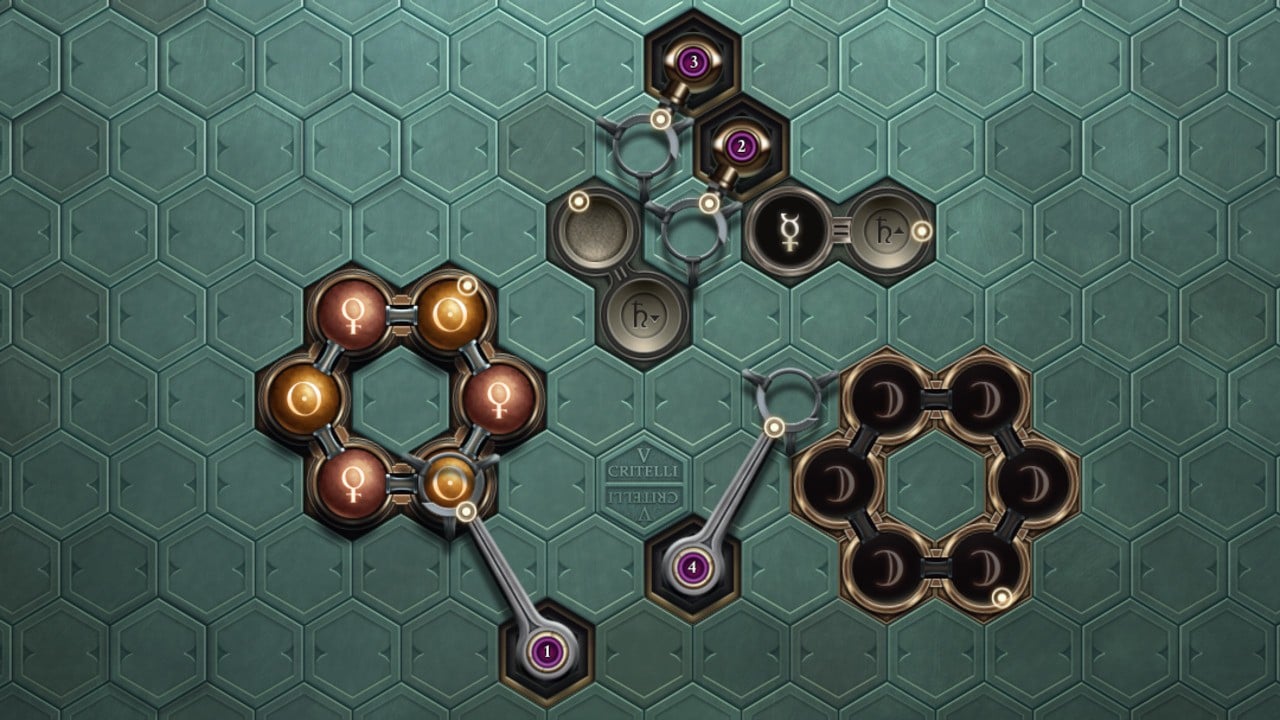
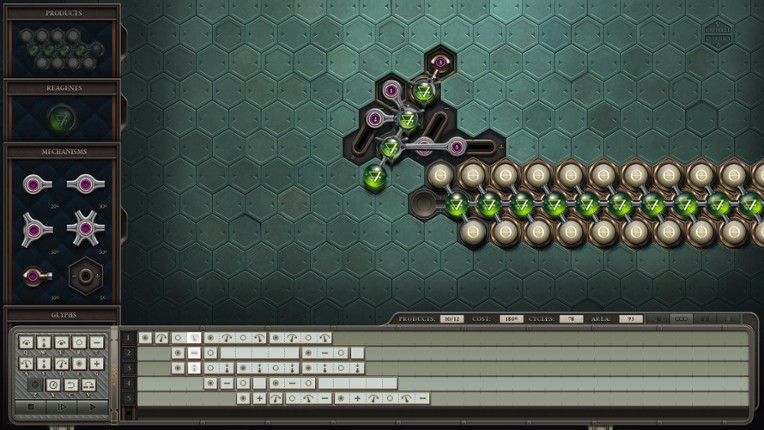
Master the intricate, physical machinery of the transmutation engine— the alchemical engineer’s most advanced tool— and use it to create vital remedies, precious gemstones, deadly weapons, and more. Design Machines - Design and build machines that carry out alchemical processes using a variety of components.Open-Ended Puzzles - Compete against your friends and the world to build the simplest, fast…
Skip User Reviews

97%
Audience ScoreBased on 3,806 reviews
story304 positive mentions
grinding54 negative mentions

  • Opus Magnum offers a unique and satisfying puzzle experience with open-ended solutions, allowing players to approach challenges creatively.
  • The game features beautiful visuals and a charming story that enhances the overall experience, making it engaging and enjoyable.
  • The ability to optimize solutions for cost, speed, and area adds significant replayability, encouraging players to revisit puzzles and improve their designs.
  • The user interface can be clunky, with a lack of essential features like zooming, copy/pasting, and the ability to edit instructions in real-time, which can lead to frustration.
  • Some players find the later puzzles tedious and overly complex, with a steep difficulty spike that may deter casual gamers.
  • The story, while charming, is minimal and may not hold the interest of players who prefer a more substantial narrative.
  • story
    796 mentions Positive Neutral Negative

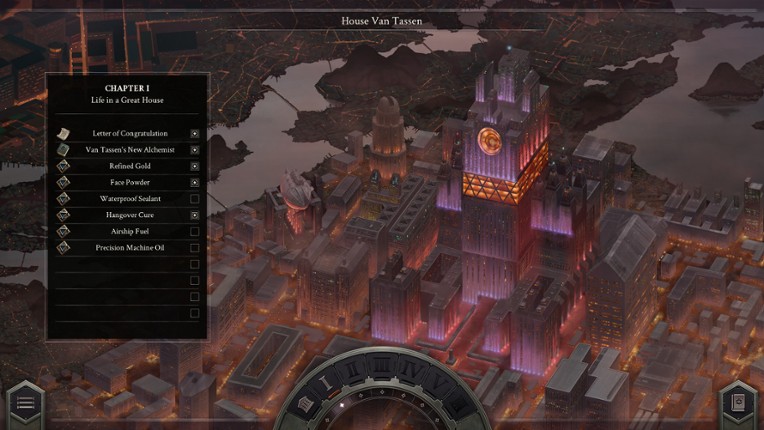
    The story in "Opus Magnum" is generally well-received, providing a light yet engaging narrative that complements the puzzle-solving gameplay. Set in a steampunk-inspired world of alchemy, it features humorous dialogue and character interactions that add depth without overshadowing the main mechanics. While some players found the story to be minimal or skippable, many appreciated its charm and the way it ties the puzzles together, making the overall experience more immersive.

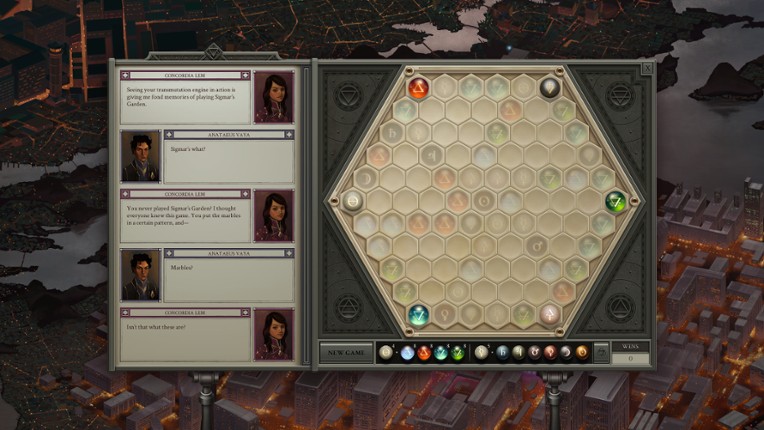
    • “The story was better than I expected; I especially liked the Sigmar's Garden conversations, and it has a good ramp-up of difficulty with extra levels in the journal.”
    • “The story is light, delivered through text-based cutscenes and character banter, but it adds flavor and context to your mechanical experiments.”
    • “The story is compelling enough to keep you interested in solving puzzles besides their inherent challenge.”
    • “The story seems unnecessary and opaque, but it doesn't get in the way of the puzzles, so no harm done.”
    • “The story was very boring and got dumb very quickly, and it is completely unnecessary; don't even bother next time.”
    • “The only real negative I have about this game was that I found it difficult to get invested in the story, with story points only given to you as back-and-forth text boxes.”
  • gameplay
    426 mentions Positive Neutral Negative

    The gameplay of "Opus Magnum" is characterized by its intricate puzzle mechanics that blend mechanical design and programming elements, allowing players to create complex machines to produce specific alchemical compounds. While the game starts with simple mechanics that gradually increase in complexity, some players find the mid-to-late game repetitive and tedious, despite the overall satisfaction derived from solving puzzles and optimizing solutions. The visuals and intuitive interface enhance the experience, making it accessible for newcomers while still offering depth for seasoned players, though some may find the learning curve steep and the narrative somewhat disconnected from the gameplay.

    • “Absolutely brilliant puzzle game - intriguing, the optimization mechanic keeps you going and the difficulty curve is spot on.”
    • “Incredibly addictive gameplay, with beautiful art and a surprisingly good narrative for a game in which story is not supposed to be the focus.”
    • “The gameplay revolves around designing intricate machines using a variety of mechanical components, precision timing, and creative problem-solving.”
    • “Drags a little towards the halfway/endgame once you fully understand the ins and outs of the mechanics but still have to do the busy work.”
    • “The gameplay is ok, but it's not groundbreaking or revolutionary.”
    • “Repetitive and tedious gameplay, poor UI, primitive and dull plot.”
  • graphics
    232 mentions Positive Neutral Negative

    The graphics in the game have received widespread acclaim for their beauty and clarity, with many reviewers highlighting the crisp visuals, charming art style, and engaging animations that enhance the overall experience. The steampunk aesthetic is particularly praised, creating an immersive environment that complements the gameplay and story. While some users noted that the graphics are relatively simple, they still contribute significantly to the game's appeal, making it visually satisfying and enjoyable to play.

    • “The graphics are amazing and the gameplay is genius.”
    • “The game boasts stunning graphics, with intricately designed machines and mesmerizing animations that bring your creations to life.”
    • “The visuals are gorgeous; watching your perfectly-designed clockwork finally getting alive with dozen-or-so rotating and sliding arms in steampunk-styled machine tops off the Zachtronics experience.”
    • “The graphics are quite simplistic, and your visual cortex will be very idle when you play this game.”
    • “I expected more :( it's like someone said to them, 'Hey, SpaceChem was good and all, but if you make the graphics shinier and add in a thinly disguised wizard academy story, you can charge twice as much money for it.'”
    • “The visuals and UI design weren't much compared to modern offerings and there was no story at all (good music though), but already there was that addictive problem-solving and optimizing gameplay that people would love in later games.”
  • optimization
    165 mentions Positive Neutral Negative

    The game's optimization aspect is highly praised, offering players multiple metrics to improve upon, such as cost, speed, and area. While the core puzzles can be completed without focusing on optimization, the challenge and satisfaction come from refining solutions to achieve better performance, with community leaderboards adding a competitive edge. Overall, the game caters to both casual players and optimization enthusiasts, providing a rich environment for creativity and problem-solving.

    • “The replayability is endless with all the optimization you can do, not to mention the Steam Workshop that has community puzzles.”
    • “Solutions can be optimized based on different parameters - there are graphs to compare your solution to the best results of other players and a leaderboard to compete with friends.”
    • “If you like automation/optimization games, this is a must-own.”
    • “What should be a game about relatively high-level logical optimization becomes a chore whenever you try to do anything even slightly complex.”
    • “The cost and footprint optimization are nearly the same in every level, and the cycle optimization is mostly about figuring out some positions for the arms where they don't block each other and then enter a hundred or so repetitive commands to complete the level.”
    • “While keeping optimizations and achievements out at the periphery should help minimize frustration for many players, it's still not a casual experience, and it's not for everyone: there's ultimately no way of getting around the grind of 'programming' complex timing patterns for different elements of your alchemical engine.”
  • music
    122 mentions Positive Neutral Negative

    The music in the game is widely praised for its pleasant, ambient quality that enhances the overall experience, creating a relaxing atmosphere conducive to puzzle-solving. While many players appreciate the soundtrack's ability to complement the gameplay, some note that it can become repetitive over time. Overall, the combination of engaging music and beautiful visuals contributes significantly to the game's immersive and enchanting environment.

    • “The music is absolute top notch and makes me feel like a real alchemist making the elixir of life or something.”
    • “Combined with a mesmerizing soundtrack that complements the gameplay perfectly, Opus Magnum creates an immersive and enchanting atmosphere that pulls you deeper into its alchemical world.”
    • “The art, music, and UI design really solidify the atmosphere and pull this together into a complete package.”
    • “The game only has 1 music track and it plays over and over, and even though it's long, it does eventually become annoying, so I muted it allowing me to appreciate the sounds of the machines more.”
    • “The music is repetitive, as one might expect in this situation, and sometimes distracting, but well done nonetheless.”
    • “The story is boring and the music is not as good as in Infinifactory.”
  • replayability
    93 mentions Positive Neutral Negative

    The game boasts exceptional replayability, driven by its optimization mechanics that allow players to refine their solutions based on various metrics such as cost, speed, and size. With user-generated content and leaderboards, players are encouraged to revisit puzzles to achieve better scores and explore different approaches, making it a highly engaging experience. Overall, the combination of intricate puzzles and the freedom to experiment ensures nearly infinite replay value.

    • “Each puzzle has almost unlimited replay value if you try to minimize cost, cycles, etc. I managed to solve refined bronze with one fixed length arm and 4 tracks, and I thought that was probably optimal, but it's been done with one fixed arm and no track!”
    • “The game's replayability is enhanced by the inclusion of leaderboards, allowing you to compete with other players and showcase your alchemical mastery.”
    • “With the addition of Steam Workshop for custom levels, this game has near infinite replayability as you solve new problems and tweak your solutions.”
    • “The few downsides are the story, which is fun at first but soon gets tedious and very disengaged from the actual gameplay, and that there might after all be limited replayability, especially if you don't find the fine-tuning part entertaining.”
    • “Even if you don't get the same replay value I have already gotten out of this game without having completed it, just solving the puzzles once is worth the price of admission for this game.”
    • “The only thing would be the price tag might be a bit high for the amount of content, but I'm not the kind of person to spend loads of time reworking something to be more efficient so that would add a lot of replayability.”
  • grinding
    55 mentions Positive Neutral Negative

    The grinding aspect of the game is frequently described as tedious and repetitive, with many players expressing frustration over the lengthy and monotonous processes required to complete puzzles. While some enjoy the satisfaction of solving complex challenges, the lack of user-friendly features and the need for extensive instruction input often detracts from the overall enjoyment, making the gameplay feel more like a chore than a rewarding experience. Despite its engaging concept, the game struggles with balancing complexity and accessibility, leading to a grind-heavy experience that can diminish player satisfaction.

    • “You'll need a second life for grinding.”
    • “The game is tedious more so than difficult.”
    • “None of the puzzles were truly challenging or forced me to think outside the box; they just required tediously writing out long lists of instructions to accomplish a simple task.”
    • “Starting from the 2nd chapter, the game becomes nothing but a tedious chore.”
  • humor
    35 mentions Positive Neutral Negative

    The humor in the game is described as light yet effective, blending philosophical musings with dry wit and entertaining dialogue. While the protagonist may lack personality, the interactions with over-the-top antagonists and humorous side characters add charm and laughter to the experience. Overall, players find the game’s comedic elements, including funny mechanics and engaging storylines, to be a delightful complement to its puzzle-solving gameplay.

    • “Though light, the story strikes a nice balance between philosophical musings, dry humor, and glimpses of a larger world.”
    • “The dialogue/story is very funny, and the puzzles in the game get challenging at a nice pace.”
    • “The story, while slightly convoluted in the telling, isn't too overwhelming to be entertaining, and it does a good job of showing a wide variety of moods and injecting a lot of humor.”
    • “The jokes fall flat and feel forced.”
    • “I expected more clever humor, but it was mostly cringeworthy.”
    • “The attempts at comedy just made me roll my eyes.”
  • atmosphere
    28 mentions Positive Neutral Negative

    The atmosphere of the game is widely praised for its immersive and enchanting qualities, enhanced by a captivating soundtrack and stylish art design. Reviewers highlight the gothic and steampunk vibes, along with excellent world-building that complements the puzzle-solving experience. Overall, the game's atmosphere is described as relaxing, engaging, and beautifully crafted, contributing significantly to the enjoyment of the gameplay.

    • “Combined with a mesmerizing soundtrack that complements the gameplay perfectly, Opus Magnum creates an immersive and enchanting atmosphere that pulls you deeper into its alchemical world.”
    • “The atmosphere, the story, the music, the puzzles themselves, the extremely satisfying physical look and feel of the mechanical system executing your program - all of this is just perfect.”
    • “The art, music, and UI design really solidify the atmosphere and pull this together into a complete package.”
    • “The puzzles are quite intriguing and the text-based background actually helps a lot to set the atmosphere.”
    • “But I would be remiss if I failed to mention the soundtrack, which, although fairly minimalist, really adds to the atmosphere of the game.”
    • “Opus Magnum does it over a relaxing atmosphere and subtle alchemical atmosphere, blending light story elements with puzzles that will never frustrate you and making you review that last solution just slightly differently to get it a bit faster, a bit better.”
  • emotional
    11 mentions Positive Neutral Negative

    The game offers a surprisingly engaging story with solid emotional beats and character arcs, allowing players to feel intelligent and connected to the narrative. While the protagonist lacks depth, the emotional highs and lows, along with touching moments, create a complex experience that resonates with players. Overall, it balances fun and emotional engagement, making it a well-rounded experience despite its simplicity.

    • “The story as well is surprisingly good, with solid emotional beats and some clear character arcs, leading to a well-rounded experience, in a game that could do well even without a plot.”
    • “It's a complex emotional ride that offers you deep despair and euphoric highs.”
    • “The story was fun and interesting enough for being such an overall small part of the game, some moments were very touching and bring a lot of humanity to some of the characters.”
  • stability
    8 mentions Positive Neutral Negative

    Overall, the game's stability is mixed; while many users report smooth performance, especially on Linux, some experience significant issues such as frequent freezes on startup and occasional bugs, particularly with the mahjong counter. However, several players note that the game feels polished and enjoyable, especially after the early access period.

    • “I bought the game at the end of the early access period, but I had no glitches or bugs.”
    • “The price is low for the amount of fun, and the game, though in early access, is not buggy and seems very polished.”
    • “Great to give the brain a workout, and it runs great on Linux.”
    • “The counter in mahjong was also buggy sometimes.”
    • “3 out of 4 times the game freezes on startup and needs a full PC reset.”
  • monetization
    3 mentions Positive Neutral Negative

    The monetization strategy effectively leverages user-generated animated gifs of solutions as a clever advertising tool, enticing players to share their achievements and attract new users. This feature enhances the game's appeal, particularly for fans of open-ended puzzles and programming mechanics.

    • “The monetization strategy feels overly aggressive, making it hard to enjoy the game without spending extra money.”
    • “I appreciate the game, but the constant push for in-game purchases really detracts from the overall experience.”
    • “It's frustrating that so many features are locked behind a paywall, making it feel like a cash grab rather than a fair game.”
  • character development
    2 mentions Positive Neutral Negative

    The game excels in character development and world-building despite its brief length, effectively utilizing limited visuals and dialogue to create an engaging narrative. Players appreciate the depth and richness of the characters, which enhances the overall experience of the puzzle game.

    • “Also, as an added bonus, it's a puzzle game with an engaging story that manages to do an impressive amount of world-building and character development in a small number of still images and dialogues.”
    • “The game (and therefore story) isn't terribly long but it accomplishes some admirable world-building and character development in that time.”
Skip Critic Reviews
Skip Game Offers

Buy Opus Magnum

19h Median play time
22h Average play time
9-40h Spent by most gamers
*Based on 14 analyzed playthroughs
Skip Videos

Videos

Skip Games Like Opus Magnum

Games Like Opus Magnum

Infinifactory Image
Kaizen: A Factory Story Image
SpaceChem Image
SHENZHEN I/O Image
EXAPUNKS Image
Skip FAQs

Frequently Asked Questions

Opus Magnum is a simulation game.

Opus Magnum is available on PC, Mac OS, Windows, Linux and others.

On average players spend around 22 hours playing Opus Magnum.

Opus Magnum was released on June 9, 2019.

Opus Magnum was developed by Zachtronics.

Opus Magnum has received very positive reviews from players and very positive reviews from critics. Most players liked this game for its story but disliked it for its grinding.

Opus Magnum is a single player game.

Similar games include Infinifactory, Kaizen: A Factory Story, SpaceChem, SHENZHEN I/O, EXAPUNKS and others.