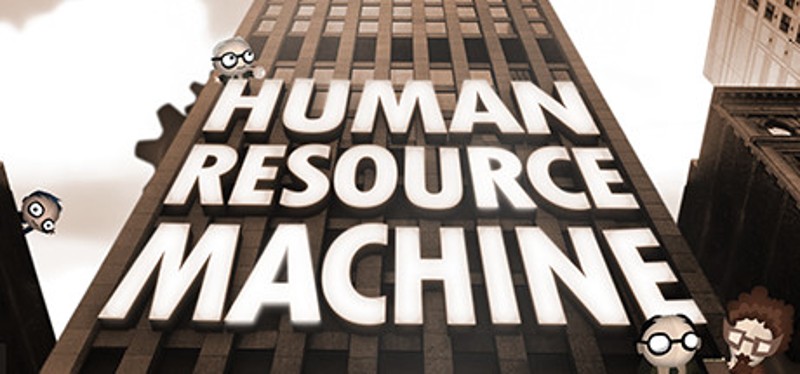
Human Resource Machine

The Tomorrow Corporation's oddest creation may have found new life.
Human Resource Machine Game Cover
84%Game Brain Score
Most mentioned positive aspects:story, optimization
Most mentioned negative aspects:grinding, replayability
92% User Score Based on 2,366 reviews
Critic Score 74%Based on 7 reviews

Platforms

Nintendo SwitchEpic GamesGog ComAndroidSteam DeckiPhoneWindowsLinuxPCWii UTabletMac OSPhoneWiiiPadMobile Platform
Human Resource Machine Game Cover

About

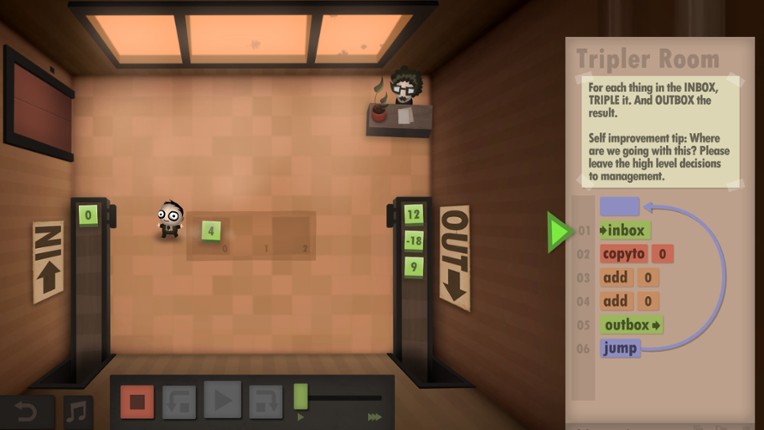
Human Resource Machine is a single player casual management game with a comedy theme. It was developed by Tomorrow Corporation and was released on October 15, 2015. It received mostly positive reviews from critics and very positive reviews from players.

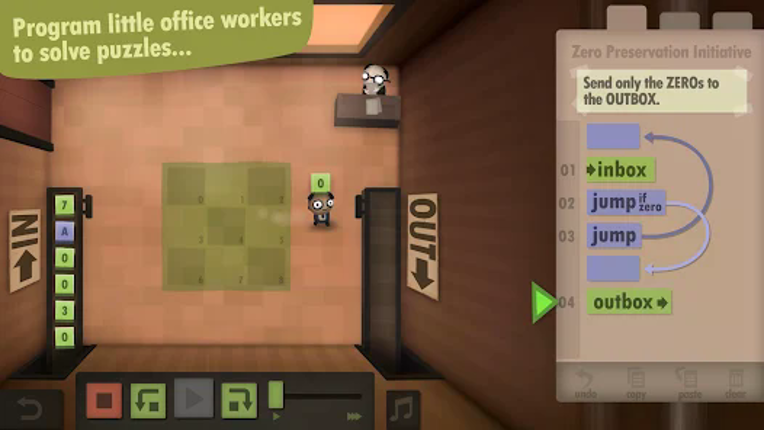
Program little workers to solve puzzles. The machines are coming...for your job.
Skip User Reviews

92%Audience ScoreBased on 2,366 reviews
story60 positive mentions
grinding65 negative mentions

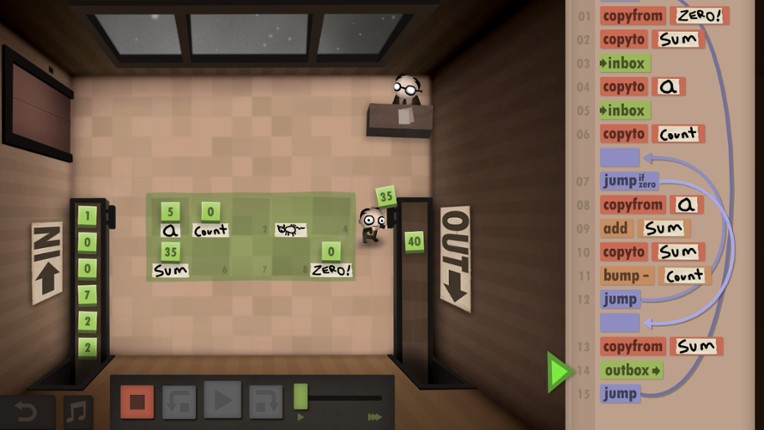
  • Accessible and engaging introduction to assembly-like programming concepts through puzzle solving.
  • Charming and humorous presentation with appealing art style and soundtrack enhancing the gaming experience.
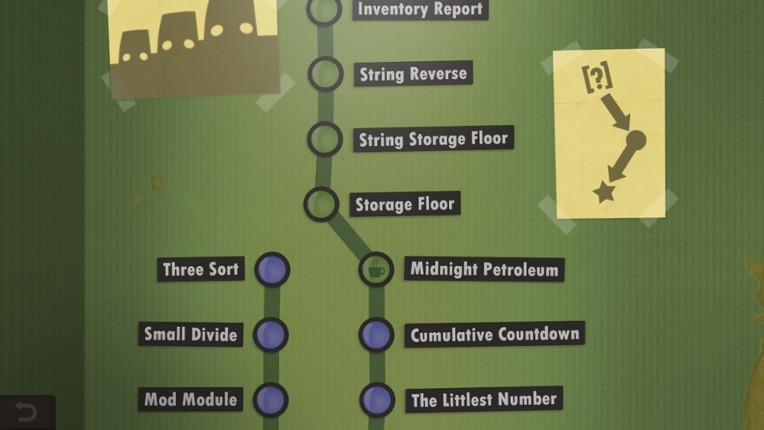
  • Progressive difficulty curve with optional optimization challenges offers depth and replayability for both beginners and experienced programmers.
  • Interface limitations such as tiny visible code area, lengthy drag-and-drop assembly editing, and cumbersome jump labels make managing complex programs frustrating.
  • Later puzzles can be extremely challenging, sometimes requiring external help or prior programming knowledge to solve, which can discourage casual players.
  • Lack of quality-of-life features including inability to type comments, no volume control in-game, slow execution speed, and limited usability options.
  • story

    272 mentions Positive Neutral Negative

    The story in this programming puzzle game is minimalistic, understated, and often treated as a secondary element to the gameplay. It features a quirky, darkly humorous tone with subtle dystopian and corporate themes, but many find it lacking depth, development, and a meaningful conclusion. While the story adds charm and intermittent engagement, especially for fans of the developer's style, it is generally not the main draw and may feel sparse or underwhelming to those seeking a strong narrative.

    • “The story, like most Tomorrow Corporation games, is really understated but interesting in the bursts you get to see.”
    • “The game itself has such a simple idea and premise and it executed terrifically; the atmosphere is so strange for what the game is, it draws you back into this 'story-not-story' scenario after every level and leaves you dying to know what the progression is.”
    • “The story and environment are very good and surprisingly make you invested in the characters.”
    • “And now, for the cherry on top, if even after all of this you don't feel like you've wasted enough time, let me introduce you to meaningless and unskippable cutscenes trying desperately to pretend this game has any story whatsoever (it doesn't, the developers just didn't want the minimal playtime to look quite so pathetic).”
    • “Except these tidbits of story here are so sparse and hard to achieve in the later portions of the game that it made the story completely worthless, and it would honestly, I feel, be the exact same game if the story was taken out altogether.”
    • “The worst part about Human Resource Machine is its story.”
  • optimization

    237 mentions Positive Neutral Negative

    Optimization challenges in the game add significant depth and replayability, offering optional goals to minimize program size and runtime that can be quite difficult, especially for beginners, while providing satisfaction and learning opportunities for experienced programmers. The difficulty curve is balanced, with early puzzles accessible and later optimizations becoming increasingly complex and sometimes frustrating due to UI limitations and the necessity of tedious techniques like loop unrolling. Overall, the optimization aspect effectively teaches low-level programming concepts and sharpens problem-solving skills, though some find certain optimization goals tedious or unrealistic.

    • “The visual drag-and-drop approach lowers the barrier to entry nicely, though be warned: the optional optimization challenges (minimizing steps and runtime) will absolutely humble you, and the spaghetti mess of jump arrows on later levels can make your own code feel like a crime scene.”
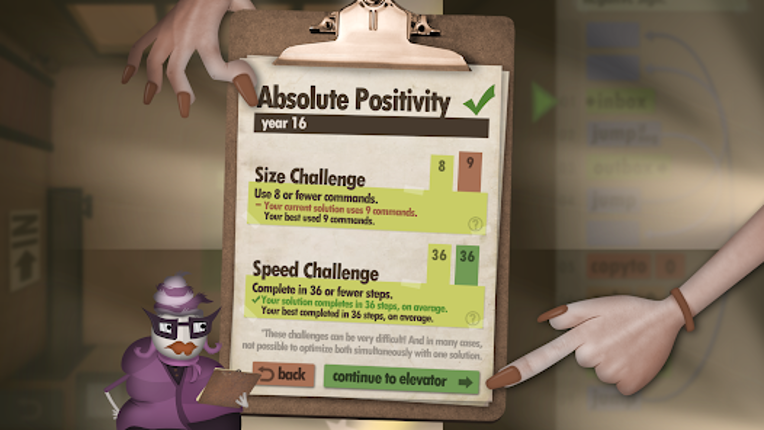
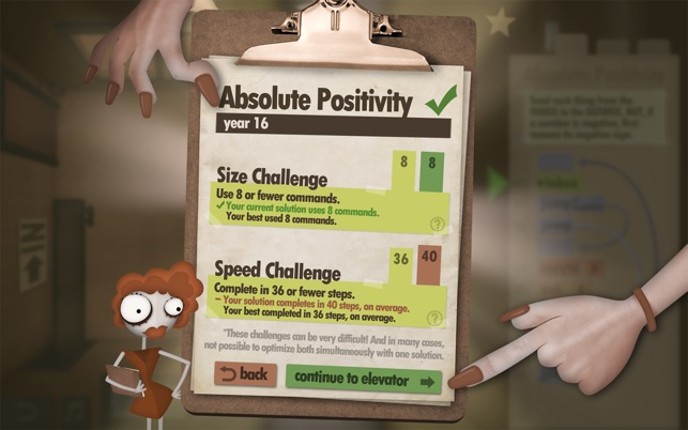
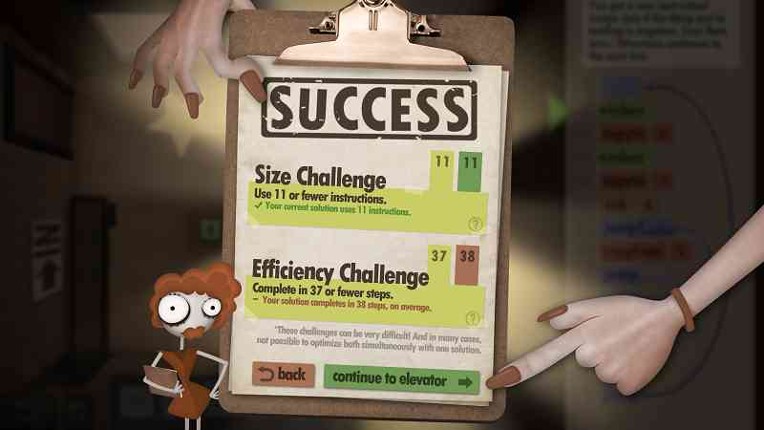
    • “If you enjoy optimization puzzles, you may enjoy the meta-challenges to make your program as short and fast as possible.”
    • “All levels have an optional line and runtime optimization goal.”
    • “For a few tasks I had to use a guide, and as a casual player the optimization challenges feel almost impossible.”
    • “Due to the stuttering and horridly twitchy performance, the game is now unplayable for me to finish out the achievements, because it triggers my migraine.”
    • “The tasks are rather straightforward, and the optimization challenges don't work well - the toolset is insufficient to do creative size optimizations, and speed optimizations too often turn into exploding loops to save on the jump instruction.”
  • graphics

    218 mentions Positive Neutral Negative

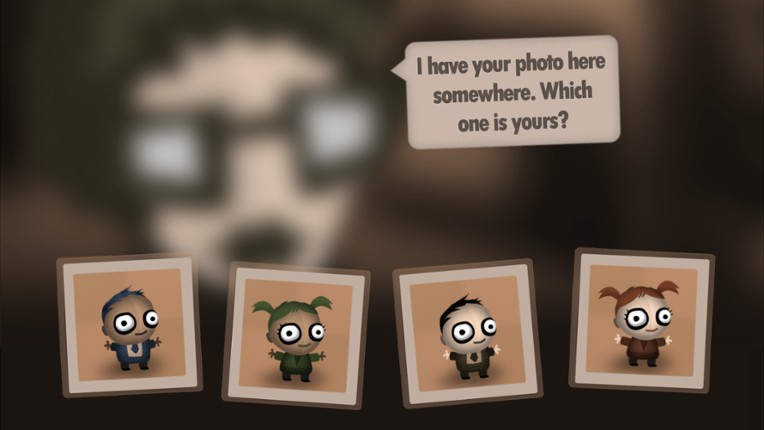
    The graphics feature a charming, quirky, and distinctive art style typical of Tomorrow Corporation, combining cute, cartoonish visuals with a dystopian corporate aesthetic that enhances the game's personality and atmosphere. While simple and not focused on high-end graphical fidelity, the visuals and animations are polished, engaging, and effectively support the programming puzzles without distracting from gameplay. Overall, the graphics are widely praised for their unique style, smooth presentation, and ability to complement the game’s humor and storytelling.

    • “The game has a charming aesthetic to it and a great artstyle, and the soundtrack absolutely slaps.”
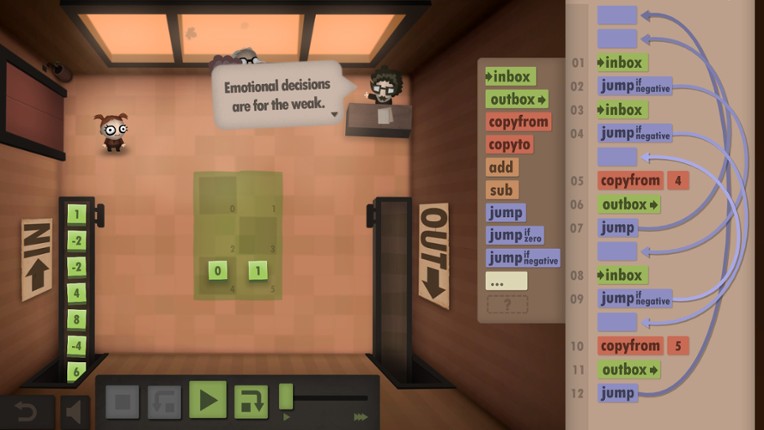
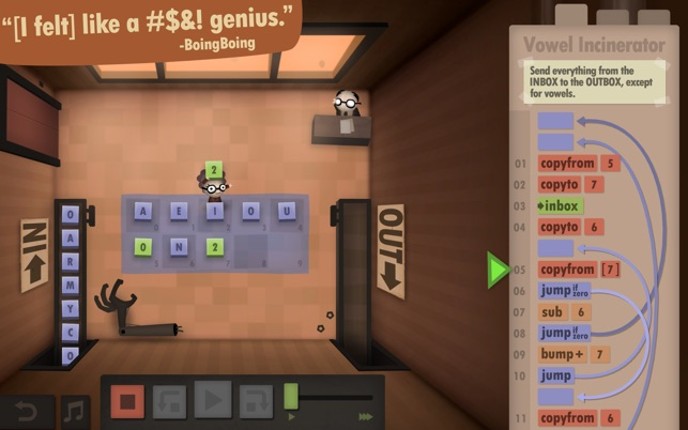
    • “The graphics and animation let you forget you are programming and they nicely visualize what actually happens in your program.”
    • “The quirky aesthetic, accompanied by a charming narrative, adds personality to the cerebral gameplay.”
    • “Played this through, wanted to come back to it, started getting weird graphic hiccups.”
    • “The game has a weird, ugly post-modern art style with bug-eyed characters.”
    • “Commands take only a little part of the screen, most being taken by ultimately useless graphics, leaving you with a small window for at most 15 lines of code; when later challenges require up to twenty-five, requiring you to scroll and making arrow following so much more aggravating…”
  • gameplay

    162 mentions Positive Neutral Negative

    The gameplay centers on programming-themed puzzles that start simply and progressively increase in complexity, effectively teaching programming logic and assembly concepts in an accessible way for both novices and experienced players. While some find the core mechanics engaging, rewarding, and well-paced, others note occasional frustrations with repetitiveness, interface limitations, and a desire for more varied or extended content. Overall, the gameplay is praised for its clever puzzle design, gradual learning curve, and integration with thematic elements, making it a solid and satisfying experience especially for those interested in programming-based challenges.

    • “The mechanical progression is so well done.”
    • “The gameplay is amazing, the story is funny, and the puzzles are very satisfying.”
    • “The mechanics are simple, but the puzzles get increasingly complex, making you think hard.”
    • “It's not a quirk, it's a baffling design failure, a clear symptom of having unthinkingly ported the touch screen scribble mechanic directly without adapting it.”
    • “I would have preferred to take the mechanic learned from one of the levels, and been posed with a more challenging problem using that learned mechanic, rather than always having to try and learn a new mechanic and having that be the challenge of every level.”
    • “The gameplay is basically solving puzzles with assembly language.”
  • music

    151 mentions Positive Neutral Negative

    The music in the game is widely praised for its unique, catchy, and atmospheric soundtrack that complements the art style and mood well, often described as relaxing, quirky, and immersive. However, many users criticize the lack of in-game audio controls, noting the absence of volume sliders and the inability to fully mute sounds or menu music, which leads some to turn off the music or listen to their own instead. Overall, the soundtrack is considered a strong positive aspect that enhances the experience, despite occasional repetitiveness and limited customization options.

    • “The game's visuals and audio create an awesome and very immersive environment; the music is great for problem solving and fits the mood, and sprite animations are very smooth and polished as well.”
    • “The soundtrack is fantastic, as expected from tomorrow corporation.”
    • “The art style, the music, the animations and design... all what you love from tomorrow corp.”
    • “Some basic features such as a music/sound effects volume slider are missing.”
    • “Not a 10 only because of the lack of control on the sound settings (the only option is music on/off, that's it).”
    • “There is no way to switch music off completely or to switch sound off at all in-game.”
  • humor

    105 mentions Positive Neutral Negative

    Human Resource Machine features clever, understated, and darkly sardonic humor that effectively parodies corporate culture while complementing its challenging programming puzzles. The game's quirky, cynical tone—paired with charming visuals, funny dialogues, and humorous cutscenes—engages players and adds an entertaining layer to the educational experience. Overall, its humor is widely praised for being witty, intellectually stimulating, and a key factor in maintaining player engagement.

    • “Human Resource Machine is a genuinely clever programming puzzle game that sneaks assembly language concepts into a charming, darkly humorous office setting — and somehow makes it fun.”
    • “Human Resource Machine is a deceptively clever puzzle experience that wraps the fundamentals of computer programming in an accessible, humorous, and surprisingly demanding format.”
    • “The humor is understated but effective, poking fun at corporate culture and automation without overwhelming the core gameplay.”
  • grinding

    67 mentions Positive Neutral Negative

    Grinding in the game is widely described as tedious and frustrating due to limited UI features, slow speed, and the cumbersome drag-and-drop programming interface. While early puzzles are engaging, later levels become repetitive and require excessive optimization efforts that feel more like chores than challenges, especially for experienced programmers. A lack of quality-of-life improvements like text input, easier code management, and better commenting tools contributes heavily to the grind.

    • “You'll need a second life for grinding.”
    • “Having nice common routines allows you to focus on problem solving rather than the tedious work.”
    • “Running long programs is extremely tedious, since there is a relatively low speed limit.”
    • “The only downside is that there is an optimization for having the most efficient program in terms of lines ran, which sounds fine at first, but you will quickly realize that it just means you'll need to create an if section for almost every single possible outcome, which isn't interesting, just tedious.”
    • “Learning programming is nice but after level 13, things are just as tedious as assembly language and it becomes an exercise in patience doing very long things that would otherwise be solved by modern programming commands like multiplication and logic gates.”
  • replayability

    26 mentions Positive Neutral Negative

    The game offers notable replayability primarily through optimization and efficiency challenges, appealing to players who enjoy refining solutions and achieving higher performance. While the base puzzles may have limited replay value once completed, the optional challenges and multiple solution paths add depth and extended playtime for dedicated players. However, some find replayability limited after fully mastering the optimization goals.

    • “For players who enjoy optimization and refinement, this adds significant replay value and depth.”
    • “There are multiple solutions to each level and finding any of them will allow you to continue to the next, but the game challenges you to find the most efficient solution for added replay value.”
    • “30 hours in and I've completed all but two of the OCDs, so I'd say there's a lot of replayability here, as playing through the game itself only took about 10 hours.”
    • “To put a bow on my list of issues, the replayability factor is non-existent.”
    • “Not terribly much replayability once you have optimized your solutions, but worth the money all the same.”
    • “The game lacks replayability but I've had a good 3 days of fun with it and although I've never programmed before I felt like I have achieved something by beating almost every level.”
  • atmosphere

    24 mentions Positive Neutral Negative

    The game's atmosphere is widely praised for its quirky, minimalist, and slightly unsettling tone, reminiscent of other Tomorrow Corporation titles like Little Inferno, with cohesive art, music, and dark humor enhancing player immersion. It effectively balances a bleak corporate or mysterious vibe with charm and authenticity, making the experience engaging and unique. While some find the story weaker than previous games, the atmospheric design and soundtrack consistently receive high acclaim.

    • “A fun game with the quirkiness and just slightly off-balance atmosphere you'd expect from Tomorrow Corporation.”
    • “The bleak corporate atmosphere and satirical animations are a perfect fit for the gameplay mechanic, offering a few chuckles and a relaxing ambience, both welcome when thinking through the interesting and puzzling requests that you are given.”
    • “The music and atmosphere really make it shine, but I also found the gameplay simple enough to pick up, but challenging and rewarding, definitely getting me addicted.”
    • “Maybe the story is weaker than most Tomorrow Corporation games - while there is the sense of the same sort of atmosphere as in the previous games, it doesn't really come through strongly.”
    • “It helps the game's overall atmosphere, sure, but I'd much prefer just being able to type in the boxes instead of having to scribble.”
    • “The game atmosphere is very similar to other games from the same studio (World of Goo, Little Inferno) and by that I mean that the story is very minimalistic and mysterious, and the humour is very cynical (you're basically working within the game).”
  • emotional

    9 mentions Positive Neutral Negative

    The game evokes a range of emotions, from frustration and challenge to a rewarding sense of accomplishment, particularly when solving difficult levels. While it may feel intellectually demanding and less emotionally driven compared to the developer's previous, more heartfelt titles, it still provides a uniquely thoughtful and subtly poignant experience.

    • “Despite that, I still had plenty of fun, especially when I finally solved a level I was struggling on; it made me feel like a genius!”
    • “A dystopian future with little regard for individual worker bees, but still weirdly heartfelt and enjoyable.”
    • “It's been a long time since I played a game which made me feel challenged without requiring me to kill stuff.”
  • monetization

    2 mentions Positive Neutral Negative

    The monetization includes microtransactions tied to charitable causes, but completing in-game challenges adds significant difficulty, extending gameplay time substantially.

  • stability

    2 mentions Positive Neutral Negative

    The game demonstrates excellent stability, running smoothly even on older hardware and different Linux versions, such as Ubuntu 19.10. Users report no performance issues or crashes.

    • “The game takes up 120 MB of disk space and runs great on an old computer running Ubuntu Linux 19.10.”
    • “Runs great on Linux.”
Skip Critic Reviews
Skip Game Offers

Buy Human Resource Machine

7h Median play time
8h Average play time
4h Main story
10h Completionist
4-10h Spent by most gamers
*Based on 13 analyzed playthroughs
Skip Videos

Videos

Skip Games Like Human Resource Machine

Games Like Human Resource Machine

7 Billion Humans Image
Games like 7 Billion Humans
TIS-100 Image
Games like TIS-100
SHENZHEN I/O Image
Games like SHENZHEN I/O
while True: learn() Image
Games like while True: learn()
Opus Magnum Image
Games like Opus Magnum
Silicon Zeroes Image
Games like Silicon Zeroes
EXAPUNKS Image
Games like EXAPUNKS
SpaceChem Image
Games like SpaceChem
Infinifactory Image
Games like Infinifactory
The Farmer Was Replaced Image
Games like The Farmer Was Replaced
Skip FAQs

Frequently Asked Questions

Human Resource Machine is a casual management game with comedy theme.

Human Resource Machine is available on Nintendo Switch, Steam Deck, iPhone, Windows and others.

The main story can be completed in around 4 hours, while the entire game is estimated to take about 10 hours to finish. On average players spend around 8 hours playing Human Resource Machine.

Human Resource Machine was released on October 15, 2015.

Human Resource Machine was developed by Tomorrow Corporation.

Human Resource Machine has received mostly positive reviews from players and mostly positive reviews from critics. Most players liked Human Resource Machine for its story but disliked it for its grinding.

Human Resource Machine is a single player game.

Similar games include 7 Billion Humans, TIS-100, SHENZHEN I/O, while True: learn(), Opus Magnum and others.