Unity of Command

Doesnt overdo unit counts and under-engineer AI, unlike most East Front wargames. Wargame of the Year material.
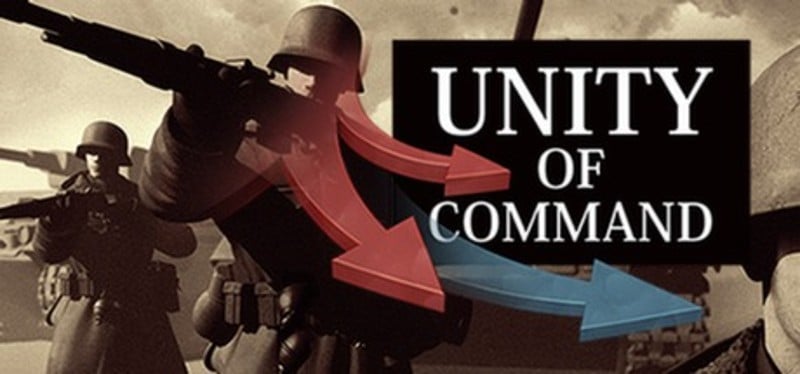
Unity of Command Game Cover
79%Game Brain Score
gameplay, story
grinding, monetization
78% User Score Based on 548 reviews
Critic Score 86%Based on 1 reviews

Platforms

LinuxPCMac OSWindows
Unity of Command Game Cover

About

Unity of Command is a single player and multiplayer strategy game with warfare and historical themes. It was developed by 2x2 Games and was released on October 17, 2012. It received positive reviews from critics and mostly positive reviews from players.

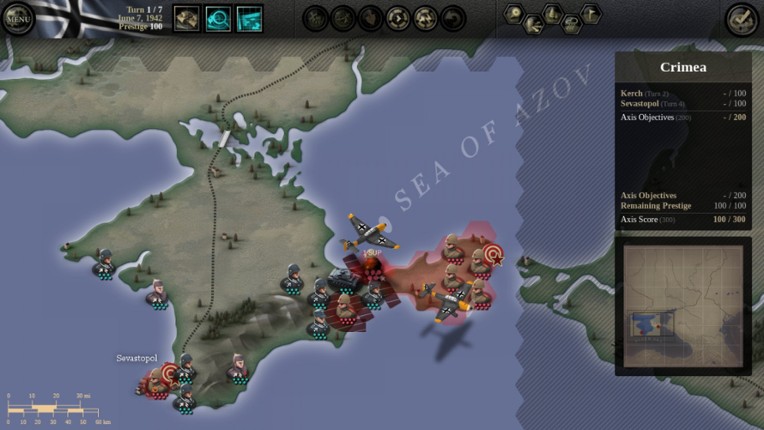
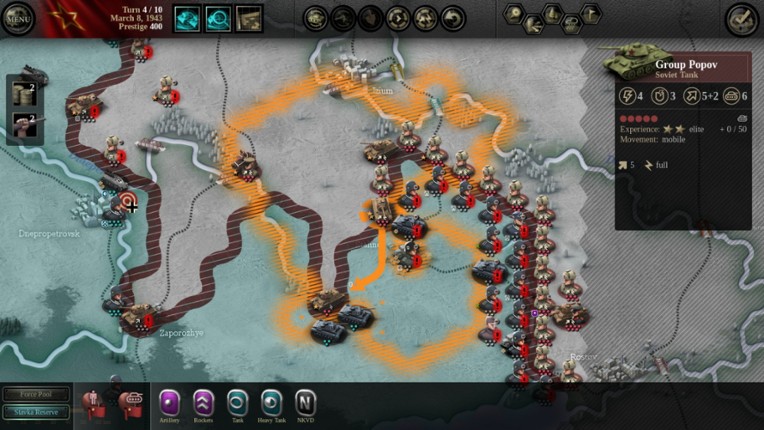
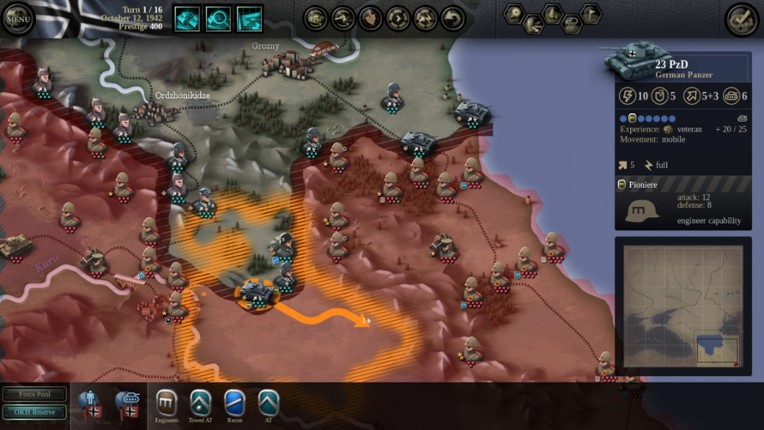
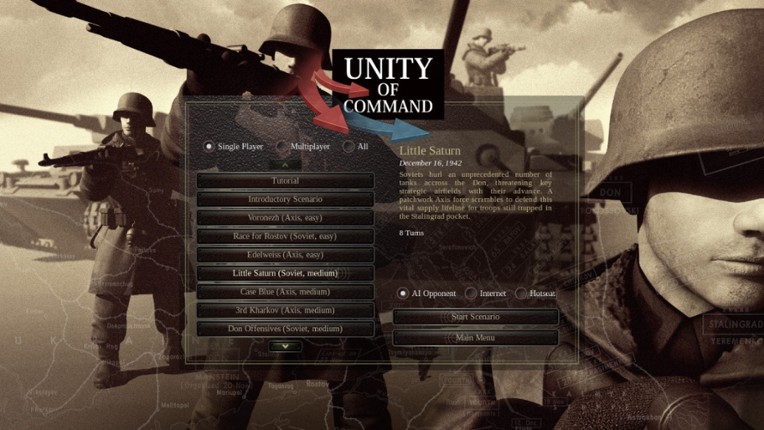
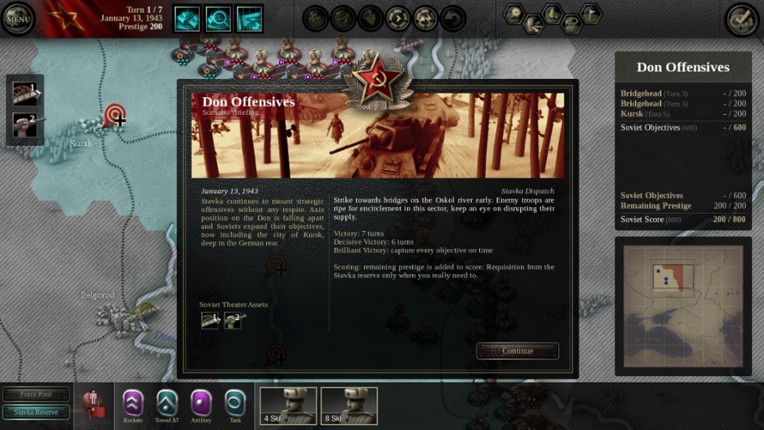
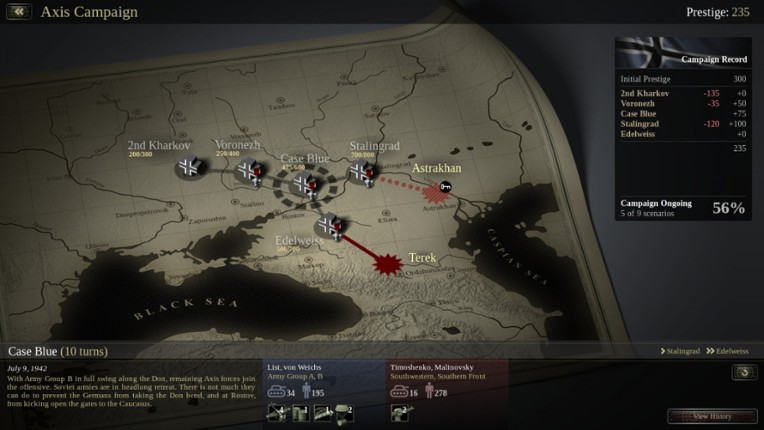
Unity of Command is a turn-based strategy wargame set on the Eastern Front during the Stalingrad Campaign in World War II. Players can command either Axis or Soviet forces in operational-level battles, focusing on maneuver, logistics, and weather conditions. The game aims to recreate the strategic challenges and tension of this critical period in the war.

Skip User Reviews

78%
Audience ScoreBased on 548 reviews
gameplay27 positive mentions
grinding7 negative mentions

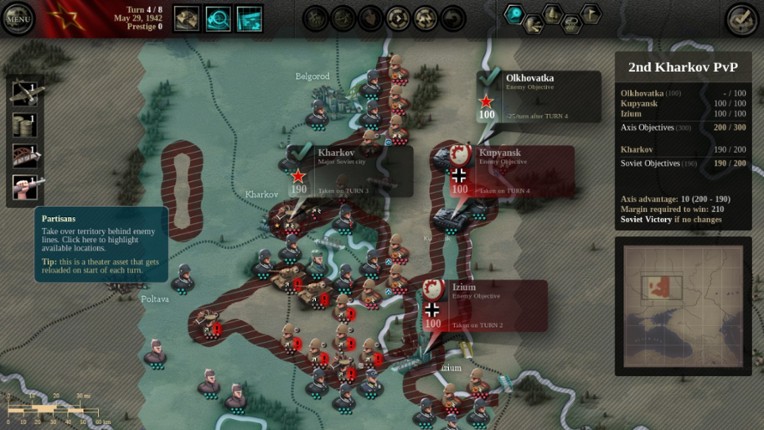
  • Unity of Command offers a challenging and engaging strategy experience that emphasizes supply line management and tactical maneuvering.
  • The game features a clean and intuitive user interface, making it accessible for both newcomers and seasoned strategy gamers.
  • The AI is clever and punishes mistakes, providing a satisfying challenge that encourages players to think strategically.
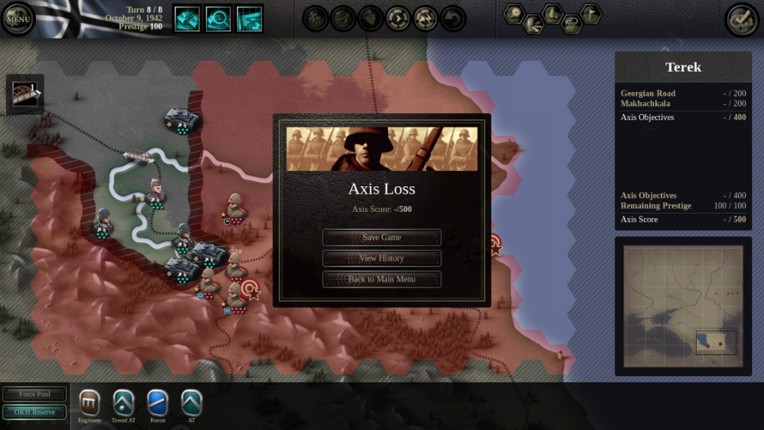
  • The game can be frustratingly difficult, with strict turn limits that may require multiple retries to achieve desired victory conditions.
  • There is a lack of variety in scenarios and missions, leading to a repetitive gameplay experience.
  • The absence of a save feature during campaigns means players must restart entire campaigns if they fail a single mission.
  • gameplay
    102 mentions Positive Neutral Negative

    The gameplay of "Unity of Command" is characterized by its simple yet deep mechanics, particularly the innovative supply system that adds strategic depth to the turn-based wargame format. While many players appreciate the accessibility and historical accuracy, some criticize the lack of flexibility in level design and the reliance on randomness, which can lead to frustrating experiences. Overall, the game offers a blend of straightforward mechanics and tactical challenges, appealing to both newcomers and veteran strategy gamers.

    • “Although the graphics are basic, the gameplay is fun and challenging.”
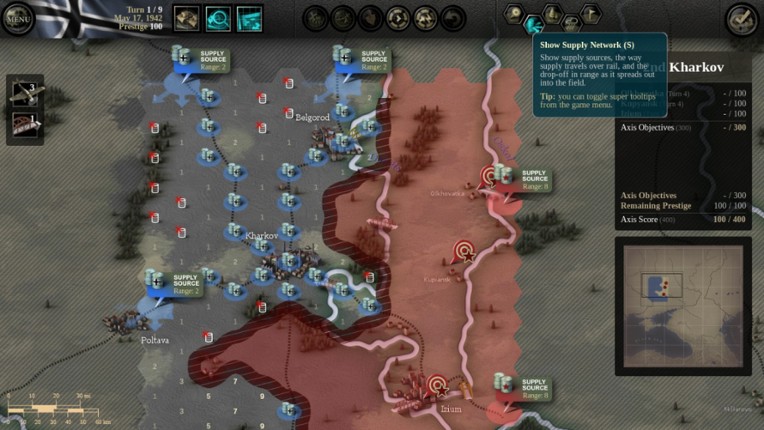
    • “The brilliantly conceived supply mechanic is the fulcrum around which the entire game pivots; every map has a set of supply sources, with an associated 'supply' range.”
    • “Unity of Command is a fantastic turn-based wargame that features a simple interface with a deep gameplay system underneath.”
    • “The problem with this game is the gameplay that is absolutely atrocious and unrealistic.”
    • “However, the accessibility comes at a cost, where other games would introduce new mechanics and units in order to increase difficulty; this game cynically just reduces the number of moves you have to complete the mission and/or just adds huge amounts of enemy units to beat, as well as adding in highly variable RNG elements.”
    • “There are specific moves that you have to make in order to have any effectiveness, which really dumbs down the gameplay to the point where you just have to look up or remember what those moves are for each mission.”
  • story
    79 mentions Positive Neutral Negative

    The game's story is primarily conveyed through a series of challenging missions that often feel more like puzzles than strategic gameplay, as players must complete objectives within strict time limits and face harsh penalties for failure. Many reviewers express frustration with the lack of flexibility in mission design, where success often hinges on specific tactics and a degree of luck, leading to repetitive attempts to achieve the required victory conditions. While the campaign offers a variety of scenarios and historical context, the overwhelming difficulty and reliance on predetermined strategies detract from the overall enjoyment of the narrative experience.

    • “Apparently, full attention had been paid to the smaller details as well: helpful popups provide bits of useful information, mission briefings depict the historical situation in a compact yet accurate manner, etc. Together with both DLCs, you'll get a chance to try your luck in all major operations on the Eastern Front between 1941-45.”
    • “Each mission feels different in how it's laid out, with some being considerably more challenging with how many units you're given or what your objectives are.”
    • “Replaying missions allows you to try pushing through at different points which may lead to breaking through and encircling enemy forces and cutting them off from supplies, or could lead to you trying to charge forward with armor and mobile infantry to reach further into enemy territory.”
    • “The campaign is kind of annoying; to fully complete it, you must beat missions quickly. Otherwise, some missions won't show up, which limits your strategic options and makes the game feel more like a puzzle rather than a strategy game.”
    • “Without one, each mission is a quick one-off puzzle without much replayability.”
    • “Unfortunately, its good ideas in UI and mechanics are wasted by level design that disallows flexibility. You get the given forces each mission, you do not build your own force; turn limits are harsh; your rate of advance is heavily affected by randomness, undermining its potential as a puzzle game.”
  • graphics
    49 mentions Positive Neutral Negative

    The graphics of the game are generally described as simplistic yet appealing, with many players appreciating the minimalist design that enhances gameplay without overwhelming complexity. While some reviews note that the visuals may appear dated or basic, others highlight their clarity and effectiveness in conveying the game's mechanics. Overall, the graphics are considered a strong aspect of the game, contributing positively to the overall experience despite some criticisms regarding their simplicity.

    • “The simple graphics hide a complex masterpiece underneath.”
    • “Beautiful art and graphics, quick and fun gameplay that is deceptively complex.”
    • “The general presentation of the game is astounding – all the menus, unit icons, map graphics are lovely and up to a very high standard.”
    • “The graphics, sound, and gameplay are circa 1990's and not in a good way.”
    • “I can't say much about the gameplay, because the tiny graphics (which can't be adjusted in scale or zoomed) make the game unplayable.”
    • “Music is ok, sound is not offensive, graphics are basic.”
  • replayability
    19 mentions Positive Neutral Negative

    Replayability in the game varies significantly among users, with some praising its depth and strategic elements that encourage multiple playthroughs, while others criticize it for being overly simplistic or puzzle-like, leading to diminished replay value. Features such as different challenge levels, side objectives, and online functions can enhance replayability, but many players feel that once the core scenarios are mastered, the incentive to replay diminishes. Overall, the game's replayability is seen as a mixed bag, heavily dependent on individual play styles and preferences.

    • “Cut off the enemy's supply lines while at the same time protecting your own is an important strategy in this game, and it is very well executed and has good replayability.”
    • “There are different levels of challenges for each campaign which add a lot of replayability.”
    • “Unity of Command has great replay value - there is just the right mix of randomness in rolls to make it interesting while maintaining substantial reward for good strategy.”
    • “This game has zero replayability.”
    • “It's much more a puzzle rather than a military game, with scenarios that simply need to be 'solved' - once you've done that (and it's fairly easy) there's little or no replayability.”
    • “Once you wish to move into more realism (or if that's what you were looking for in the first place), this has limited replayability.”
  • music
    17 mentions Positive Neutral Negative

    The music in the game receives mixed reviews, with some players praising its ability to enhance the atmosphere and complement the gameplay, despite its limited variety. While a few find the soundtrack repetitive or generic, many appreciate its quality and the emotional weight it brings to the game's setting. Overall, the music is seen as a solid addition, even if players often opt to play their own tracks.

    • “Love the sound design and even though the music is just three tracks, I find them to create the atmosphere this game needs.”
    • “Music is awesome, and if that is not enough, you can easily play something from YouTube or whatever.”
    • “A solid intermediate entry into logistical and strategic wargaming, with both beautiful and clean assets and a foreboding soundtrack.”
    • “Music can get repetitive and the graphics are not the selling point of the game.”
    • “There is little variety in terms of music, but the music that is there is really nice.”
    • “If a piece of music doesn't portray the hard slog the Soviets and Germans endured on the Eastern Front, then I have no idea what does.”
  • grinding
    7 mentions Positive Neutral Negative

    Players find the grinding aspect of the game tedious and unengaging, often describing it as a frustrating tactical puzzle rather than a strategic experience. The focus on capturing objectives rather than defeating enemies leads to a repetitive and unsatisfying gameplay loop, with many feeling compelled to exploit the system to achieve success. Overall, the grinding mechanics detract from the enjoyment and immersion of the game.

    • “This game became too tedious to enjoy way too fast.”
    • “Overall pretty boring and tedious.”
    • “This game basically boils down to the hugely unrealistic strategy of luring your enemy away from their supply lines and then slowly grinding them down, which is not very satisfying.”
  • optimization
    6 mentions Positive Neutral Negative

    The game is praised for its stability and smooth performance, even on low-end hardware, making it accessible for a wide range of players. However, some users feel that the performance ranking system could be improved by incorporating additional factors, such as troop loss, alongside objective completion times.

    • “As a program, the game is very stable and runs smoothly on a potato.”
    • “Every few months, I come back to it; I try to improve my performance in the campaign or on the tougher maps.”
    • “I enjoy it very much and it seems to run smoothly.”
    • “If I had to criticize gameplay, I would say it's mainly this: your performance is solely ranked based on how timely you take objectives and nothing else.”
    • “Troop loss should have been included in your performance rating.”
  • monetization
    3 mentions Positive Neutral Negative

    The monetization system is perceived as largely harmless, with users suggesting that it was intended to be a microtransactions model but does not negatively impact the overall experience.

    • “I feel that the microtransaction system is actually harmless.”
    • “The monetization model is fair and doesn't pressure players to spend money.”
    • “I appreciate that the game offers plenty of free content without forcing purchases.”
    • “The monetization system feels overly aggressive and detracts from the overall experience.”
    • “I find the constant push for in-game purchases frustrating and it ruins the immersion.”
    • “The game is designed around making money rather than providing a fun experience for players.”
  • stability
    2 mentions Positive Neutral Negative

    Users report significant stability issues, citing frequent bugs and persistent problems even after standard troubleshooting measures, such as verifying game files and checking for software conflicts.

    • “Unfortunately, this option is very buggy.”
    • “Yes, I've gone through all the standard troubleshooting, looking for conflicting software, verifying the game files and cache, etc. It just does not work now.”
  • atmosphere
    2 mentions Positive Neutral Negative

    The atmosphere of the game is described as addictive, creating an engaging environment for players. However, some users criticize the music as generic and lacking in atmospheric quality, detracting from the overall experience.

    • “Addictive and atmospheric.”
Skip Critic Reviews
Skip Game Offers

Buy Unity of Command

Skip Videos

Videos

Skip Games Like Unity of Command

Games Like Unity of Command

Unity of Command 2 Image
Panzer Corps Image
Order of Battle: World War II Image
Battle Academy 2: Eastern Front Image
Graviteam Tactics: Mius-Front Image
Skip FAQs

Frequently Asked Questions

Unity of Command is a strategy game with warfare and historical themes.

Unity of Command is available on PC, Mac OS, Windows and Linux.

Unity of Command was released on October 17, 2012.

Unity of Command was developed by 2x2 Games.

Unity of Command has received positive reviews from players and positive reviews from critics. Most players liked this game for its gameplay but disliked it for its grinding.

Unity of Command is a single player game with multiplayer support.

Similar games include Unity of Command 2, Panzer Corps, Order of Battle: World War II, Battle Academy 2: Eastern Front, Graviteam Tactics: Mius-Front and others.