Unity of Command 2

Wargames don't see a lot of innovation, but Unity of Command 2 builds new things out of familiar parts.
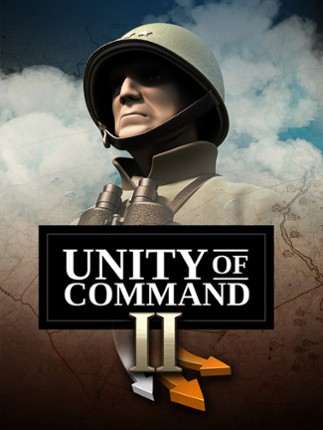
Unity of Command 2 Game Cover
82%Game Brain Score
gameplay, story
grinding, optimization
80% User Score Based on 1,204 reviews
Critic Score 91%Based on 1 reviews

Platforms

LinuxPCMac OSSteam DeckWindows
Unity of Command 2 Game Cover

About

Unity of Command 2 is a single player and multiplayer turn-based strategy game with a warfare theme. It was developed by 2x2 Games and was released on November 11, 2019. It received very positive reviews from critics and positive reviews from players.

Unity of Command II is the sequel to one of the most critically acclaimed strategy games of all time; a game critics called 'the perfect gateway' into computer war games.
Skip User Reviews

80%
Audience ScoreBased on 1,204 reviews
gameplay60 positive mentions
grinding13 negative mentions

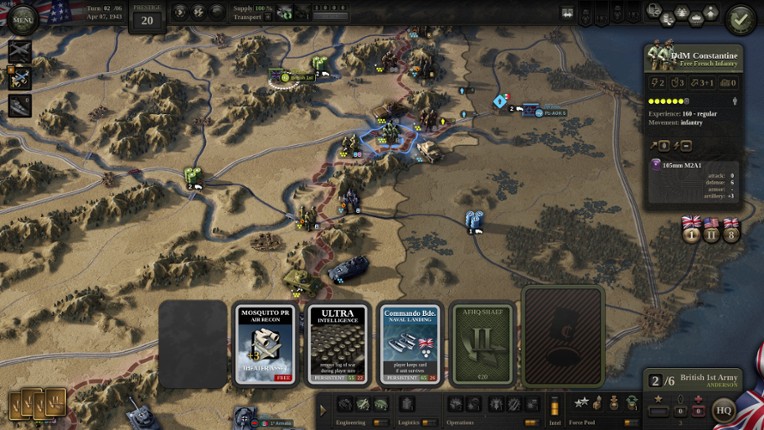
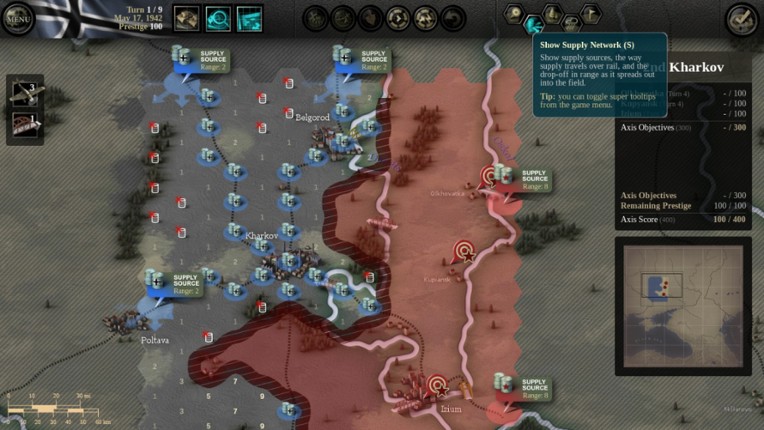
  • Innovative and well-implemented logistics and supply system that affects gameplay significantly and realistically.
  • Strategic, tactical, and operational depth with challenging scenarios that encourage careful planning and adaptability.
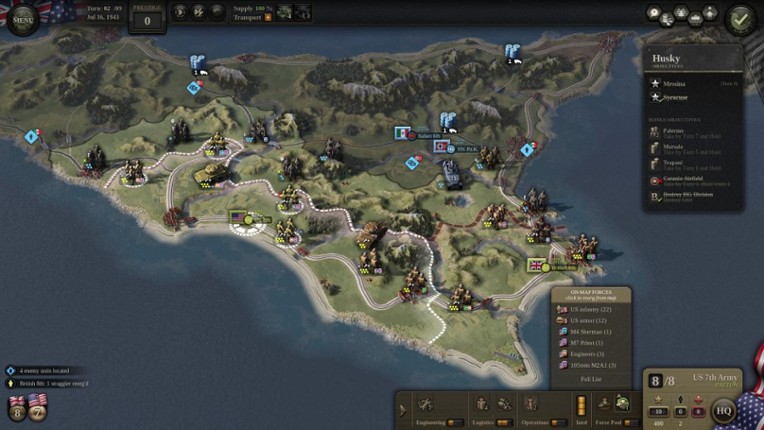
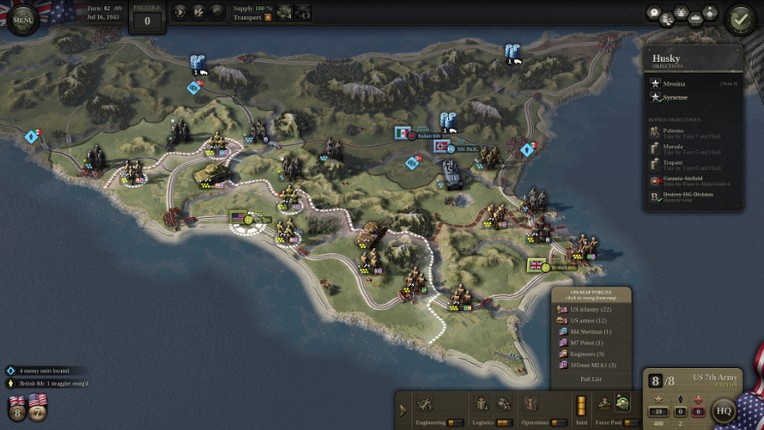
  • Visually appealing and clean user interface with engaging historical campaigns and extensive replayability.
  • Steep learning curve with incomplete tutorials and manual requiring external resources for full understanding.
  • Strict turn limits for objectives and puzzle-like scenarios with limited freedom and a sometimes frustrating save system.
  • Randomness and AI behaviors that can feel unfair or unpredictable, occasionally hindering player progression.
  • gameplay
    282 mentions Positive Neutral Negative

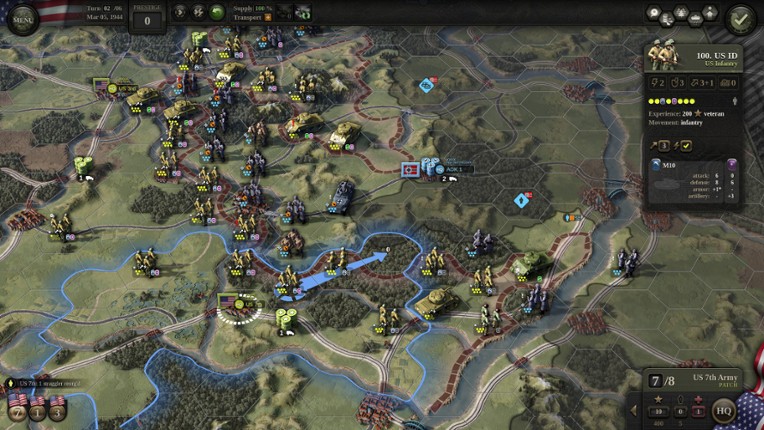
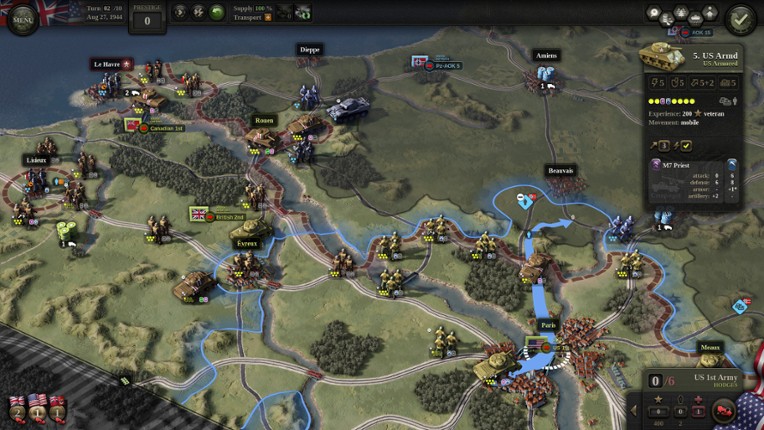
    The gameplay of Unity of Command II is a deep and engaging turn-based strategy experience that emphasizes logistics, supply lines, and headquarters mechanics, adding meaningful strategic layers beyond typical hex-based wargames. While the core mechanics are generally well-designed and intuitive once learned, many players find the initial learning curve steep due to insufficient tutorials and complex, sometimes obscure systems that require consulting manuals or external guides. The game strikes a balance between accessibility and depth, rewarding careful planning and tactical finesse, though it can feel somewhat puzzle-like and limiting to those expecting more freedom or simpler mechanics.

    • “Unity of Command II is a deep, engaging, and brilliantly executed turn-based strategy game that builds on the strengths of its predecessor while introducing a host of new mechanics and systems that elevate the entire experience.”
    • “The core gameplay loop revolves around commanding corps and divisions across a series of historical and hypothetical scenarios, managing not only combat but also logistics, supply lines, reinforcements, and fog of war.”
    • “All the new mechanics are worked beautifully into the game, with everything from the HQ abilities to the new supply system giving you a more diverse toolset while rewarding planning ahead.”
    • “The game has a strong concept and is well implemented overall, but some mechanics, especially the unit logistics system and limited map interaction, are overly complex and can feel prohibitive for regular players.”
    • “While I managed to get through the basic tutorials and started my first campaign, this game isn't grabbing me; the mechanics around suppression and supply aren't presented in a clear manner and I have found the game to be overall unapproachable.”
    • “The gameplay at first is deceptively simple to grasp, but there is definitely some meat on these bones. The game is hard to understand at first - a lot of subtle mechanics are not covered in the tutorial, you have to read the full rules, then re-read parts of them time and again to understand fine details of movement costs or combat shifts.”
  • story
    176 mentions Positive Neutral Negative

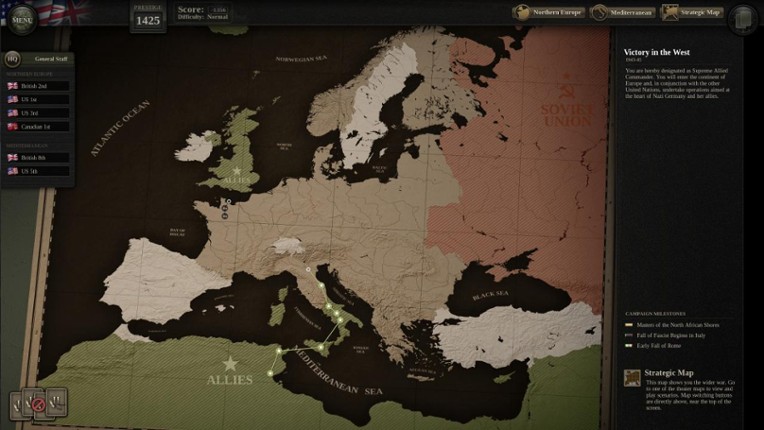
    The story aspect of the game is largely conveyed through its structured, historically themed campaign of around 20-31 missions, though many players find the narrative presentation minimal and reliant on text rather than immersive cutscenes. Reviews highlight that the campaign feels more like a series of challenging, puzzle-like scenarios with tight turn limits and limited strategic freedom, often leading to frustration due to strict mission constraints, opaque mechanics, and a steep learning curve. While some appreciate the authentic WWII operational feel and persistent unit progression, many criticize the lack of dynamic storytelling, poor tutorial clarity, and repetitive mission objectives, which can hinder player engagement with the story.

    • “The campaign consists of 31 missions which you can play in a campaign mode and also individually if you wish to do so.”
    • “Units gain experience as they progress from mission to mission, as do command units, which unlock new abilities such as bridge building and river crossings.”
    • “Each mission in the campaign has clear objectives and bonus objectives with different rewards, like HQ command operation point bonuses and prestige point bonuses to buy steps or specialists for units.”
    • “There is no room for improvising, for trying something different, for making mistakes and learning from them without restarting the mission.”
    • “In order to succeed a mission, even including the so-called training missions, you have to play again and again to work out the one and only game plan for success!”
    • “The tutorial teaches you perhaps 1/10th of what you need to know and then you will win the first few missions before losing and not understanding the core reasons why.”
  • graphics
    134 mentions Positive Neutral Negative

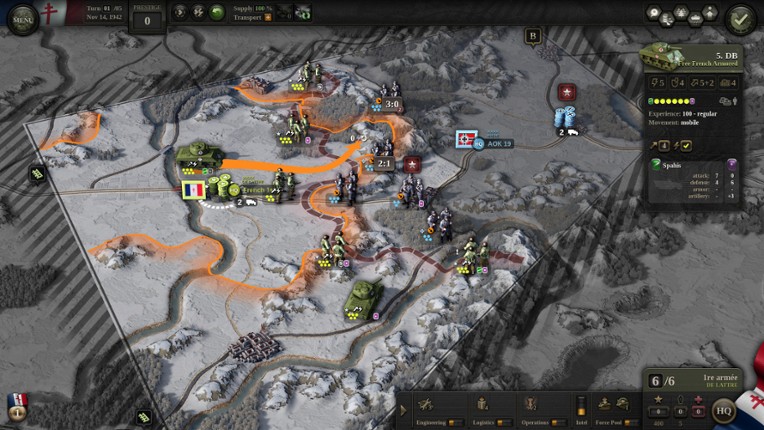
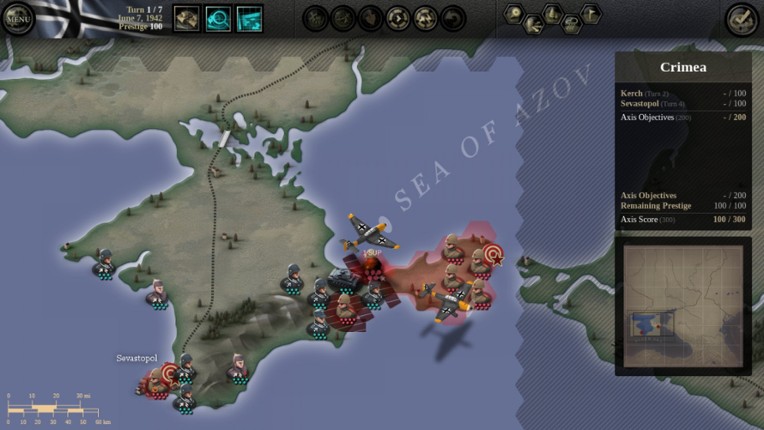
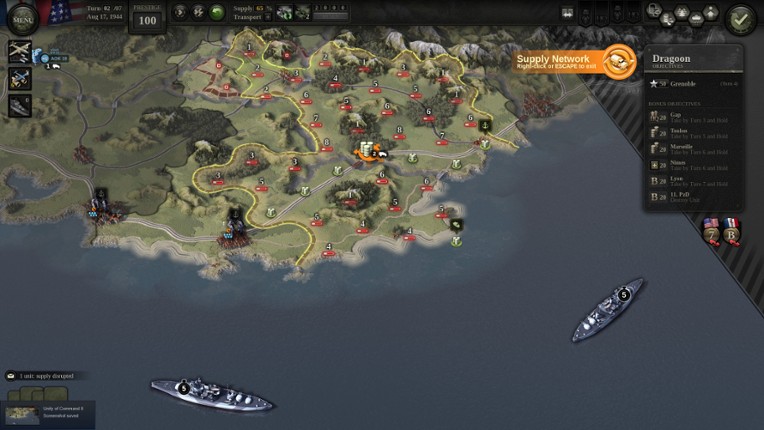
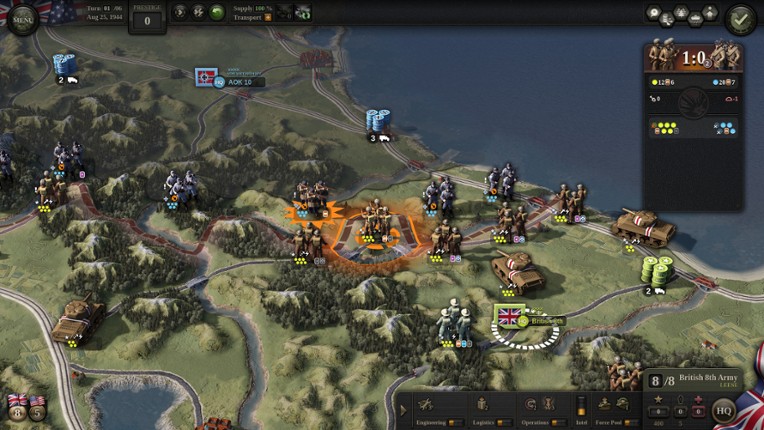
    The graphics are generally praised for their clean, aesthetically pleasing, and functional art style, often described as slightly cartoony but effective in conveying tactical information and enhancing immersion. While some find the visuals simple or dated compared to modern standards, many appreciate the balance between visual clarity and historical atmosphere, noting improvements over earlier versions. Minor criticisms include occasional clutter, UI issues, and limited customization, but overall the graphics are seen as a strong asset that complements the gameplay well.

    • “Combine this with the most beautiful graphics in a wargame, you have the recipe of the best wargame in the market.”
    • “I wasn't very impressed with the first Unity of Command, but this one is just so much better, largely because the visuals changed from bland, anonymous hexes and symbolic portraits to realistic maps and models, and the difference this makes to immersion is gigantic.”
    • “The graphics and aesthetics are very nice for a wargame, and the UI is highly functional and informative.”
    • “The UI and graphics are also quite bad.”
    • “Has a ton of different theatres including the Pacific, but poor graphics and UI.”
    • “The graphics, though admittedly pretty, make the maps really hard to read clearly.”
  • replayability
    41 mentions Positive Neutral Negative

    Replayability opinions vary significantly, with many praising the game for its extensive content, branching campaign paths, mechanic-driven variety, and engaging strategic depth that encourage multiple playthroughs. However, some users note frustrating limitations, a linear or repetitive campaign, and lack of incentive to continue beyond initial hours, which diminish replay value. Overall, the game is generally regarded as highly replayable, especially with DLCs, alternate scenarios, and difficulty settings that keep the experience fresh.

    • “This performance-based progression adds a great deal of replayability and keeps players engaged in perfecting their strategy, not just surviving the scenario.”
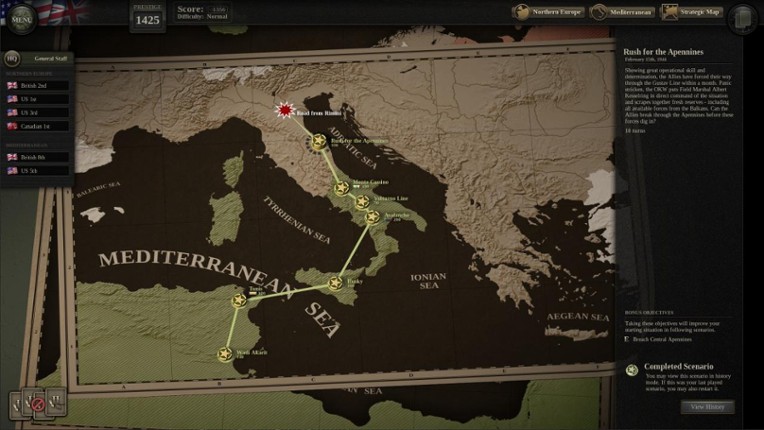
    • “The game also features alternate routes through the campaign if you do very well with bonus objectives, allowing you to experience some planned WWII operations that were never deployed as well as some fully ahistorical scenarios, adding replay value beyond the various difficulty levels.”
    • “It also seems to me that the game has a high replay value: you can try different strategies in a scenario, and the campaign itself is not totally linear with a choice for high-level approaches depending on previous scenarios' outcomes.”
    • “Frustrating lack of options, hard limitations, zero replayability, and laughable amount of content (not counting paid DLCs) brings it to the level of a mobile game and not a great one.”
    • “As such, there is almost zero replayability or, in my case, any incentive to keep playing past the few hours I've invested in it.”
    • “Okay if you are into that sort of thing, but disappointing if you actually wanted something with some strategy, depth, or replay value.”
  • music
    30 mentions Positive Neutral Negative

    The music in the game is generally praised for its quality, atmosphere, and fitting historical tone, with several users describing it as strong, immersive, and better than contemporaries in the genre. While some find the soundtrack limited or occasionally too dramatic, most appreciate its contribution to the overall experience, though a few desire more variety and smoother integration. Overall, the soundtrack is considered a notable positive aspect that enhances the game's ambiance.

    • “I should mention the sound design as well - the soundtrack by Bruno Brabić is one of the best in the genre and leagues ahead of contemporaries like Panzer Corps 2 and Steel Division 2.”
    • “For me the game just looks good, music and sound effects are great (though more songs would be great, but what is there is quality stuff), I like the era, historic feeling of the game and scenarios, feeling of the game, decision space is interesting, scenarios are interesting and I just get the right kind of feeling commanding units to victory in the west.”
    • “This strategic wargame truly looks, plays and feels amazing in every way, and the musical soundtrack (not forgetting overall sounds) are of top notch quality too (although at times they can be pretty loud especially when using headphones)!”
    • “Overly complex, slow loading, useless sound effects, music that must have been added just to add the no music option.”
    • “The sound and music are generally inferior to the first game.”
    • “The graphics are great and the simulations are cool, but I wish there were more battle/background music.”
  • grinding
    14 mentions Positive Neutral Negative

    Grinding in the game is widely described as tedious and overly complex, with unclear rules and poor UI making supply management and repetitive scenario retries frustrating. The AI's illogical behavior and trial-and-error puzzle-like gameplay contribute to a sense of drudgery rather than strategic depth, leading to a grind that can feel more like punishment than engaging challenge.

    • “You will coast through some scenarios, then you'll get to one that you'll have to replay repeatedly until you can win it (assuming you can) -- it just gets tedious at that point, as you cannot progress in the campaign until you win.”
    • “This game has nothing to do with real tactics or strategy; each scenario is a puzzle that you must solve through tedious trial and error, and the AI is designed to stop you from reaching the objectives in time, not actually fight a war with a view to preserving their strength or salvaging their defensive positions.”
    • “Bad and bloated rules for no reason, terrible explanations and unclear information, poor usability, and tedious systems that contribute nothing.”
  • optimization
    8 mentions Positive Neutral Negative

    Optimization is mixed, with some users noting improved CPU turn speed but others experiencing high GPU usage, poor shadow and shader optimization, occasional crashes, and save file corruption. Overall, performance can be inconsistent, impacting the gameplay experience despite engaging campaign design.

    • “The campaign is structured around key World War II operations, with branching paths based on your performance.”
    • “This performance-based progression adds a great deal of replayability and keeps players engaged in perfecting their strategy, not just surviving the scenario.”
    • “I think the performance has increased a bit; the CPU takes its turns very fast.”
    • “Uses tons of GPU, shadows and shaders poorly optimized.”
    • “Then I also had some mediocre performance, a few crashes but the worst was when my save file corrupted at the very end of the invasion of Italy.”
    • “I think the performance has increased a bit, the CPU takes its turns very fast.”
  • atmosphere
    6 mentions Positive Neutral Negative

    The game's atmosphere is notably enhanced by its strong, evocative music and sound effects, which effectively immerse players despite the simplicity. While the visuals are clear and functional, some users desire more dynamic environmental effects like weather to further enrich the setting. Overall, the soundtrack and audio contribute significantly to a compelling and immersive experience.

    • “Even the music, though simple, is strong and atmospheric.”
    • “I usually turn music off in wargames but the atmospheric soundtrack of UofC is an exception too.”
    • “Great music and atmosphere, it really takes you back in time.”
  • stability
    5 mentions Positive Neutral Negative

    The game demonstrates strong stability with no crashes or major glitches reported after extensive playtime. While some users note minor polish issues like incomplete tutorials or manual development, overall the game runs smoothly and is considered bug-free and reliable.

    • “No crashes to desktop, no glitches; you are not the beta tester. The game actually works upon release.”
    • “While it lacks some polish—the manual is still in development and tutorials omit important elements—the game is complete, apparently bug-free, and a pleasure to play.”
    • “No glitches or other issues observed in almost 30 hours of play.”
    • “I also think it is a little buggy because the odds are displayed before you attempt to attack a target, but sometimes you just get destroyed.”
  • emotional
    4 mentions Positive Neutral Negative

    The emotional experience is mixed: while some found tutorials lacking warmth, many appreciated the added RPG elements and experienced units, which fostered a stronger attachment and immersion during gameplay.

    • “Cutting enemy supply lines made me feel like Rommel.”
    • “Experienced units and RPG elements made me feel more attached to how my units are performing; this is a big improvement over the original UOC.”
  • monetization
    2 mentions Positive Neutral Negative

    The game’s monetization includes a workaround that users appreciate, though it could be better advertised. Overall, the monetization is straightforward, matching the game's simple tactical battle simulator style.

  • humor
    2 mentions Positive Neutral Negative

    The humor in the game is mixed, with some tactics like the Germans destroying every bridge seen as unfunny, while the playful presentation of "toy soldiers" and engaging explanations add a lighthearted and enjoyable tone.

Skip Critic Reviews
Skip Game Offers

Buy Unity of Command 2

35h Median play time
146h Average play time
3-400h Spent by most gamers
*Based on 3 analyzed playthroughs
Skip Videos

Videos

Skip Games Like Unity of Command 2
Skip FAQs

Frequently Asked Questions

Unity of Command 2 is a turn-based strategy game with warfare theme.

Unity of Command 2 is available on PC, Mac OS, Steam Deck, Windows and others.

On average players spend around 146 hours playing Unity of Command 2.

Unity of Command 2 was released on November 11, 2019.

Unity of Command 2 was developed by 2x2 Games.

Unity of Command 2 has received very positive reviews from players and very positive reviews from critics. Most players liked this game for its gameplay but disliked it for its grinding.

Unity of Command 2 is a single player game with multiplayer and local co-op support.

Similar games include Unity of Command, Order of Battle: World War II, Panzer Corps, Strategic Mind: Blitzkrieg, Strategic Command WWII: World at War and others.