Slitterhead

Slitterhead is a bold and inventive addition to the action-horror genre, but it offers a flawed journey in its strange universe.
Slitterhead Game Cover
81%Game Brain Score
story, gameplay
optimization, grinding
87% User Score Based on 647 reviews
Critic Score 68%Based on 4 reviews

Platforms

Xbox Series X|SPCPlaystation 5Playstation 4XboxSteam DeckWindowsPlayStation
Slitterhead Game Cover

About

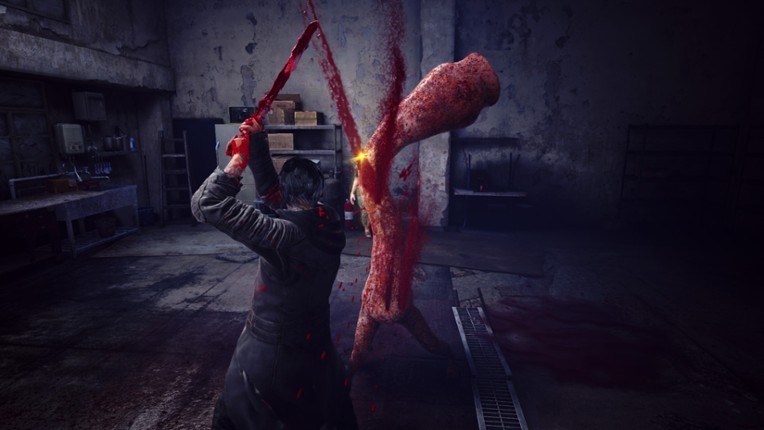
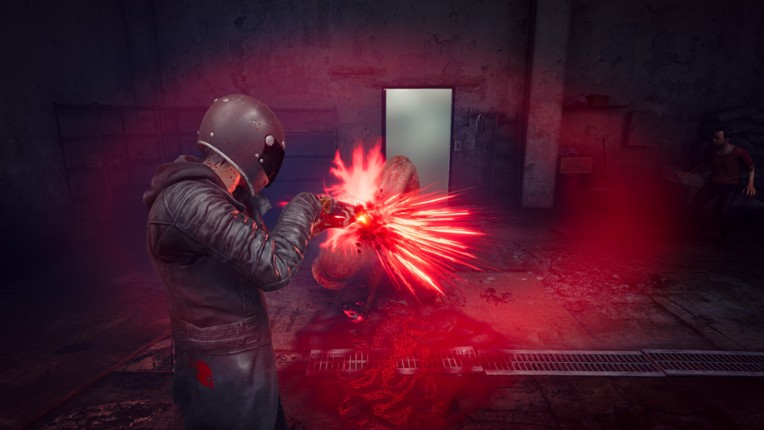
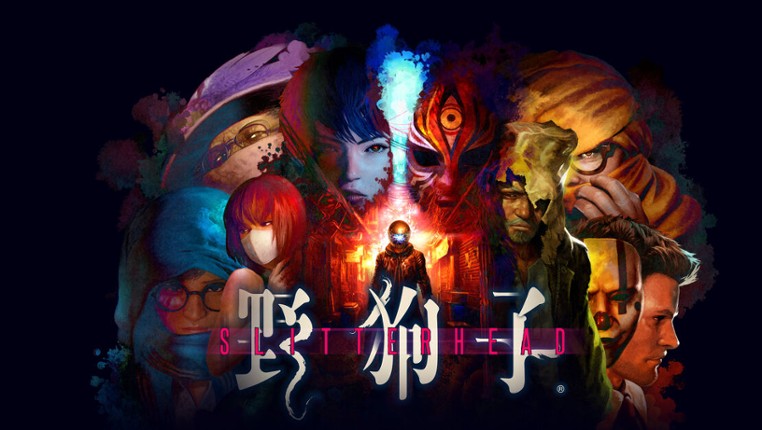
Slitterhead is a single player survival action adventure game with horror, mystery and violence themes. It was developed by Bokeh Game Studio lnc. and was released on June 26, 2024. It received mostly positive reviews from critics and positive reviews from players.

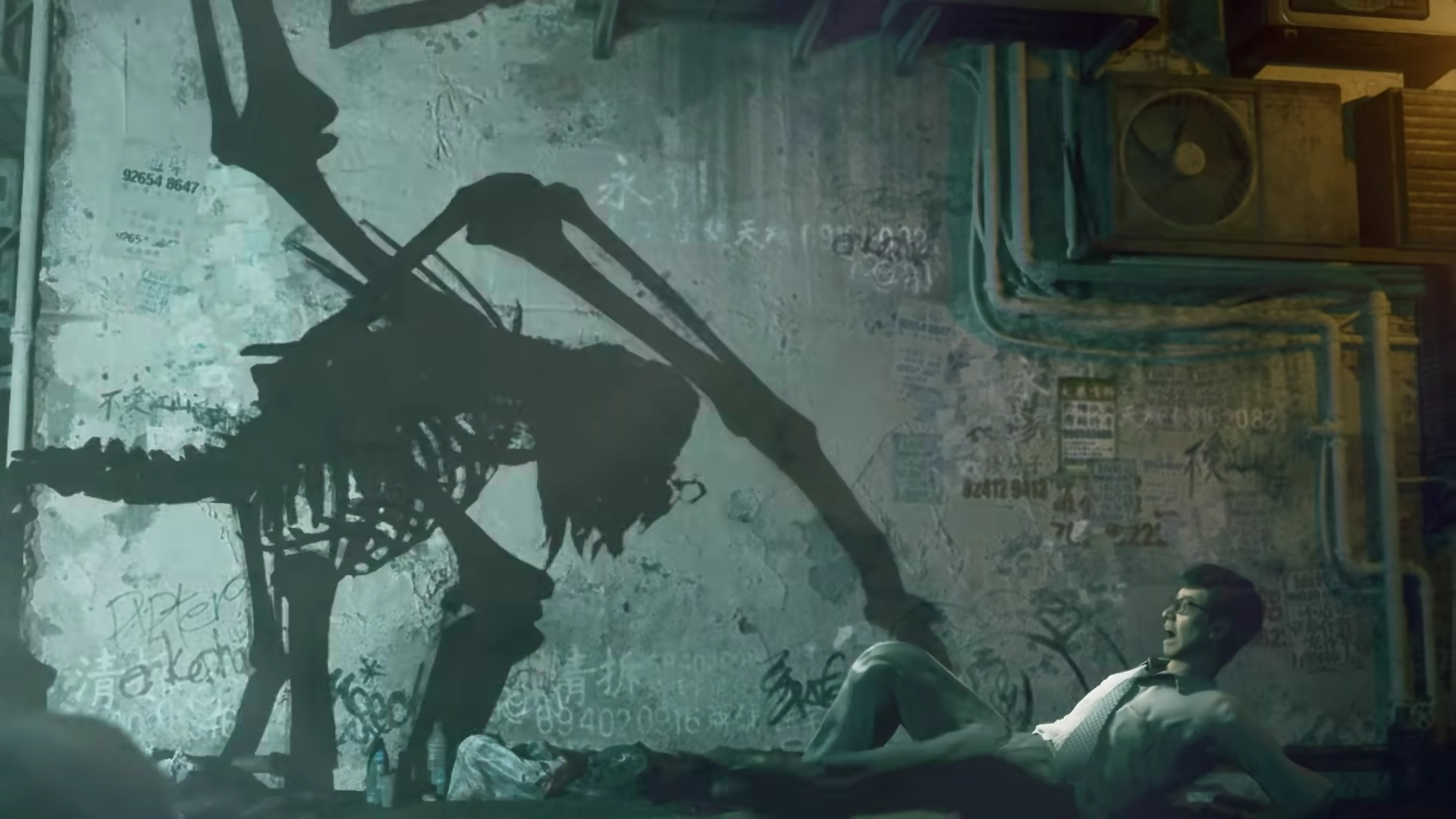
Set in the densely cluttered streets of Kowlong, filled with obscurity and chaos, this battle action-adventure game casts players as the Hyoki, an entity devoid of memory and physical form. His only motive is to eradicate the monstrous beings known as Slitterheads crawling around the city, disguising themselves as humans. Roaming the vibrant neon-lit cityscape, players must seek out allies among h…
Skip User Reviews

87%
Audience ScoreBased on 647 reviews
story140 positive mentions
optimization4 negative mentions

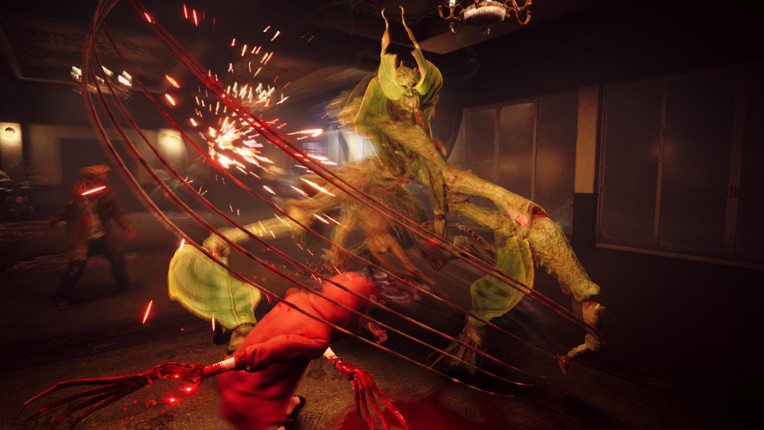
  • Unique and innovative possession-based combat system with enjoyable body-switching mechanics.
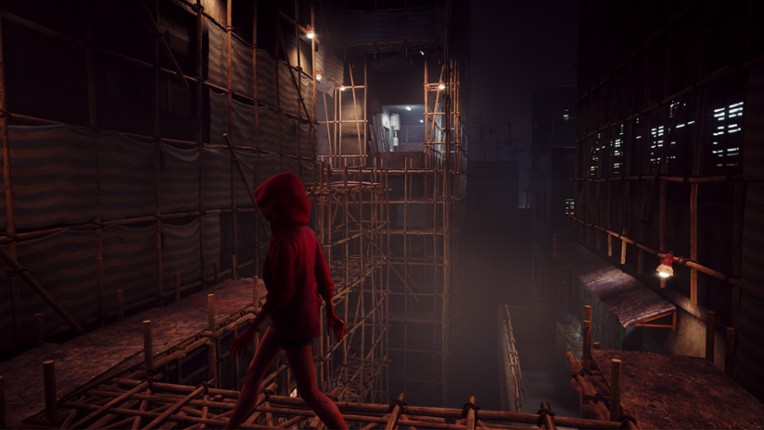
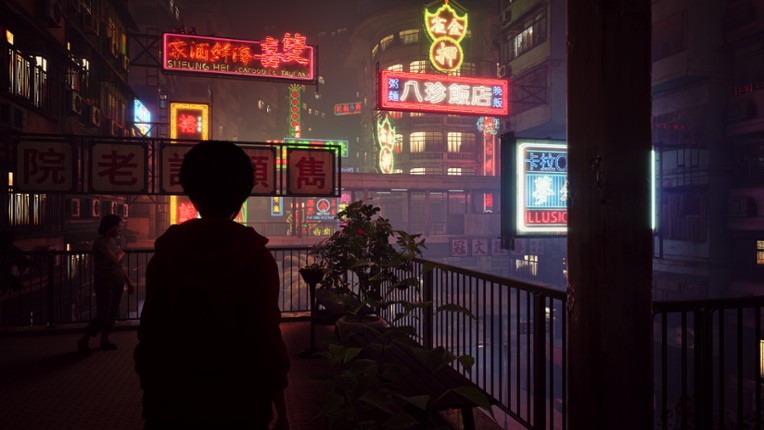
  • Strong atmosphere, setting, and art direction inspired by Hong Kong's Kowloon with impressive monster designs and a captivating soundtrack by Akira Yamaoka.
  • Engaging and intriguing story with memorable characters, narrative twists, and a mix of action and horror elements.
  • Repetitive mission design with frequent reuse of levels and enemy types leading to monotony.
  • Clunky controls and combat that can become frustrating especially in multi-enemy encounters with inconsistent parry mechanics.
  • Lack of full voice acting with most dialogues consisting of grunts or mumbling, and some unpolished visual and technical aspects due to budget constraints.
  • story
    565 mentions Positive Neutral Negative

    The story of Slitterhead is a complex, dark, and atmospheric narrative centered around body possession, time loops, and a city infested by monsters called slitterheads. While praised for its intriguing premise, unique character interactions, and thematic depth, it is often criticized for convoluted plot twists, underdeveloped characters, repetitive mission structure, and an unresolved, sometimes frustrating ending that requires repeated playthroughs to fully comprehend. Despite these flaws, many players find the story compelling enough to drive their engagement alongside the game's distinctive gameplay and mood.

    • “This is a really special action-horror game with a clear vision, amazing atmosphere, and engaging time-travel storyline.”
    • “The story is captivating and reminds me of Murdered: Soul Suspect.”
    • “The story, the combat, the music - I went from tolerating to loving.”
    • “A lot of story elements are left unexplained or under-explored, and the ending leaves things unresolved. It feels like the story was building up to a resolution, but then that resolution never comes.”
    • “The story suffers from poor presentation; some character introductions and important plot reveals are very underbaked, making it difficult to connect with the narrative or its characters.”
    • “The time travel logic is a hot mess that takes real effort to sort out. The story resorts to deus ex machina to tie up some of the mess, resulting in a convoluted and unsatisfying narrative.”
  • gameplay
    318 mentions Positive Neutral Negative

    Slitterhead's gameplay is defined by its unique possession mechanic, allowing players to swap bodies strategically during combat, exploration, and stealth, which provides a fresh and engaging experience. However, many reviewers note that the combat, while initially fun and innovative, becomes repetitive due to limited enemy variety, recycled mission design, and occasionally clunky controls and mechanics. Despite some roughness in execution and a steep learning curve, the game's creative core gameplay loop and distinctive style offer a compelling, if sometimes uneven, action experience.

    • “Instead of giving you multiple enemy types to tackle, they give you a bunch of characters with different kits to tackle the same few enemies and with missions being tackled in teams of two, there's plenty of room to experiment and have fun with the combat mechanics.”
    • “The mechanic of being a floating spirit that goes from body to body to control them as you fight these grotesque slitterheads is such a fun idea and how it's implemented is executed to near perfection.”
    • “The possession mechanic is great, it's so much fun tricking an enemy into cornering you only to jump to a person behind them and attack.”
    • “Tl;dr: it's a good action game with some good artistic direction, but overstayed its welcome by repeatedly reusing content without introducing gameplay variety.”
    • “I echo all the other negative reviews; it's one thing for the gameplay to simply not feel responsive or satisfying, but copy-pasted enemies and bosses--and lazy, rehashed level design--don't make that any more palatable.”
    • “There's some good foundation there, that also allows for some tactical finesse with the whole possession mechanic, but then collides with the game's jank, swampy controls and the fact half the combat mechanics are locked behind something that never accounted for mouse and keyboard, meaning your best approach is to default to large AOE or lock-on ranged attacks... which work stupidly well, but also make the game a boring 'hold button for 20 seconds whilst enemy is stunlocked and health slowly drains'.”
  • music
    156 mentions Positive Neutral Negative

    The music, composed by Akira Yamaoka, is widely praised as a standout aspect of the game, delivering a captivating, eerie, and diverse soundtrack that strongly enhances the atmosphere and complements the body horror and urban setting. Reviewers note it blends ambient, industrial, and avant-garde elements, with memorable menu and combat tracks, often considered some of Yamaoka’s best and a vital part of the game's identity. While the gameplay and story receive mixed opinions, the soundtrack consistently earns acclaim for its quality, originality, and mood-setting power.

    • “Also, this is probably the closest we can get to a parasyte game and Akira Yamaoka's original soundtrack slaps (as per usual).”
    • “The music blends eerie ambient tones with intense industrial elements during combat sequences, creating a soundscape that shifts between quiet tension and chaotic confrontation.”
    • “And Akira Yamaoka still has what it takes; the game's OST is mystical, blending antagonistic elements and complementing the game so perfectly that it's like a vital extra character, impossible to separate one from the other.”
    • “The intermission screen music is literally the worst music I've ever listened to in my entire life.”
    • “Some music tracks are decent, but few and far between.”
    • “That said, I must admit the soundtrack packaged in the deluxe edition is disappointingly selective; the tracks included could have been arranged to a longer length, and more unique tracks could have been included.”
  • graphics
    129 mentions Positive Neutral Negative

    The graphics in Slitterhead receive mixed reviews, generally described as dated, ranging from PS2 to early PS3-era quality with limited polish and low budget constraints. However, the game's unique and cohesive art style, gritty urban aesthetic, and impressive creature designs are widely praised for creating a compelling atmosphere despite technical limitations. While not visually cutting-edge, the stylized visuals effectively support the game's mood and narrative, though some find the lack of voice acting and graphical options detract from immersion.

    • “Visually, the game presents a gritty urban aesthetic that mixes neon lighting with decaying infrastructure.”
    • “While the graphics were clearly made on a low budget, the game nails the art style, music, and overall vibes.”
    • “Visuals are amazing, can't help but stop and adore the neon lit streets of fictional Kowloon.”
    • “There was a lot of potential but unfortunately it's bogged down with janky combat, convoluted story, ugly graphics, boring text-based cutscenes, repetitive structure, and an overall 'cheap' feeling to everything.”
    • “Game won't launch most of the time and when it does, it freezes; then the graphics are hot garbage.”
    • “Awful weightless combat, copy-pasted bosses, boring linear levels, hideous graphics; the monster designs are alright but that's about the only positive thing I can say about this.”
  • atmosphere
    69 mentions Positive Neutral Negative

    The game excels in creating a richly immersive atmosphere inspired by 1990s Hong Kong noir, with stylish art direction, haunting music by Akira Yamaoka, and detailed environments that blend vibrant neon with decaying urban settings. Despite some technical and repetition flaws, its unsettling mood, inspired by Wong Kar-wai cinema and Lovecraftian horror, strongly captivates players and sets it apart from typical horror titles. Overall, the atmosphere is widely praised as a standout feature that deeply enhances the narrative and gameplay experience.

    • “Towering apartment blocks, dimly lit alleyways, and cramped markets create a claustrophobic setting that perfectly supports the game’s unsettling atmosphere.”
    • “Based on real-life Kowloon Walled City, the environmental design is beautiful and feels authentic to its roots, with neon signs, narrow alleyways, aged buildings, bustling streets, and traditional Chinese decorations. The mix of vibrant glitter and haunting decay creates a mesmerizing atmosphere.”
    • “Atmosphere is unreal, feels like Wong Kar-wai and Christopher Doyle teamed up yet again to give us a neon-soaked noir visual masterpiece; you can almost smell the gutters in this game.”
    • “The atmosphere had potential but what they did with it is absolute garbage.”
    • “Instead of voice lines you get walls of text that are accompanied by grunts and moans that destroy any resemblance of atmosphere.”
    • “Even though the world doesn’t feel quite live-in, as NPCs don’t talk or do anything and blatantly pop in as you approach, the mix of vibrant glitter and haunting decay creates quite a mesmerizing atmosphere.”
  • optimization
    12 mentions Positive Neutral Negative

    The game, built on Unreal Engine 5, is notably well-optimized and stable, offering solid performance even on devices like the Steam Deck. While some users experience occasional stuttering or frame drops—possibly linked to engine limitations or past DRM like Denuvo—adjusting settings generally results in smooth gameplay. Overall, optimization is impressive given the engine used, though minor hiccups persist.

    • “Under the hood it's Unreal Engine 5, and it's the most optimized game on this engine I've seen.”
    • “Denuvo was removed, performance improved drastically.”
    • “Despite its flaws, Slitterhead is remarkably stable and optimized.”
    • “I couldn't play on the highest settings because of stuttering, probably due to Unreal Engine or maybe Denuvo, but the graphics are just okay.”
    • “Sometimes I have slight stuttering, this is an Unreal Engine 5 game.”
    • “Stuttering and camera issues made the last 30% of gameplay rough.”
  • grinding
    11 mentions Positive Neutral Negative

    Grinding in the game is frequently described as tedious and repetitive, with players finding collectible hunting and stealth segments slow-paced and monotonous. Progression often requires replaying long, challenging missions multiple times, which can hinder enjoyment, especially for those less invested in the story. However, some completionists find the replayability manageable despite these drawbacks.

    • “Hunting for collectibles was unnecessarily tedious (good luck finding 3 small dots in a huge map).”
    • “Compounding the issue, you are likely getting progression blocks requiring replaying some sections to unlock new characters (more repetition), and inevitably you have to replay some missions entirely to meet a certain threshold to unlock ending (even more repetition). These missions you are about to replay are likely to be some of the longest, toughest and most tedious missions.”
    • “The gameplay loop, as noted in other reviews, can get potentially tedious due to its repetitive nature.”
  • replayability
    10 mentions Positive Neutral Negative

    Replayability in the game is mixed, with some players noting a lack of meaningful choices and a linear path that limits replays, while others appreciate unlockable cosmetics, multiple strategies for boss fights, and the ability to replay missions with different character combinations. The gameplay loop and in-game unlockables provide incentives for completionists, though replay value may feel outdated or limited for some. Overall, the game encourages replayability through varied approaches and content, despite budget constraints and linear progression.

    • “You can go about a boss-fight in various strategies, which obviously adds nice replayability to it as well.”
    • “The gameplay loop is insanely fun and the game is designed with game design concepts we rarely see anymore, like in-game unlockables that are not DLC, replaying missions to further advance the story, which allows you to try different combinations of characters you earn. This adds to replayability as well.”
    • “The game is still fun to play, encourages replayability and manages to create pretty sceneries (the nightclub looks pretty cool).”
    • “To top it all off, the game isn't particularly long either, and has virtually zero replayability, since it's a linear path with no meaningful choices.”
    • “You can replay levels to search for that one doodad hidden in some obscure corner on a roof, but that's 'replayability' that was already outdated when it was invented back in the 90's.”
    • “Not a 40 quid game, get it when it's half price like I did. PS2-style graphics but had a blast near the end. Now, no replayable gain to it, but a decent 10 to 12 hour original game.”
  • humor
    9 mentions Positive Neutral Negative

    The humor in the game is quirky and morbidly funny, blending bizarre and sleazy elements that some players really enjoy. While certain vocalizations and character animations add comedic moments, the lack of consistent dubbing sometimes undermines the narrative's impact. Overall, the humor is an integral, if sometimes uneven, part of the game's unique charm.

    • “There is a throughline in the history of games on which Slitterhead lurks that is punctuated at one point 20 years ago by Katamari Damacy, and I mean this without a trace of irony and more than a dash of good humor.”
    • “It's sleazy, it's gross, it's bizarre, it's morbidly funny and I loved every second of it, warts and all.”
    • “The ability to hop between hosts during battle and gaining new powerful allies in the form of a grocery store worker or an old grandma are interesting and funny ideas.”
  • stability
    8 mentions Positive Neutral Negative

    Stability reports are mixed, with some users experiencing frequent crashes, freezes, and graphical glitches, while others praise the game for smooth performance, zero bugs, and no crashes. It appears stability may vary depending on platform or system configuration.

    • “Runs great on Ally.”
    • “The game runs great on Linux, for those who care.”
    • “Plus, it runs great to boot.”
    • “The story and concept seemed solid but between endless tutorial pauses, game freezes, and crashes, I decided to walk away and do something far less frustrating like teaching algebra to chickens.”
    • “Game won't launch most of the time and when it does, it freezes. Then the graphics are hot garbage.”
    • “Then there are the edges of the screen on the bottom and right: I had constant flickering and graphical glitches here, don't even know what it was but it was annoying.”
  • character development
    8 mentions Positive Neutral Negative

    Character development in the game receives mixed feedback: while character designs and creativity are praised for their uniqueness and appeal, the depth and growth of these characters are often seen as lacking or redundant, resulting in a somewhat shallow narrative experience.

    • “Character designs are great, and I love the rag-tag team of rarities you assemble.”
    • “Also, had some really surprising character designs you wouldn't usually see as selectable main characters.”
    • “The character design is fun and honestly exciting; I constantly found myself wondering who would join the team and what they'd play like—what about their character informs their weapon choice, etc. There's enough writing here to get a strong sense of each host, but it isn't RPG-levels of deep or anything like that.”
    • “Redundant characters and disappointing character development.”
    • “Something I feel is worth mentioning is that I found the character design very unappealing.”
    • “The sound and character design are amazing, but the world lacks depth and the gameplay is not all that fun because the cognitive challenges are lacking and there's little meaning in what I can do.”
  • emotional
    2 mentions Positive Neutral Negative

    The emotional aspect is weakened by a dull, artificially prolonged story and lack of variety, making it feel tedious despite some quality moments. However, players appreciate that they can access emotional content without completing the entire level.

    • “It has some good quality stuff in it, but it's all buried under tons of jank, artificially prolonged and boring story, and almost zero variety.”
  • monetization
    2 mentions Positive Neutral Negative

    The game features no microtransactions or DLCs, with all costumes and items unlockable solely through gameplay missions. This approach is praised as conceptually excellent, offering a fair and rewarding experience that surpasses initial impressions from previews or ads.

    • “+zero (0!) microtransactions and DLCs, all costumes and items can be unlocked through missions, and it's the only way to get them!”
Skip Critic Reviews
Skip Game Offers

Buy Slitterhead

7h Median play time
8h Average play time
4-12h Spent by most gamers
*Based on 8 analyzed playthroughs
Skip Videos

Videos

Skip Games Like Slitterhead
Skip Game News
Skip FAQs

Frequently Asked Questions

Slitterhead is a survival action adventure game with horror, mystery and violence themes.

Slitterhead is available on Xbox Series X|S, PC, PlayStation 5, PlayStation 4 and others.

On average players spend around 8 hours playing Slitterhead.

Slitterhead was released on June 26, 2024.

Slitterhead was developed by Bokeh Game Studio lnc..

Slitterhead has received positive reviews from players. Most players liked Slitterhead for its story but disliked it for its optimization.

Slitterhead is a single player game.

Similar games include SILENT HILL f, Soulstice, Hollowbody, Silly Polly Beast, The Evil Within 2 and others.