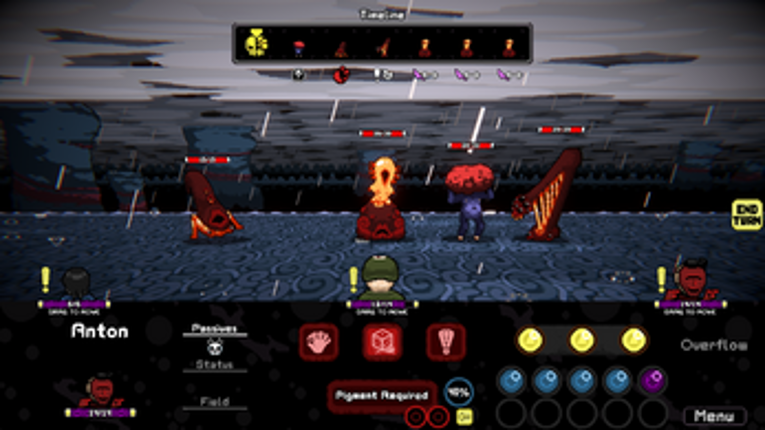
Shigatari Game Cover

About

Shigatari is a single player role playing game with a historical theme. It was developed by Super Legit Games and was released on August 25, 2017. It received overwhelmingly positive reviews from players.

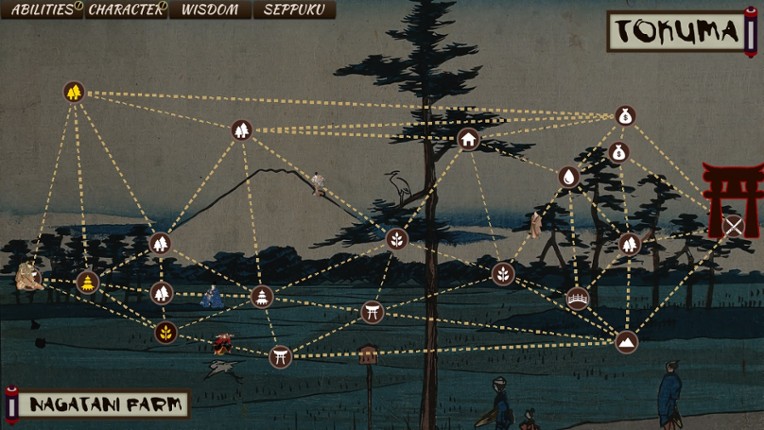
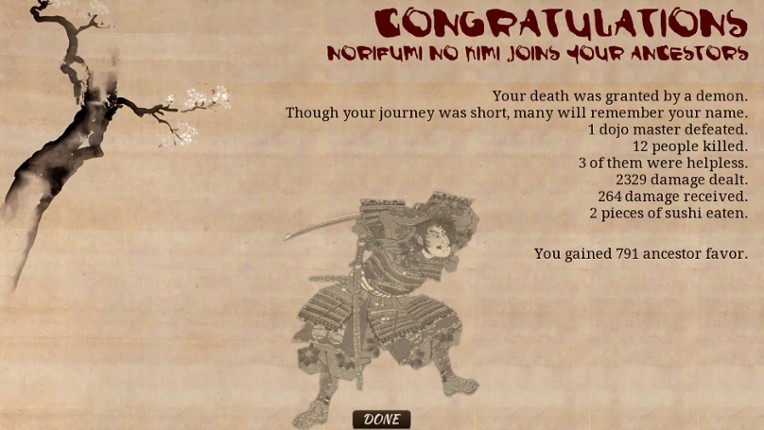
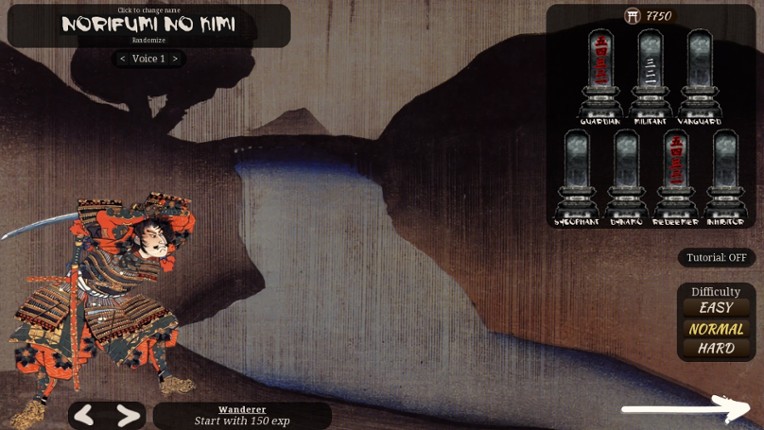
Shigatari is a single-player Role Playing Game with good gameplay, compelling visuals, and plenty of humor. As a samurai, you'll engage in brutal katana duels, combining seven dueling schools to form your own style. With a three-axis morality system, your actions impact your character's legacy, even in permadeath, and can grant persistent bonuses upon committing seppuku or visiting a kagema while intoxicated on sake.

Skip User Reviews

98%
Audience ScoreBased on 249 reviews
graphics16 positive mentions
grinding3 negative mentions

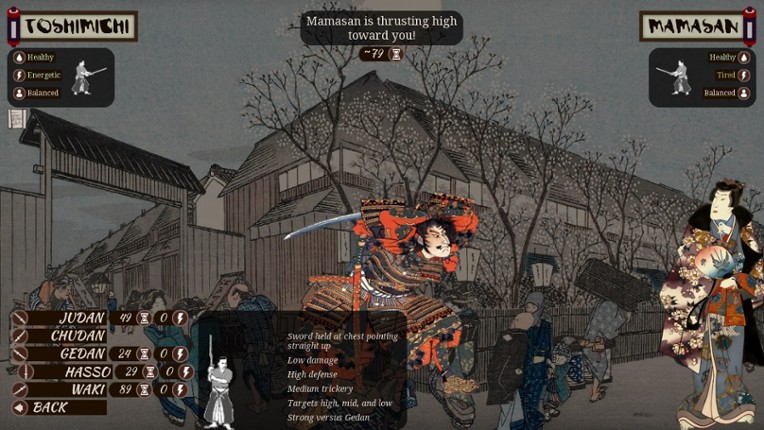
  • The game features a unique and engaging turn-based combat system that allows for various strategies and playstyles.
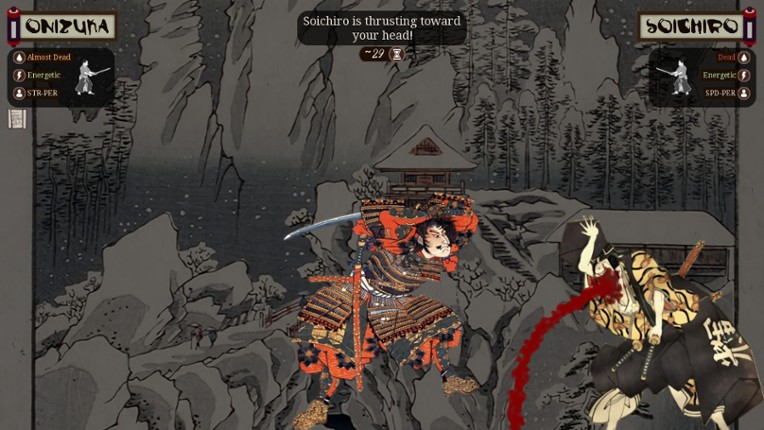
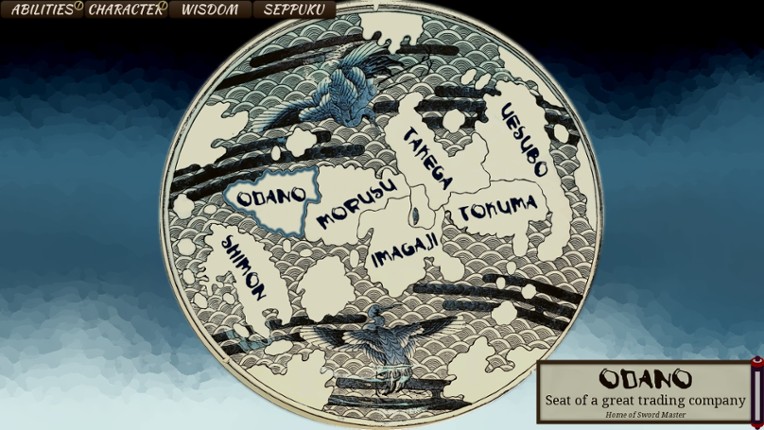
  • The art style is beautiful, drawing inspiration from traditional Japanese ukiyo-e, which enhances the overall atmosphere of the game.
  • At its low price point, the game offers a surprising amount of content and replayability, making it a great value for players.
  • The game suffers from a lack of content variety, leading to repetitive encounters and events after multiple playthroughs.
  • The combat system can be difficult to grasp initially, with a steep learning curve that may frustrate new players.
  • Some players have reported issues with balance, as the game can become too easy once certain mechanics are mastered.
  • graphics
    47 mentions Positive Neutral Negative

    The game's graphics are characterized by a unique and charming ukiyo-e art style, drawing heavily from traditional Japanese artwork, which enhances the historical atmosphere and immersion. While the visuals primarily consist of still images with minimal animations, they are praised for their attention to detail and aesthetic appeal, creating a delightful experience that complements the engaging turn-based combat. Overall, the graphics may lack modern visual spectacle, but they effectively contribute to the game's thematic depth and enjoyment.

    • “All visuals are done with actual historical artwork, and the game has an amazing attention to detail when it comes to historical atmosphere, with small jokes and references all over the place.”
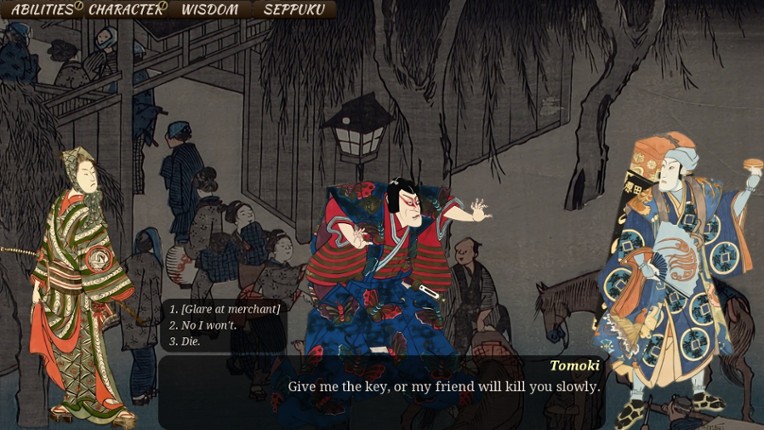
    • “The historical Japanese artwork provides the characters and backgrounds a surprising amount of vibrancy for how simple it is.”
    • “Graphically, the game goes all out on the shogun Japan art style, with both character and backgrounds mirroring traditional Japanese paintings of the time.”
    • “There's literally no graphics options in the game since essentially everything is just still images, with some simple animations on the character pieces.”
    • “Graphically, it's got an art style it sticks to well and the game is still enjoyable to look at even after 10 hours of play, although if you like visual spectacle you'll be straight out of luck as it's mostly jpegs and things done to jpegs, although those things are fun.”
  • gameplay
    36 mentions Positive Neutral Negative

    The gameplay is characterized by its engaging turn-based combat mechanics, which are easy to learn yet offer depth for experimentation, making it highly addictive and replayable. Players appreciate the unique art style and the integration of a morality system, though some note a learning curve and a desire for more challenging content as the game progresses. Overall, the combination of skill-based mechanics, immersive role-playing elements, and a variety of play styles contributes to a rewarding gaming experience.

    • “Such an interesting game filled with unique mechanics and interesting gameplay.”
    • “The art style is simply unique, but the heart and soul of this game is the combat. It feels unfair at first, but once you get the hang of it and realize what each action does, it brings out another layer of gameplay. This turn-based combat is revolutionary, making a simple game thrilling to play.”
    • “On one hand, the game has mechanics easy enough to quickly pick up, but on the other hand, they are vast enough to have fun experimenting with different setups during multiple playthroughs.”
    • “I'd give a neutral recommendation for this if it was available because it seems like a mechanical oversight at times rather than a challenging feature.”
    • “Needs more events and harder gameplay towards the end when you have maxed trees.”
    • “The limited gameplay time for me is based on just normal and dying right out the gate 3 times in a row.”
  • humor
    21 mentions Positive Neutral Negative

    The humor in the game is widely praised for its cleverness and self-awareness, avoiding over-the-top or eye-rolling moments while still delivering plenty of laughs through quirky dialogue and amusing combat scenarios. Players appreciate the lighthearted tone and the integration of humor into the RPG elements, with funny interactions and events that enhance the overall experience. The game's unique art style and respect for Japanese culture further complement its comedic aspects, making it an engaging and entertaining journey.

    • “The combat has a surprising amount of depth, and the game manages to strike a self-aware humor without overdoing it and entering eye-rolling territory.”
    • “There's a good bit of humor spread out amongst all of the events, and it's a relatively lighthearted journey.”
    • “The dialogue system is straightforward, with a funny quirk: you can say 'die' and engage in combat in almost any encounter, be it a humble tailor or a group of well-armed warriors of the local government.”
  • story
    17 mentions Positive Neutral Negative

    The game's story features a blend of repetitive elements and randomized narratives, allowing players to experience different adventures with various characters in a samurai-themed setting. While some players appreciate the depth and meaning behind the title "death story," others note the brevity and occasional dialogue errors. Overall, the storytelling is engaging, with a choose-your-own-adventure feel, but may lack content for those seeking a more extensive narrative experience.

    • “Choices you make define your character, dramatic story emerges!”
    • “The way the original artwork is used to portray the story is really cool.”
    • “With a random backstory setting you up for your adventure, you travel the seven lands to ultimately defeat all seven masters, whilst getting into scrapes on the way.”
    • “I think I killed the same escaping criminal 5 times, heard the same old man's story from 4 different old guys, the same lady ghost on a bridge 3 times, the same couple on a bridge 3 times, etc. This is in one playthrough.”
    • “The story is randomized and each time you will get a different one.”
    • “And generated story that can make ChatGPT commit sudoku.”
  • replayability
    16 mentions Positive Neutral Negative

    Overall, the game's replayability is a mixed bag; while some players find it highly engaging due to diverse character builds, unique interactions, and unlockable content, others feel that scenarios can become repetitive quickly. The presence of different playstyles and the ability to experiment with various approaches contribute positively to replay value, though some players note that once the game is mastered, the incentive to replay diminishes. Despite these concerns, many appreciate the affordability and fun gameplay, which enhance the overall replay experience.

    • “Even so, the game has a lot of weird specific interactions to find, which, combined with a lot of different starting characters and builds, makes it really replayable.”
    • “Every stance offers a unique playstyle, and this adds to the replayability.”
    • “Unlockable characters allow for more replayability, while ancestral favor is accumulated between runs and can be used to make the game easier or to experiment with non-standard playstyles.”
    • “I don't think it has replay value unless you want more of a challenge, but the challenge may be too difficult near the start on hard without ancestor favor.”
    • “Admittedly, stumbling upon these events and items decreased the replay value of this game tremendously for me.”
    • “Though this seems at first to 'lack in content' (which I don't believe it does) or that it would highly reduce the replay value, once you have a feel for the event possibilities, you can plot your course through the regions with more intention and reason to be the most powerful swordsman Japan has ever known.”
  • music
    11 mentions Positive Neutral Negative

    The music in the game is generally well-received, enhancing the feudal Japan atmosphere with traditional instruments, though some players find it repetitive and suggest turning it down or replacing it with external music. While the combat and art are praised, the overworld map music is noted as a weak point. Overall, the soundtrack complements the gameplay but may not stand out prominently.

    • “Randomly generated roguelite samurai action with great combat, art, and music; plus very cheap, what's not to like?”
    • “The music, though it consists mostly of drums and some jingles made with traditional Japanese instruments, actually works - just tone it down a bit so the massive drums won't hit your ears too hard.”
    • “The music and graphics are very stylish and nice.”
    • “The music isn't very prominent, but it adds to the feudal Japan atmosphere.”
    • “I recommend turning off the in-game music (which is cool, but a bit repetitive) and instead listen to some nice koto or shakuhachi music on your preferred streaming platform.”
    • “The dialogue is often very witty and the art is beautiful; the music gets a little bit monotonous, but it fits the feel of the era the game is set in.”
  • atmosphere
    6 mentions Positive Neutral Negative

    The game's atmosphere is deeply rooted in feudal Japan, characterized by stunning ukiyo-e style visuals and meticulous historical detail, which enhances the overall experience. While the music is subtle, it complements the setting effectively, and the inclusion of small jokes and references adds a layer of charm for players who appreciate this cultural backdrop. Overall, the artwork and atmosphere are highly praised, particularly for fans of the era.

    • “All visuals are crafted with actual historical artwork, and the game has amazing attention to detail when it comes to historical atmosphere, with small jokes and references throughout.”
    • “The ukiyo-e style presentation is unique and defines the game's entire atmosphere.”
    • “Basically, it's a rogue-lite dueling simulator with a heavy emphasis on the atmosphere of feudal Japan.”
    • “All visuals are crafted with actual historical artwork, and the game has an amazing attention to detail when it comes to historical atmosphere, with small jokes and references scattered throughout.”
    • “The music isn't very prominent, but it contributes to the overall atmosphere of feudal Japan.”
  • grinding
    4 mentions Positive Neutral Negative

    Players appreciate the variety of character-building options and the ability to engage in low-xp "pacifist" runs, which adds depth to gameplay. While grinding for experience points can become tedious, the game offers enjoyable mechanics and unique unlocking conditions that keep the experience engaging without excessive grinding. Overall, the first playthrough is fun, albeit grindy at times.

    • “This is fun on its own, as the unlocking conditions require you to do some very specific, but not grindy things, like drinking some 'gaijin sake' while wearing 'gaijin armor' and wielding a 'gaijin sword' to unlock a dapper-dressed European foreigner.”
    • “It can get a bit tedious over time because if you act in haste... much deeper than you would expect, fun stories and options. I'd love to see a fully fleshed version of this.”
    • “It's quite enjoyable on the first playthrough, though it is grindy.”
    • “There are a lot of ways to build a character, and while grinding XP is useful, it isn't necessary, which makes low-XP 'pacifist' runs particularly interesting, since you will have to fight eventually and will have to make the most of what you have at that point.”
  • optimization
    1 mentions Positive Neutral Negative

    While the game is noted for its fun gameplay, it suffers from slightly poor optimization, which may affect the overall experience for some players.

    • “Not gonna lie, despite the poor optimization, this game is really fun.”
  • stability
    1 mentions Positive Neutral Negative

    The game demonstrates excellent stability on the Steam Deck, making it an ideal choice for quick gaming sessions during breaks or while traveling.

    • “The game runs great on the Steam Deck, and it's perfect for a quick play during breaks or on the go.”
Skip Game Offers

Buy Shigatari

5h Median play time
5h Average play time
5-5h Spent by most gamers
*Based on 1 analyzed playthroughs
Skip Videos

Videos

Skip Games Like Shigatari

Games Like Shigatari

One Way Heroics Image
Renowned Explorers: International Society Image
Loop Hero Image
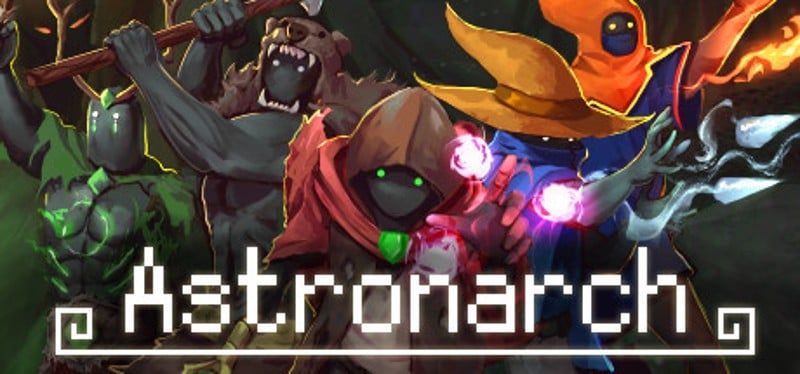
Astronarch Image
Tainted Grail: Conquest Image
Skip FAQs

Frequently Asked Questions

Shigatari is a role playing game with historical theme.

Shigatari is available on PC, Mac OS, Windows and Linux.

On average players spend around 5 hours playing Shigatari.

Shigatari was released on August 25, 2017.

Shigatari was developed by Super Legit Games.

Shigatari has received overwhelmingly positive reviews from players. Most players liked this game for its graphics but disliked it for its story.

Shigatari is a single player game.

Similar games include One Way Heroics, Renowned Explorers: International Society, Loop Hero, Astronarch, Tainted Grail: Conquest and others.