Never Second in Rome Game Cover

About

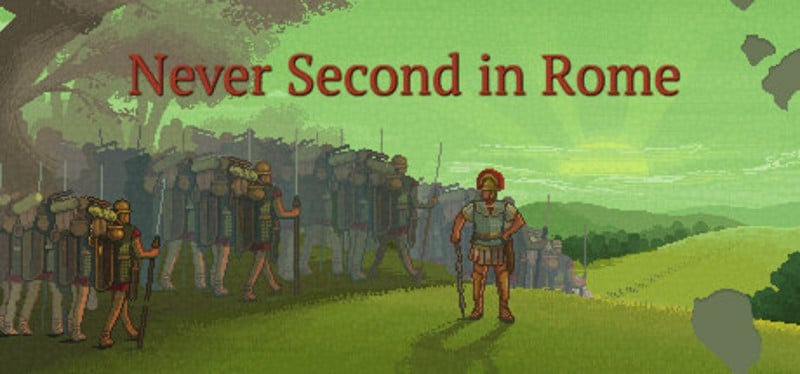
Never Second in Rome is a single player role playing game with warfare and historical themes. It was developed by Alessandro Roberti and was released on February 18, 2025. It received mostly positive reviews from players.

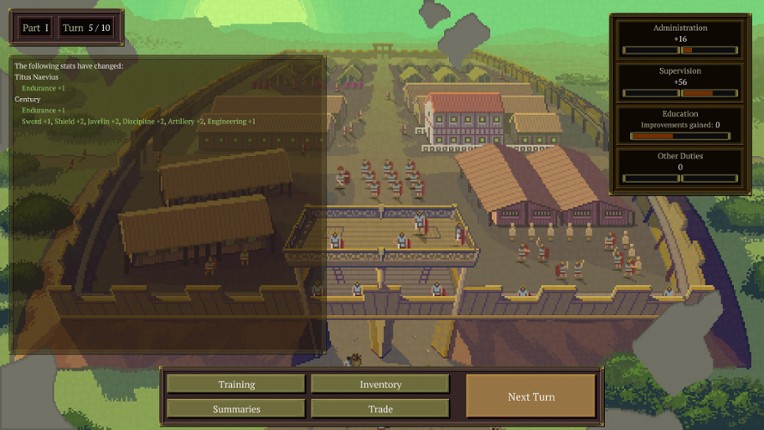
Never Second in Rome is a turn-based historical game with RPG and management elements. You take the role of a Roman centurion in the army of Julius Caesar. Starting right before the beginning of the Gallic War, you will assume command of a century in a newly raised legion.

Skip User Reviews

80%
Audience ScoreBased on 353 reviews
gameplay17 positive mentions
grinding30 negative mentions

  • The game offers a rich and immersive experience, allowing players to take on the role of a centurion leading a century during Julius Caesar's campaigns.
  • The writing is well-crafted and historically accurate, providing a compelling narrative that enhances the gameplay.
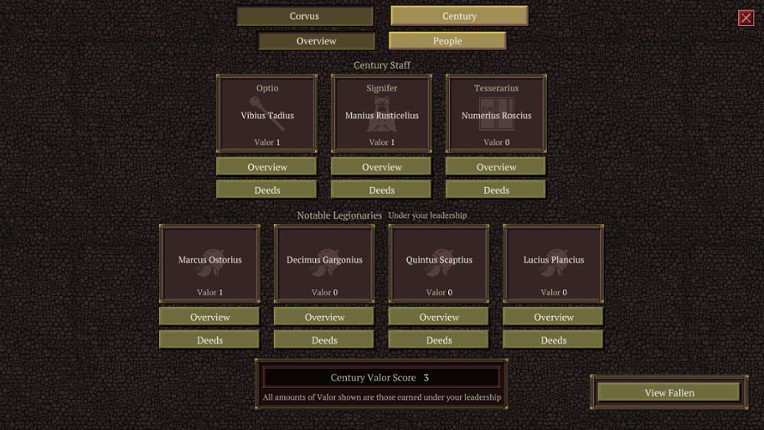
  • The addition of a management system for training and leading your legionnaires adds depth and strategy to the game.
  • The RNG mechanics can be frustrating, often leading to unexpected failures in combat and skill checks, which can detract from the overall enjoyment.
  • The lack of meta-progression makes replayability limited, as players cannot carry over improvements from previous runs.
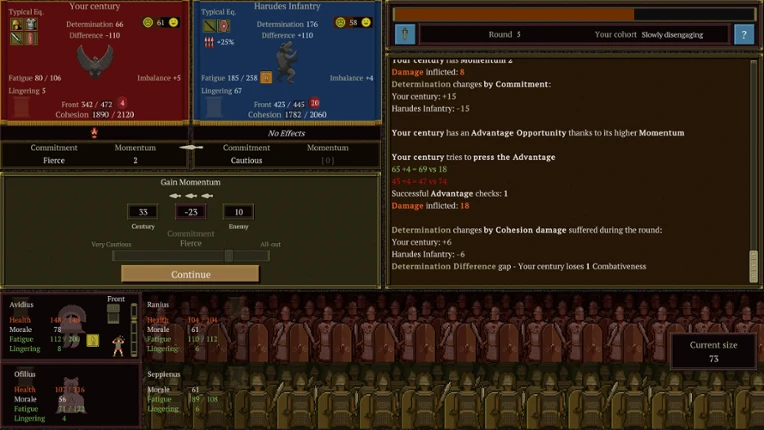
  • The combat system can feel tedious and overly complex, with battles taking a long time and often resulting in repetitive gameplay.
  • gameplay
    130 mentions Positive Neutral Negative

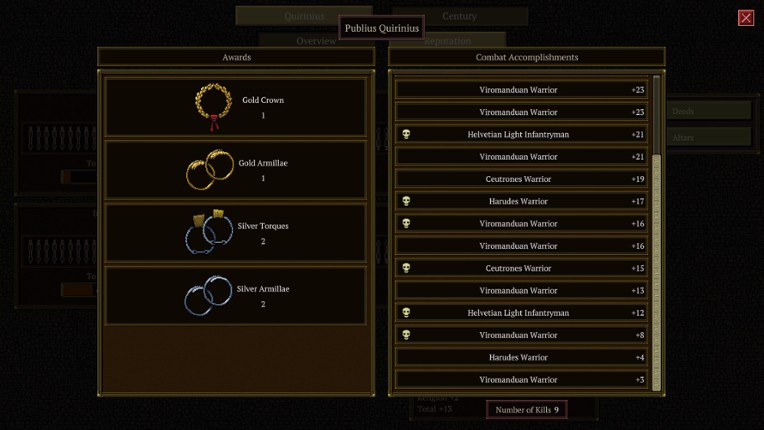
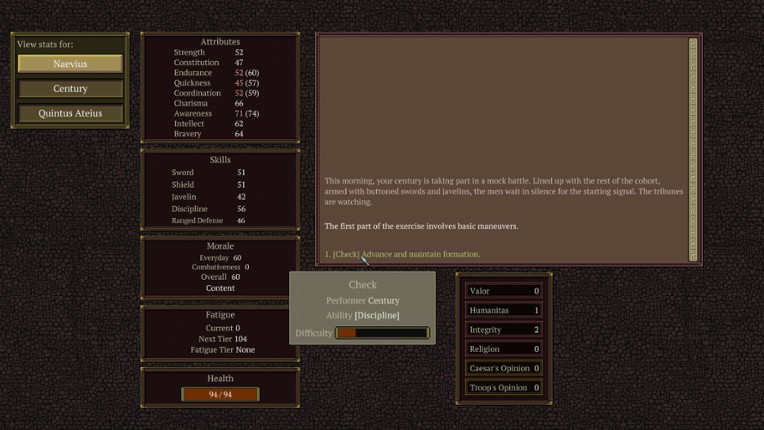
    The gameplay in "Never Second in Rome" is characterized by its complex mechanics and a steep learning curve, which can be both rewarding and frustrating for players. While the combat system has been significantly revamped to enhance engagement, many users find the mechanics overly complicated and poorly explained, leading to a reliance on trial and error. Despite these challenges, the game offers a rich narrative and immersive experience, with a solid gameplay loop that becomes enjoyable once players invest the time to understand its intricacies.

    • “The gameplay loop is incredibly solid and proves to be very addictive, making it hard to put down.”
    • “Once it clicks and you start figuring out the mechanics, and understanding why you're doing well or why you're failing, it all comes together.”
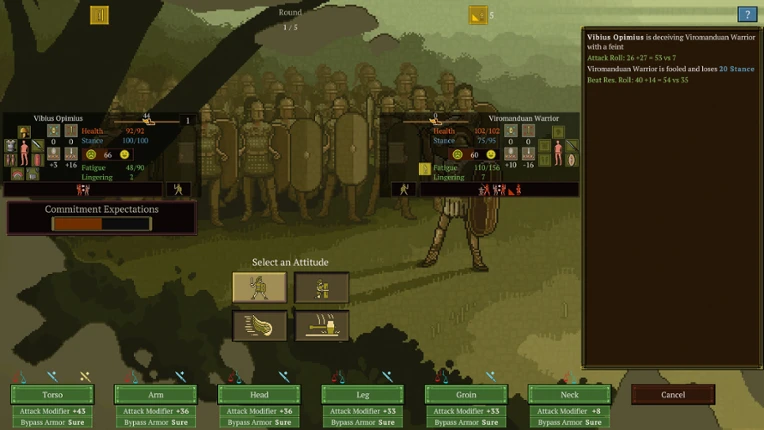
    • “The individual combat system is fairly straightforward for anyone that has played a legionary's life, with improvements to both the UI and gameplay mechanics that make combat seem much more realistic.”
    • “Getting to a later chapter only to lose your centurion to a series of unfortunate die results doesn't engender a desire to learn the mechanics or start a new playthrough to make different choices.”
    • “Whatever game is here is buried under mountains of tutorial text, obtuse and overcomplicated mechanics, and RNG that robs you of any agency.”
    • “The gameplay loop of training/management leading to battles works well and is enjoyable.”
  • story
    70 mentions Positive Neutral Negative

    The story of "Never Second in Rome" is a well-crafted, historically accurate narrative that immerses players in the events of Julius Caesar's campaigns, told from multiple perspectives, including that of the player character and their soldiers. While the game allows for some player influence through decision-making and dice rolls, it is primarily a linear experience that emphasizes storytelling over replayability. Players appreciate the depth and authenticity of the narrative, though some express a desire for more dynamic story elements and character progression compared to its predecessor, "A Legionary's Life."

    • “The story is wonderfully told, with a close telling of Caesar's campaign.”
    • “An excellent game that builds upon the unique style and gameplay of a legionary's life to deliver a captivating story.”
    • “The storyline, following the Gallic Wars fought by Julius Caesar, is a realistic look at the historical era with an educative level of detail.”
    • “I've still no idea when success or failure in battle happens, whether it's down to lucky dice rolls, good legion preparation, good strategy, or just the way the encounter is written into the game's story.”
    • “At certain points you can decide on things, but the story is set.”
    • “Also, the fact that there is no meta progression really takes out one of the core strengths of the previous title and my main motivation to replay the game so that I could reveal new story actions through a stronger character.”
  • grinding
    31 mentions Positive Neutral Negative

    The grinding aspect of the game has been widely criticized for its tediousness and lack of engagement, with many players finding the combat system overly reliant on RNG and repetitive battles that detract from the overall experience. While some appreciate the strategic elements, the majority feel that the grind is not rewarding enough, leading to frustration and detachment from the game. Suggestions for improvement include reducing the frequency of battles and incorporating meta-progression to alleviate the monotony.

    • “Battles were not tedious; they were chaotic.”
    • “The grinding experience felt rewarding and engaging.”
    • “Each grind session brought a sense of progression and achievement.”
    • “The combat system is probably my least favorite part of this game; although it's logical and well-constructed, it can be a bit brutal with the dice roll RNG, similar to the previous game, 'A Legionary's Life'... in addition to being tedious.”
    • “Every playthrough is a tedious grind with no foreseeable reward for future runs.”
    • “The battles themselves are just too tedious, especially with all those individual fights.”
  • replayability
    20 mentions Positive Neutral Negative

    Overall, reviews indicate that the game's replayability is significantly hampered by the absence of meta-progression and meaningful character development systems that were present in the previous installment. While some players appreciate the challenge and graphics, many feel that the gameplay lacks diversity and encourages a singular approach, leading to a limited replay experience. Suggestions for improvement include reintroducing systems that allow for varied playstyles and more impactful decision-making.

    • “So that at least one playthrough is the vanilla experience Roberti envisioned, but the meta progression is also available for those of us who enjoy the replayability aspect of it.”
    • “It was very short and quite frankly insanely replayable.”
    • “It has more challenge, replayability, and better graphics.”
    • “Sure the game isn't finished so we aren't able to see the late game effects, but at this time it has no real replayability aspect other than doing a different build to pass some checks. However, the check passes usually don't change anything like the first game did.”
    • “In the first game, when your character died or you finished his story, you'd get points that you were able to spend on your next character, which is a feature I miss dearly in this game. By leaving it out, the replayability of this game compared to the first one completely tanks.”
    • “The transition away from meta-progression made the gameplay itself much more stale and less diverse. There's a correct way to do things now, which makes this game have almost zero replayability.”
  • graphics
    12 mentions Positive Neutral Negative

    The graphics of the game are characterized by a charming pixel art style that many players find appealing, though some feel it lacks sufficient visual variety and clarity. While the art has improved and is considered thematic and pretty, there are calls for more artwork and less text-based content to enhance the overall experience. Overall, the graphics are seen as a strong point, but there is room for improvement in terms of complexity and visual communication.

    • “The art style improved, the music got better, and the story is fantastic.”
    • “The graphics might not be some amazing 3D render, but the art is stylized, thematic, and very pretty.”
    • “Graphics -- the pixel art is charming and well done.”
    • “Game has old school graphics, is tedious and requires a good amount of planning to enjoy it.”
    • “Maybe the visuals being a little more clear or informative would've saved it?”
    • “Quite a bit too complex though, and I wish there were more visuals and graphics and not so much text-based.”
  • music
    5 mentions Positive Neutral Negative

    Overall, the music in the game has received positive feedback, with many noting improvements over previous installments and praising the soundtrack. However, some users feel it doesn't quite match the quality of the first game. There is a desire among players for an official soundtrack release to enjoy the music outside of gameplay.

    • “The art style improved, the music got better, and the story is fantastic.”
    • “The music is pretty good, though not as good as the first game in my opinion.”
    • “It's a good game so far; I wish there was a released OST for this, I'd love to listen to it as background music.”
  • humor
    3 mentions Positive Neutral Negative

    The humor in the game is primarily derived from the comedic elements of combat formations, which players find amusing once they adapt to the mechanics. While some moments elicit laughter, there is a noted absence of minigames that could enhance the overall comedic experience.

    • “Getting the command perspective is very funny; combat in terms of formations takes some getting used to, but once you do, it's a blast.”
    • “When it happens once, it's pretty funny.”
  • optimization
    3 mentions Positive Neutral Negative

    The optimization aspect of the game is generally well-received, with players noting that while both versions require troops to exert more effort for improved performance, one version stands out as more enjoyable due to its engaging audio effects.

    • “The optimization mechanics really make you feel like you're maximizing your troops' potential, and the satisfying sound effects add to the overall enjoyment.”
    • “I love how the optimization system encourages strategic thinking, pushing you to make the best use of your resources for improved performance.”
    • “The way optimization is integrated into gameplay makes every decision feel impactful, enhancing the overall experience.”
  • emotional
    3 mentions Positive Neutral Negative

    Players find the emotional aspect of the game compelling, as the well-written battles explore various facets of warfare and challenge moral perspectives, significantly enhancing immersion.

    • “The battles are well written, showcasing different aspects of warfare that challenge your morality and enhance immersion.”
    • “The emotional depth of the characters truly resonates, making you feel their struggles and triumphs.”
    • “The story's ability to evoke such strong feelings is a testament to the developers' understanding of human emotions.”
Skip Game Offers

Buy Never Second in Rome

20h Median play time
20h Average play time
10-30h Spent by most gamers
*Based on 3 analyzed playthroughs
Skip Videos

Videos

Skip Games Like Never Second in Rome
Skip FAQs

Frequently Asked Questions

Never Second in Rome is a role playing game with warfare and historical themes.

Never Second in Rome is available on PC and Windows.

On average players spend around 20 hours playing Never Second in Rome.

Never Second in Rome was released on February 18, 2025.

Never Second in Rome was developed by Alessandro Roberti.

Never Second in Rome has received mostly positive reviews from players. Most players liked this game for its gameplay but disliked it for its grinding.

Never Second in Rome is a single player game.

Similar games include A Legionary's Life, Heads Will Roll: Reforged, Expeditions: Rome, Darkest Dungeon II, Endless Legend 2 and others.