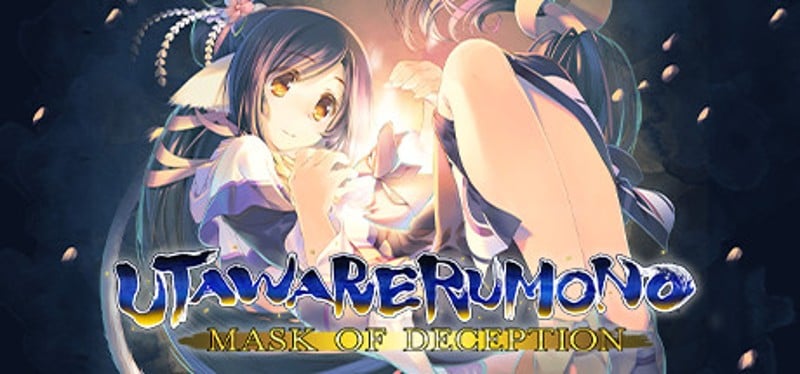
Utawarerumono: Mask of Deception

Utawarerumono: Mask of Deception Game Cover
88%Game Brain Score
story, gameplay
grinding, optimization
94% User Score Based on 447 reviews
Critic Score 56%Based on 1 reviews

Platforms

Playstation 3Nintendo SwitchPCTabletPlaystation 5PhonePlaystation 4Steam DeckWindowsPlayStationPlaystation Vita
Utawarerumono: Mask of Deception Game Cover

About

Utawarerumono: Mask of Deception is a single player tactical role playing game with fantasy, drama, warfare, anime and others themes. It was developed by AQUAPLUS and was released on January 23, 2020. It received neutral reviews from critics and very positive reviews from players.

Utawarerumono: Mask of Deception is a grand tale that will enchant the hearts and minds of players as it takes them on an incredible journey. With a beautiful visual novel story experience, intriguing characters, fast-paced SRPG combat, world-class soundtrack and more. The game begins atop a snowy mountain where the protagonist awakens in an unfamiliar wilderness, surrounded by deadly creatures, w…

Skip User Reviews

94%
Audience ScoreBased on 447 reviews
story134 positive mentions
grinding9 negative mentions

  • Outstanding worldbuilding and rich lore with detailed cultural elements and glossary.
  • Engaging and well-written characters with strong voice acting, especially the protagonist Haku and Kuon.
  • Beautiful art and soundtrack that greatly enhance the story experience.
  • Strong and emotional story with a blend of slice-of-life moments and serious plot developments.
  • Improved and enjoyable tactical RPG combat with accessible mechanics and nice integration into the story.
  • Excellent pacing in the latter half leading to a powerful and cliffhanger ending that sets up the sequel.
  • The story pacing is slow and uneven, with a very long slice-of-life segment in the first half that may feel like filler.
  • Combat sections are sparse and not very challenging, and may feel secondary to the visual novel elements.
  • Some characters can be underdeveloped or trope-heavy, and the protagonist may annoy some players initially.
  • Contains some fanservice and repeated comedic violence against the protagonist, which may be off-putting.
  • Technical issues in the PC port include resolution locked to 720p, 30fps cap, occasional crashes, and blurry UI elements.
  • Game ends on a cliffhanger and is best played in conjunction with the prequel and the sequel for full story impact.
  • story
    545 mentions Positive Neutral Negative

    The story of "Utawarerumono: Mask of Deception" is a slow-burning and heavily narrative-driven visual novel that combines slice-of-life moments with deep world-building and rich character development. While the first two-thirds lean towards a lighter, comedic tone with ample downtime, the plot intensifies significantly in the latter part, setting up a grander story arc continued in its sequel "Mask of Truth." Though pacing issues and filler sections can cause some frustration, the overall storytelling, emotional depth, and immersive setting make it a highly praised experience, especially for those who appreciate epic, character-focused fantasy tales.

    • “The plot development is generally slow throughout this game, but it's worth every moment as the writing continuously builds on itself, and in some cases, even comes full circle, unfolding the brilliance and magic of the author's vision.”
    • “The story truly gets into full swing in mask of truth—mask of deception is a very good setup for the climax, but still a setup nonetheless.”
    • “Full of unexpected surprises and plot twists, neatly tying a new story to that of the prequel, opening your eyes to the secrets of the intriguing world a bit more.”
    • “All the seeds of the story of Mask of Deception are sown in this game, but it suffers from a lack of pacing, being very slow with a great amount of slice of life skits, character exploration/development, and world building, but very little actual story development until the last act.”
    • “Don't expect much from Utawarerumono: Mask of Deception. For most of its plot, you'll have a tranquil, relatively shallow story with not so many successive battles. You might even spend hours just listening to the characters' interactions without a single battle. The game is quite slow and it can get boring at times; if you lie in bed while playing, you might have the risk of falling asleep.”
    • “The story starts off pretty slow with not much going on. The plot doesn't really kick in until you're halfway through, with much of the first half filled with filler and slice-of-life moments that barely advance the plot or character personalities.”
  • gameplay
    152 mentions Positive Neutral Negative

    The gameplay in this visual novel is a turn-based tactical RPG element that, while improved and more engaging than its predecessor, remains relatively simple, not very challenging, and secondary to the story. It features some strategic mechanics like the zeal system and chain attacks, with difficulty options catering to both casual players and strategy fans, though combat segments are infrequent and may feel light or repetitive to those seeking a pure gameplay experience. Overall, the gameplay enhances the narrative without overshadowing it, making it suitable primarily for fans who enjoy a mix of visual novel storytelling with light tactical battles.

    • “The gameplay is a massive upgrade over Prelude to the Fallen, with improved mechanics such as new chain rings, counterattacks, and the addition of jump mechanics. Healer characters can now attack, and the overzeal system introduces strategic depth by buffing players when their zeal bar fills and then decays.”
    • “The game mechanics were thoughtfully designed, allowing tactical turn-based battles to blend seamlessly with the story. Characters even talk during battles, making gameplay sections feel like a continuation of the narrative rather than interruptions.”
    • “The gameplay consists of tactical, turn-based battles on a grid interspersed throughout the visual novel. While primarily story-focused, the gameplay is engaging, with smooth combat system improvements over the previous entries and challenging post-game maps for players seeking more depth.”
    • “The gameplay was very basic and simple, nothing too special, and there were awkward sex scenes thrown in that seemed there just for the sake of helping sell more copies.”
    • “The tactical combat gameplay is okay - I found it more streamlined than the cumbersome gameplay of the first game, but it's still easy and rather mindless compared to other similar games on the market.”
    • “Although the combat system is a bit complicated due to different effects that can be applied to a character, the gameplay is way better than the prequel.”
  • music
    88 mentions Positive Neutral Negative

    The music across the series is widely praised for its exceptional quality, emotional depth, and perfect scene alignment, with the soundtrack described as phenomenal, immersive, and frequently listened to even outside gameplay. Vocal performances, especially by singer Suara, and the seamless blend of battle and atmospheric tracks enhance the overall experience, making the soundtrack a standout element that rivals top video game OSTs. While some found balancing the music challenging, the consensus is that it significantly enriches the narrative and emotional impact.

    • “The music is still on point; just like in the previous game, you can bet that every scene will have an appropriate track that matches the moment and makes the experience all that much more impactful.”
    • “The soundtrack is fantastic, one of the best game soundtracks I have heard and placed very well to immerse you into the story.”
    • “When Utawarerumono pulls out all the stops, it won’t lose to any other video game OST, and the way those songs are placed elevate the already good scenes into another world.”
    • “I fell asleep twice during the game because the OST was just too peaceful, and there was nothing dramatic going on during the first 20-25 hours of the game.”
    • “The OST is a small step up from the original title, with a few new tracks complementing a strong selection of returning pieces from the original, although I didn't find it to be spectacular overall.”
    • “The supporting music needs to support, not take center stage, and it took some effort to get the balancing right on my end.”
  • graphics
    40 mentions Positive Neutral Negative

    The game's graphics are widely praised for their beautiful, polished anime-style 2D artwork and visually appealing character designs, contributing to its strong visual novel presentation. While the 3D battle graphics receive mixed feedback—being considered somewhat outdated and less refined—the overall aesthetic and artwork consistently enhance the immersive fantasy world. The visual style, complemented by a fitting soundtrack, is seen as a key strength that elevates the game's storytelling and atmosphere.

    • “It’s a very long visual novel with one of the most beautiful art styles I’ve ever seen, with such an expansive cast of characters and quite honestly, a somewhat Tolkien-level of world building.”
    • “The worldbuilding is great, the OST is one of the most unique I've heard (the sound team at Aquaplus is very talented) and the BGS, CGS, and character art is some of the cleanest art I've seen in a long time, with Amazuyu Tatsuki my GOAT and Misato Mitsumi doing the art for this game, (and of course all the graphics guys that do a great job).”
    • “Slowly and steadily introduces the player to the world of Utawarerumono once again with an almost overwhelming amount of lore illustrated by an enormous glossary, beautiful art style and top-notch voice acting.”
    • “Visuals are pretty rough for a modern game though, especially the title screen UI being blurry on my 1440p screen.”
    • “The port is 720p 30fps locked, not a big deal considering this is about 90% visual novel, 10% game with graphics designed for the PS Vita.”
    • “- I'm not going to judge the 3D graphics because this is mainly a visual novel.”
  • humor
    30 mentions Positive Neutral Negative

    The humor in the game is a well-balanced mix of hilarious, ridiculous, and heartfelt moments that often evoke genuine laughter and emotional engagement. The main character's role as the frequent butt of jokes contributes heavily to the comedy, though this approach can feel repetitive or hit-and-miss for some players. Overall, the humor—enhanced by strong voice acting and witty writing—adds significant charm and enjoyment to the experience.

    • “It has everything: times of joy and sadness, mysteries and big reveals, it takes itself seriously then it's both ridiculous and hilarious.”
    • “Found myself laughing out loud multiple times, and I really felt like I was on the journey with everyone having a good time.”
    • “The sitcom and slice of life stuff are genuinely very funny, and I came to really like the characters.”
  • character development
    22 mentions Positive Neutral Negative

    Character development in the game is extensive and nuanced, often conveyed through slice-of-life events that build deep connections to the characters over a lengthy and slow-paced narrative. While some find the early portion repetitive or overly detailed, this approach enriches worldbuilding and fosters strong emotional investment, with many praising the deliberate and high-quality writing, though a few note stereotypical traits or late development for some characters. Overall, it stands out as a major strength, especially when experienced fully through multiple playthroughs.

    • “The story is fantastic and the world building, the character development throughout the story is awesome.”
    • “As for supporting cast, since this game is more about worldbuilding and character development, and Suga had 12 years to become better at writing and you have 60-70 hours game instead of 40-ish length of previous game you really get to know the characters from all angles and really care what happens with them.”
    • “The character development is also very nuanced and deliberate; perhaps the worst thing about it is that it's not obvious just how well everything is done until you replay this game again after finishing Mask of Truth so that you can see exactly how all of the character arcs are set up.”
    • “The first half of the game is almost purely slice-of-life events, lacking character development, with many stereotyped characters who don't evolve at all or only right before the game ends.”
    • “I'd still need to underscore a flaw I've seen with both Mask of Deception and Prelude to the Fallen: character development, or lack thereof.”
    • “Mask of Deception basically serves as an entire game's worth of worldbuilding and character development for its sequel, and because of that, nothing really happens until the very end of the game.”
  • emotional
    20 mentions Positive Neutral Negative

    The game delivers a deeply emotional narrative with strong storytelling, endearing characters, and impactful moments that evoke laughter, tears, and anger. While some find it less emotionally potent than its predecessor, it effectively sets up intense stakes and climaxes that resonate deeply, creating a unique and memorable emotional experience. However, certain disturbing elements may feel out of place within its otherwise wholesome and heartfelt story.

    • “Great storytelling and worldbuilding, the characters are endearing, and it's full of very emotional moments.”
    • “Along the way Haku slowly regains his memories, which he learns make him a person of particular importance to this specific land and ultimately the group gets caught up in events that will change the kingdom forever, at great emotional cost to Haku and those close to him.”
    • “The story is an emotional trip, made me laugh, cry, and get angry.”
  • grinding
    13 mentions Positive Neutral Negative

    Grinding in this game is generally optional and not required on normal difficulty, with many players finding encounters easy and non-tedious. While grinding can help in postgame challenges and the final battle, it often feels time-consuming and offers limited experience rewards. Overall, the game balances gameplay to avoid mandatory grinding, though dedicated grinders can benefit from extra stat boosts and resources.

    • “No grinding needed when playing on normal.”
    • “The battle mechanic is fun to play and does not require grinding.”
    • “There is no grinding required; you can rewind whole turns as you wish, which improves quality of life.”
    • “I find the final battle poorly balanced around hard since without grinding you are 10-14 levels below it and it'll AoE 1-shot your units.”
    • “Playing on normal, I didn't bother looking at any spells or even equipping any items until the last encounter of the game, partly because encounters were just mind-numbingly easy and tedious, and partly because a good 80% of the encounters you come across are just busywork with little to no meaning in the overall plot of the story.”
    • “If you want to raise level of all characters it will be quite hard as normal grinding rewards you with really small experience points and stage first-time clear bonus only applies to used characters.”
  • optimization
    5 mentions Positive Neutral Negative

    The game's optimization is generally stable with a 30 FPS cap and minimal issues, though the 3D segments suffer from screen tearing and inconsistent performance, especially during capture. Performance can be better on emulators, indicating room for improvement in this port.

    • “The 3D segments only comprise about 10-20% of the game and you get used to the screen tearing, but it says a lot when you would get better performance from playing the game on an emulator over this port.”
    • “The game also behaves extremely strangely performance-wise when you try to capture it, though this will vary depending on setup.”
    • “Outside of the 30 fps lock, I had no other problems performance-wise.”
    • “The 3D segments only comprise about 10-20% of the game, and you get used to the screen tearing, but it says a lot when you get better performance playing the game on an emulator over this port.”
    • “The game behaves extremely strangely performance-wise when you try to capture it, though this will vary depending on setup.”
    • “Outside of the 30 FPS lock, I had no other performance issues.”
  • atmosphere
    1 mentions Positive Neutral Negative

    The atmosphere is laid-back and slow-paced in the first half, with a lengthy introduction to its characters, creating a more relaxed tone compared to the prelude.

Skip Critic Reviews

56%Critics’ scoreBased on 1 critic reviews
Skip Game Offers

Buy Utawarerumono: Mask of Deception

68h Median play time
46h Average play time
1-90h Spent by most gamers
*Based on 2 analyzed playthroughs
Skip Videos

Videos

Skip Games Like Utawarerumono: Mask of Deception
Skip FAQs

Frequently Asked Questions

Utawarerumono: Mask of Deception is a tactical role playing game with fantasy, drama, warfare, anime and others themes.

Utawarerumono: Mask of Deception is available on Nintendo Switch, PC, PlayStation 5, Phone and others.

On average players spend around 46 hours playing Utawarerumono: Mask of Deception.

Utawarerumono: Mask of Deception was released on January 23, 2020.

Utawarerumono: Mask of Deception was developed by AQUAPLUS.

Utawarerumono: Mask of Deception has received neutral reviews from players and neutral reviews from critics. Most players liked this game for its story but disliked it for its grinding.

Utawarerumono: Mask of Deception is a single player game.

Similar games include Utawarerumono: Prelude to the Fallen, Utawarerumono: Mask of Truth, The Legend of Heroes: Trails of Cold Steel, The Legend of Heroes: Trails in the Sky SC, Digimon Survive and others.