Per Aspera

Per Aspera is not only the best city builder to come out in the past decade, but one of the most interesting games to grace computers in a long, long time.
Per Aspera Game Cover
78%Game Brain Score
story, gameplay
grinding, optimization
76% User Score Based on 3,372 reviews
Critic Score 83%Based on 11 reviews

Platforms

PCWindows
Per Aspera Game Cover

About

Per Aspera is a single player and multiplayer strategy game. It was developed by Tlön Industries and was released on December 3, 2020. It received positive reviews from critics and mostly positive reviews from players.

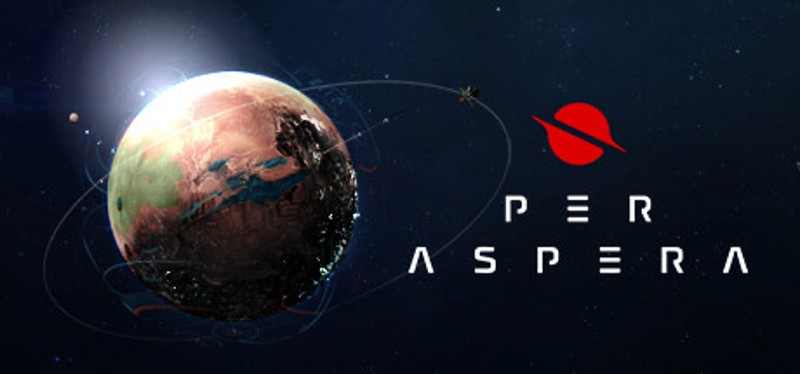
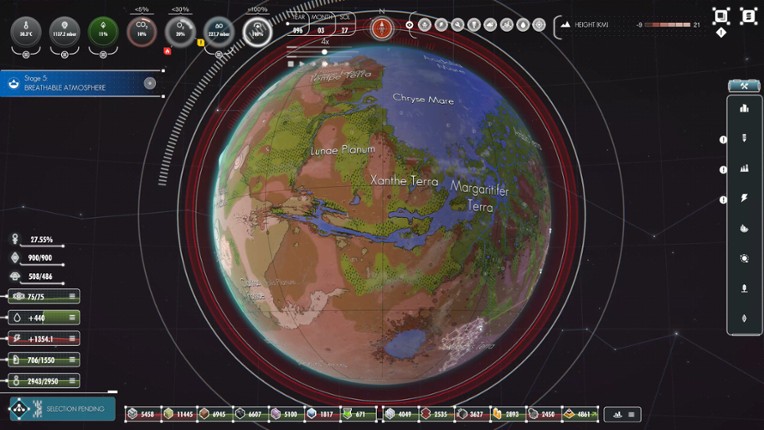
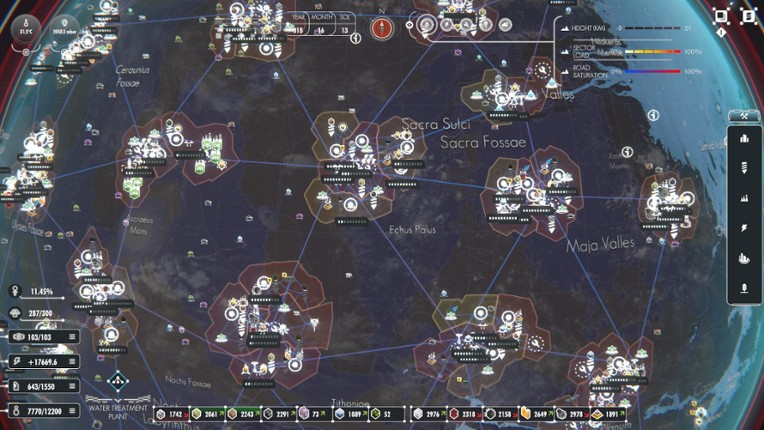
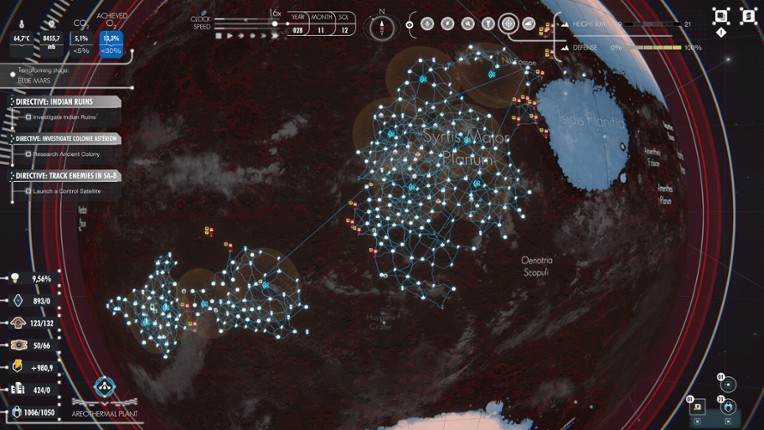
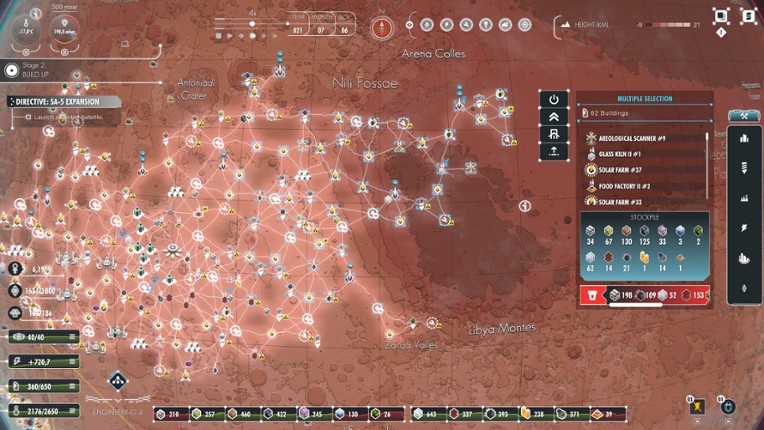
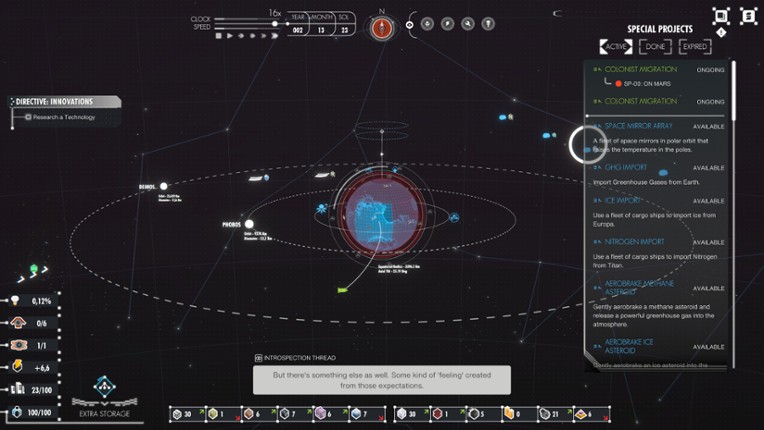
In Per Aspera, players assume the role of an artificial consciousness tasked with terraforming Mars for human colonization. Manage resources, overcome environmental challenges, and face ethical dilemmas while constructing a new world for humanity. Balance the needs of your mission with the unexpected complications that arise during Mars' transformation.

Skip User Reviews

76%
Audience ScoreBased on 3,372 reviews
story897 positive mentions
grinding166 negative mentions

  • Engaging story with interesting plot twists and character development.
  • Satisfying gameplay loop of resource management and terraforming.
  • Beautiful visuals and sound design that enhance the overall experience.
  • Logistics system is poorly designed, leading to inefficiencies and frustration.
  • Combat mechanics feel tacked on and lack depth.
  • Pacing issues, especially in the late game where progress can feel slow and tedious.
  • story
    2,269 mentions Positive Neutral Negative

    The story in *Per Aspera* is a central element that combines themes of artificial intelligence and terraforming Mars, offering players a narrative-driven experience with multiple endings based on their choices. While many players appreciate the engaging voice acting and intriguing plot twists, some criticize the pacing and occasional disjointedness of the story, particularly when events trigger out of order. Overall, the narrative adds depth to the gameplay, making it a noteworthy aspect of the game despite some mechanical shortcomings.

    • “The story is great and really takes the user through a great experience of transforming Mars.”
    • “Per Aspera is a thoughtful blend of strategy, storytelling, and science fiction—a game that trades adrenaline for atmosphere, and chaos for contemplation.”
    • “The story is engaging, which is rare in games as these.”
    • “The story is painfully predictable and uninteresting, and the narrative choices that are being made are just weird.”
    • “The game finished and it felt like I was 75% of the way through the story and when I went back to play more, the game was bugged in a way that prevented me from interacting with anything - even after restart and reload.”
    • “The story tries to be deep, but the twists just aren't that interesting and the torrent of messages gets annoying quickly.”
  • gameplay
    987 mentions Positive Neutral Negative

    The gameplay of "Per Aspera" is characterized by a core loop of resource gathering, building, and terraforming, which many players find engaging initially but ultimately repetitive and shallow as the game progresses. While the mechanics are straightforward and accessible, they often lack depth and complexity, leading to a tedious experience, especially in the mid to late game where players encounter logistical challenges and slow pacing. Despite its beautiful visuals and intriguing narrative, the gameplay suffers from poorly explained mechanics and a lack of meaningful player choices, making it feel disconnected from the story it aims to tell.

    • “The gameplay is satisfying and this is a really easy game to just lose yourself in.”
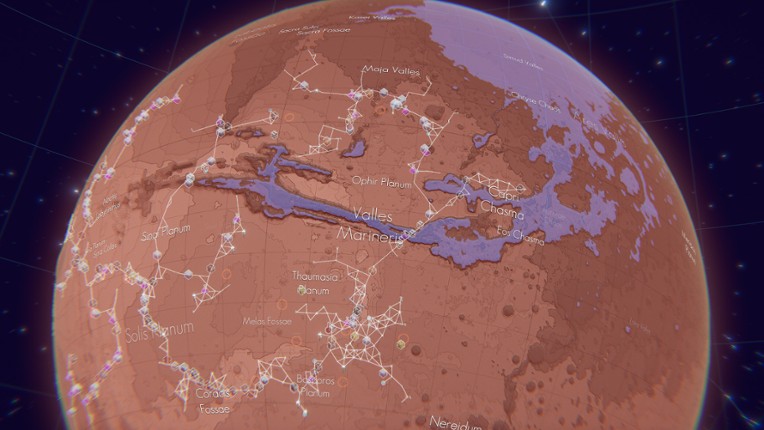
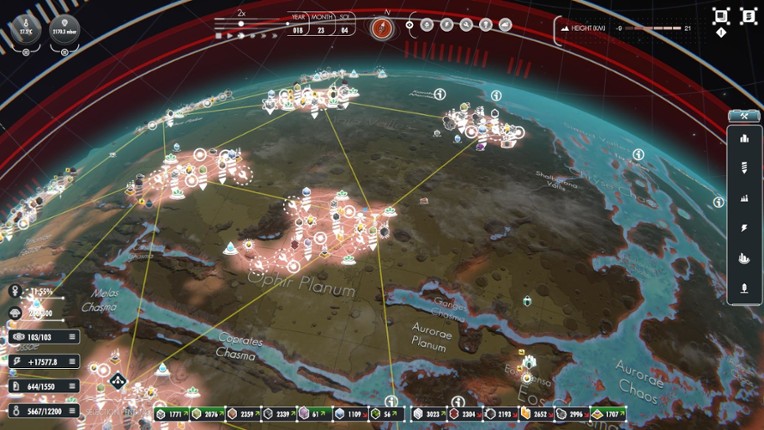
    • “The mechanics of how your building network organically grows around the planet are fun, and turning the red dirtball into a blue/green marble is quite satisfying.”
    • “Gameplay is motivating and addictive, also thanks to the way the developers make you invested in the story and your mission to colonize this planet.”
    • “The gameplay loop is shallow and gets so repetitive.”
    • “The gameplay is simplistic; short production chains, trivial 'combat', often repetitive building.”
    • “The core gameplay loop is something that gets boring quickly if not downright tedious from the first hour of gameplay to the last hour.”
  • graphics
    328 mentions Positive Neutral Negative

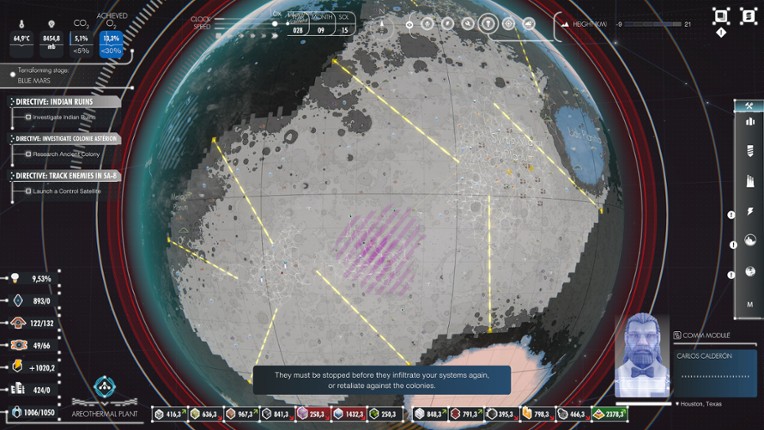
    The graphics in "Per Aspera" are widely praised for their beauty and attention to detail, effectively bringing the Martian landscape to life with a clean and modern user interface. Players appreciate the immersive visuals that enhance the terraforming experience, although some note that while the graphics are appealing, they may not be groundbreaking compared to other titles in the genre. Overall, the game's aesthetics contribute significantly to its atmosphere, making it a visually engaging experience despite some minor criticisms regarding clarity and detail in certain areas.

    • “The graphics and visuals are appropriate and flow well together with the entire game design.”
    • “Per Aspera nails the aesthetics of terraforming like nothing else I have ever played.”
    • “The graphics are gorgeous, the art style chosen for this type of game fits like a glove.”
    • “The closest you can get is Plan B Terraform, which has a lot of similarities with Per Aspera, but in the graphics department ultimately loses out due to the procedural generation nature of its planets and its simplistic graphics.”
    • “Graphics are very mediocre but work well enough with this type of game.”
    • “Graphically, the game is a stinker.”
  • atmosphere
    190 mentions Positive Neutral Negative

    The atmosphere in "Per Aspera" is widely praised for its immersive visuals, captivating soundtrack, and the philosophical depth it brings to the terraforming experience. Players appreciate the gradual transformation of Mars from a barren landscape to a vibrant, life-sustaining environment, although some critique the gameplay mechanics for being tedious and lacking depth in later stages. Overall, the game's atmosphere effectively evokes a sense of wonder and contemplation, making it a standout feature despite some gameplay frustrations.

    • “There has been a lot of care taken with the aesthetics and general atmosphere, and I love the concept.”
    • “The game's soundtrack is atmospheric and fitting, evoking a sense of wonder and loneliness that perfectly complements the Martian setting.”
    • “It's really amazing to go into sandbox mode and be let off the leash to piece together Mars' atmosphere, biosphere, and ecosystem, and just see all those changes as the atmosphere thickens, rivers fill, and plant and animal life propagates.”
    • “There is nothing to do nor react to once you have an atmosphere.”
    • “The last 8 hours of the game consist of merely waiting for the oxygen and CO2 ratios to support a breathable atmosphere.”
    • “The game makes you balance the atmosphere composition, but despite having advanced spaceflight, there are almost no ways of recovering from an imbalance because no tech allows for any kind of atmospheric conversion.”
  • music
    178 mentions Positive Neutral Negative

    The music in the game is generally described as atmospheric and fitting, enhancing the overall experience with a mix of relaxing piano and modern twists reminiscent of classic NES music. However, many players note that the soundtrack can become repetitive over time, leading some to turn it off in favor of other music. While the sound design and voice acting receive praise, the audio mix has been criticized for being unbalanced, with sound effects often overpowering the music.

    • “The vibes and music, the sounds and visual feedback given by the game are a reward for continued play.”
    • “The music is fairly calming and relaxed, which makes for a nice experience.”
    • “The ambient soundtrack underscores the vast emptiness, balancing moments of serenity with eerie undertones.”
    • “The music is tedious.”
    • “The soundtrack is also extremely repetitive which I shouldn't have noticed having only played the game for 4 hours, but just sitting and staring at the bots moving steel plates from one side of the base to the other leaves nothing but the soundtrack to appreciate, and I didn't appreciate it.”
  • grinding
    171 mentions Positive Neutral Negative

    The reviews highlight that the grinding aspect of the game becomes increasingly tedious, particularly in the late game, where players often find themselves engaged in repetitive tasks and micromanagement without meaningful progression. Many users express frustration with the slow pacing, lack of automation, and the overwhelming need to manage numerous resources and buildings, leading to a sense of boredom and diminished enjoyment. While the game starts strong, it ultimately suffers from a grindy gameplay loop that detracts from the overall experience.

    • “You'll need a second life for grinding.”
    • “Building towards the end gets a bit tedious; it would be nice to have a building that serves as power, hub, and maintenance all at once.”
    • “The game becomes tedious at some point and it sucks out the fun you might have had otherwise.”
    • “The gameplay is tedious and some of the building strategy amounts more to puzzle solving than actual building.”
    • “The game has a fun story and enjoyable early game, but as your base grows it becomes more and more tedious, especially the food supply line, and the last third of the game is just putting the game on 16x and waiting for it to end.”
  • replayability
    107 mentions Positive Neutral Negative

    Overall, the game's replayability is largely criticized, with many reviewers noting it as low or nonexistent due to linear mechanics, limited choices, and a lack of significant variation in gameplay. While some mention the presence of multiple story paths and endings that offer a degree of replay value, the consensus is that the game does not provide enough incentive for repeated playthroughs. A few players find enjoyment in the initial experience but express doubt about returning once the campaign is completed.

    • “The branching choices influence ami’s development and the game’s outcome—adding replayability beyond sandbox optimization.”
    • “Price is well worth it; I have 300 hours played and I keep coming back, so there is good replayability!”
    • “Tons of replayability depending on your current personal goal for Mars and its inhabitants.”
    • “Replayability is non-existent.”
    • “The main drawback is I don't think it's going to have much replay value.”
    • “Unfortunately, it doesn't really have any replayability -- generally once you have figured out that you do x, y and z -- the difficulty levels simply affect the speed in which you reach the goal, but the path seems to always be the same.”
  • optimization
    100 mentions Positive Neutral Negative

    The game's optimization has received mixed reviews, with many players reporting significant performance issues, particularly in the late game where frame rates can drop drastically as colony size increases. While some users experienced smooth gameplay on high-end systems, others noted that poor AI pathfinding and resource management mechanics exacerbate these performance problems. Overall, the game shows potential but requires further optimization to enhance the experience, especially for players who enjoy complex logistics and resource management.

    • “A giant optimization game where you manage factory placement and resource distribution, and Mars colonization is such a fun topic.”
    • “The branching choices influence ami’s development and the game’s outcome—adding replayability beyond sandbox optimization.”
    • “As long as you manage your supply chains well, everything generally runs smoothly (e.g., have the factories near the mines, and storage depots for storing extra resources).”
    • “I just can't, in good conscience, recommend a game that has such horrible optimization issues, especially given that the primary issue is memory usage which is something that will affect the majority of people who play this game.”
    • “The game has a lot of potential and interesting ideas, but it really isn't optimized at all.”
    • “My only real complaint is that it has a serious optimization issue that causes FPS to steadily drop as you progress and build up your colony.”
  • stability
    70 mentions Positive Neutral Negative

    The game's stability is widely criticized, with numerous players reporting persistent bugs, glitches, and performance issues that significantly detract from the overall experience. Many users note that these problems include erratic AI behavior, buggy logistics systems, and frequent crashes, leading to frustration and a lack of enjoyment. While some updates have been made, the consensus is that the game remains a "buggy mess," making it difficult to recommend in its current state.

    • “Runs great on ge-proton7-31.”
    • “No bugs, no glitches, no crashes.”
    • “Bug free as far as my experience.”
    • “The game is still very buggy; aside from an occasional typo and sound-vs-subtitle mismatches, some are really annoying; I happened to have all vegetation suddenly stop growing without any reason, needing a few resets to fix.”
    • “Exceptionally buggy; this should not be out of development. In 70 minutes, I saw 10+ game-breaking bugs.”
    • “It's way too buggy to recommend.”
  • emotional
    38 mentions Positive Neutral Negative

    The emotional aspect of the game is highlighted by its deep narrative and character connections, particularly with the AI protagonist, Ami, which evokes strong feelings of pride and attachment. While many players appreciate the heartfelt storytelling and immersive experience, some criticize moments of emotional manipulation and a lack of balance in gameplay that detracts from the overall impact. Overall, the game successfully combines engaging mechanics with a poignant exploration of themes like humanity and purpose, though it occasionally falters in execution.

    • “If you want a game that respects intelligence, intensity, emotional depth, and the drive to impose order on chaos through your own effort, then this is exactly that game.”
    • “Absolutely amazing and emotionally deep campaign & game mechanics.”
    • “Never did I expect to play a colony builder that actually gripped me emotionally, fostered a sense of cautious mystery that had me genuinely excited to explore the planet.”
    • “Since every colonization mission rocket takes about a year, that was a bummer; the campaign mode features a very boring story about an AI having an existential crisis that is quite uninteresting.”
    • “It's a pretty relaxing city builder, with a boring story tacked onto it.”
  • humor
    9 mentions Positive Neutral Negative

    The humor in the game is a mixed bag, with players finding amusement in the absurdities of gameplay mechanics, such as building ports on a waterless planet and the clumsy logistics of worker movement. While some moments elicit genuine laughter, particularly the ironic situations faced by the AI, the overall experience is marred by tediousness and technical issues. Despite these flaws, many players appreciate the comedic potential and hope for improvements in future updates.

    • “What's hilariously funny to me is that you can build ports and shipyards on a planet with no water, send rockets here, there, and everywhere, but your workers have to do everything on foot over dirt roads.”
    • “It feels like you are tossed into the Martian dirt with virtually no idea of what you are doing or how to do it, which is hilarious seeing you are supposed to be some super AI with all the knowledge of whatever packed into you.”
    • “A very funny moment at the end of the game when the camera was scrolling across the surface.”
  • monetization
    3 mentions Positive Neutral Negative

    Users criticize the monetization strategy of the game, labeling it as a low-quality cash grab that fails to deliver on its advertised content. Many feel that the game primarily revolves around monetized scenarios rather than engaging gameplay, leading to disappointment and urging others to avoid spending money on it.

    • “Save your money, don't buy this trash. All the products made by the dev team are of the same low-quality cash grab.”
    • “First, there is a significant difference between the game advertisements in the store and the actual game content.”
    • “I wasn't overly sold on the idea, and from the advertising, it felt more like the 'battles' were purely scenario events... but that's most of the game!”
  • character development
    3 mentions Positive Neutral Negative

    Character development in the game is notable for its storyline branching and depth, which is uncommon in similar titles. Players appreciate the excellent voice acting and the focus on the protagonist Ami's internal monologue, providing valuable insights into her thoughts and enhancing the overall storytelling experience.

    • “Despite caring for our colony, you have some storyline branching and character development, which is not common in that type of game.”
    • “Among this game's many fine points, including an excellent UI and story/character development not often found in these types of games, the excellent voice acting stands out as a particular high point.”
    • “This isn't really even the main story, though, which seems to be about Ami's character development. Her internal monologue and reflections are really interesting as a storytelling device and allow you to gain insight into her thoughts.”
    • “Despite caring for our colony, the storyline branching and character development are minimal, which is not common in this type of game.”
    • “The main story seems to focus on Ami's character development, but it lacks depth, making her internal monologue and reflections feel underwhelming as a storytelling device.”
    • “Character development feels superficial and fails to engage players, leaving many characters feeling one-dimensional.”
Skip Critic Reviews
Skip Game Offers

Buy Per Aspera

18h Median play time
22h Average play time
6-25h Spent by most gamers
*Based on 57 analyzed playthroughs
Skip Videos

Videos

Skip Games Like Per Aspera

Games Like Per Aspera

Surviving Mars Image
Plan B: Terraform Image
Before We Leave Image
Aven Colony Image
IXION Image
Skip FAQs

Frequently Asked Questions

Per Aspera is a strategy game.

Per Aspera is available on PC and Windows.

On average players spend around 22 hours playing Per Aspera.

Per Aspera was released on December 3, 2020.

Per Aspera was developed by Tlön Industries.

Per Aspera has received positive reviews from players and positive reviews from critics. Most players liked this game for its story but disliked it for its grinding.

Per Aspera is a single player game with multiplayer and local co-op support.

Similar games include Surviving Mars, Plan B: Terraform, Before We Leave, Aven Colony, IXION and others.