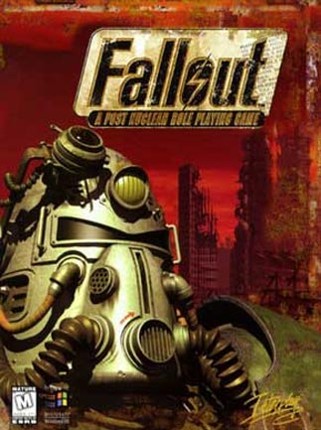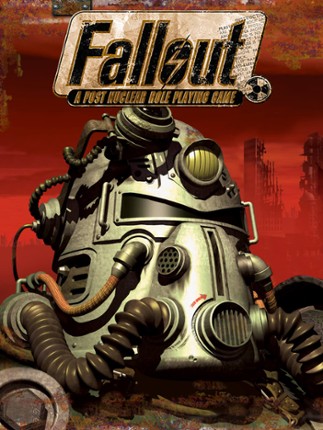
Fallout Game Cover

About

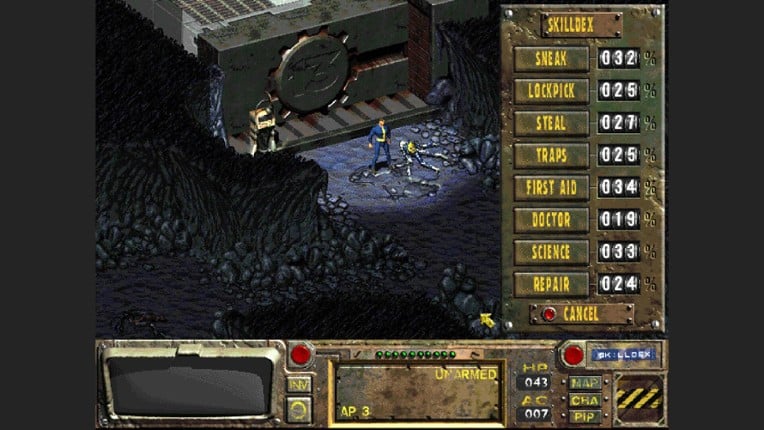
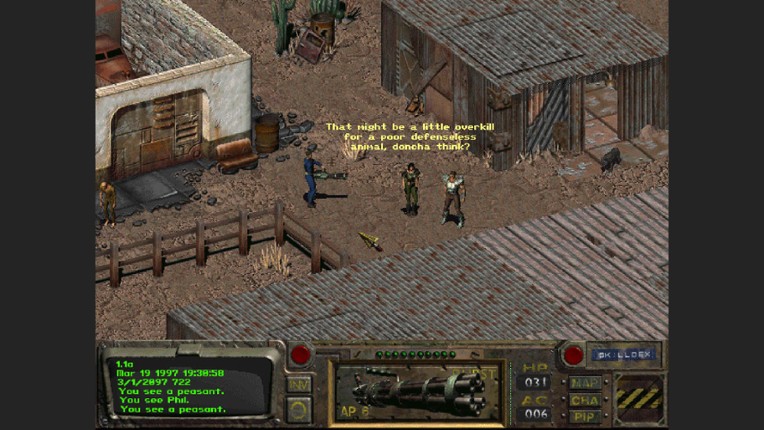
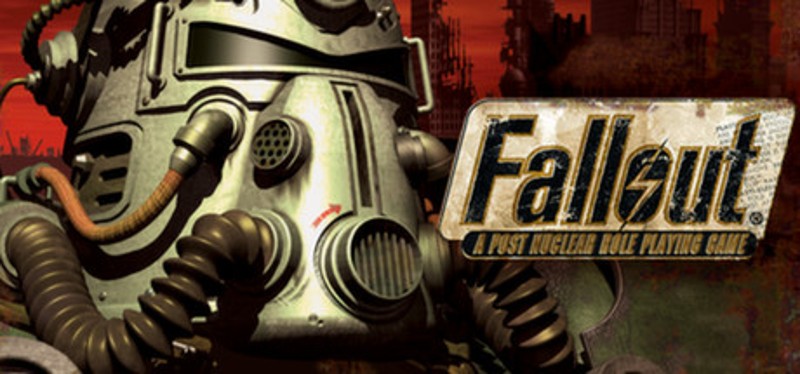
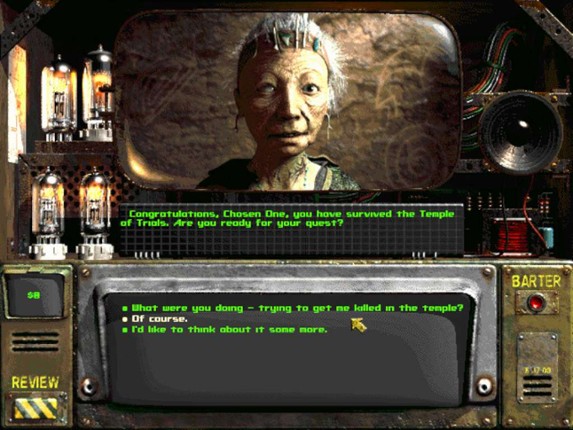
Fallout is a single player open world role playing game with a science fiction theme. It was developed by Interplay Inc. and was released on November 1, 2015. It received very positive reviews from players.

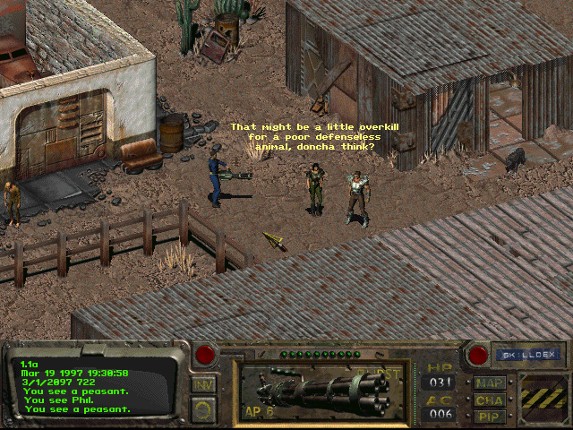
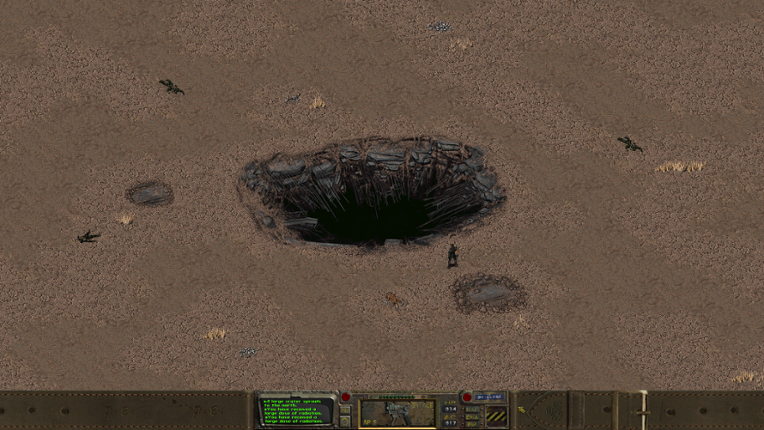
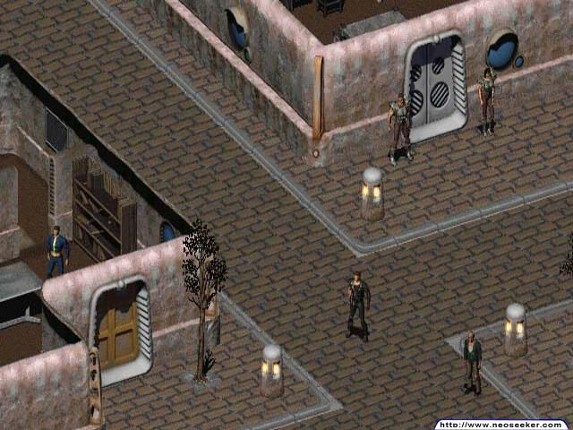
Gameplay in Fallout consists of traveling around the game world, visiting locations and interacting with the local inhabitants, and is typically in real-time. Occasionally, inhabitants will be immersed in dilemmas which the player may choose to solve in order to acquire karma and experience points.

Skip User Reviews

94%
Audience ScoreBased on 15,780 reviews
story1.3k positive mentions
stability155 negative mentions

  • Fallout 1 offers a rich, immersive post-apocalyptic story with dark humor, moral complexity, and meaningful player choices that shape the world and outcomes.
  • The game's bleak, dark atmosphere combined with its retro-futuristic art style and haunting soundtrack create a uniquely immersive and memorable experience.
  • High replayability is driven by multiple endings, diverse character builds, branching dialogue, and varied playstyles, encouraging different approaches in multiple playthroughs.
  • The gameplay and interface feel dated, clunky, and unintuitive, featuring a steep learning curve, lack of tutorials, and tedious grinding that can frustrate players.
  • Numerous bugs, crashes, glitches, and optimization issues, especially on modern systems, negatively impact progression and overall stability, often requiring patches or community fixes.
  • The absence of quest logs and limited in-game guidance makes tracking quests difficult, forcing players to take external notes to avoid confusion and spoilers.
  • story
    3,308 mentions Positive Neutral Negative

    Fallout 1 delivers a rich, immersive post-apocalyptic story marked by dark humor, moral complexity, and meaningful player choices that shape the world and its outcome. While the gameplay and interface are dated and can be challenging, the game's narrative depth, character development, and branching quests remain highly praised and stand out as some of the best in the franchise. The lack of quest markers and need for player attention adds to the sense of discovery and accomplishment, making it a rewarding experience for those willing to embrace its old-school design.

    • “The story telling is phenomenal and the setting is so dark and eerie.”
    • “The story and writing is some of the best in the franchise, but it can take a while before you meet characters that are interesting.”
    • “This is an excellent game with a compelling story that requires the player to make difficult choices and won't hold your hand like many modern games, especially within the Fallout series.”
    • “Despite liking the stories, there are also a decent number of quests and interactions that feel a little shoddy and not well written.”
    • “There wasn't really any sort of quest log, which makes it hard to know where you're at in the story (which isn't a huge deal once you know that, since you can log things for yourself using notepad or word). This can particularly be bothersome to not know which step you are on in a quest or even what quest you were doing when you leave the game and come back to after a few hours/days.”
    • “The main quest is basically just a short fetch quest with a time limit, restricting the amount of side content you can do. The time limit is an interesting idea but meant that I ended up postponing side quests until I completed the first story arc, which in the moment I found annoying, but later not as much.”
  • gameplay
    1,685 mentions Positive Neutral Negative

    The gameplay of Fallout 1 is a classic, turn-based, isometric RPG system that, while innovative for its time, feels clunky, slow, and unintuitive to modern players. It features complex mechanics including the SPECIAL system, strategic combat, and open-ended exploration, but lacks tutorials and quality-of-life improvements, leading to a steep learning curve often requiring external guides. Despite its dated interface and occasional bugs, players who invest the time to learn its mechanics often find the gameplay rewarding, deep, and strategic, perfectly complementing the game's rich story and atmosphere.

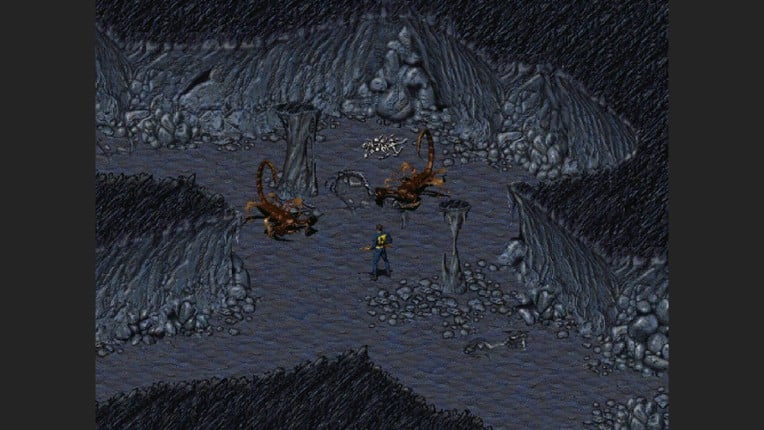
    • “To anyone debating trying the game (tiny spoiler alert), I'd say to hang in there until at least you clear Vault 15 and clear the Radscorpion cave for Shady Sands, at which point you'll notice the controls and gameplay getting easier and more fluid.”
    • “If you love turn-based RPGs with nothing but freedom to roam and the ability to approach problems in a variety of ways, this game is still the gold standard, and in my opinion is still the best entry in the series in terms of tone, gameplay, and atmosphere.”
    • “The gameplay combines CRPG mechanics with elements of tabletop RPGs, introducing the SPECIAL system and offering deep role-playing opportunities, though early builds can be inflexible.”
    • “The game will tell you what to do, you will understand the assignment but not have a clue as to how you're supposed to execute it within constraints of game mechanics.”
    • “Most (if not all) of the struggle I've had with the game stemmed from its poorly explained and convoluted mechanical expectations.”
    • “The controls are very weird and complex, many features have no tutorial, and overall, very difficult gameplay.”
  • graphics
    989 mentions Positive Neutral Negative

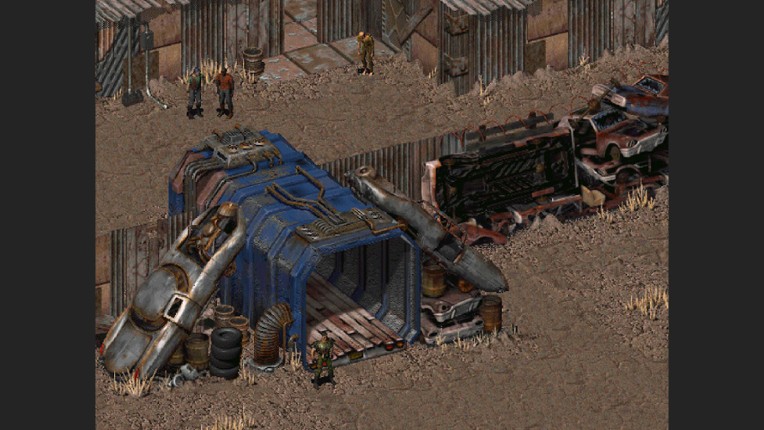
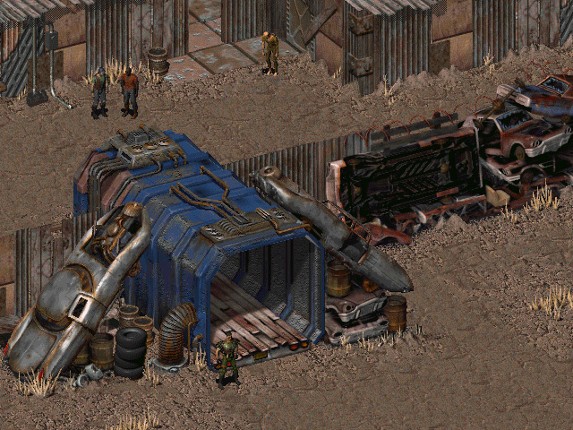
    The graphics of Fallout 1, while clearly dated by modern standards due to its 1997 release, possess a distinct retro-futuristic, isometric art style that many find charming and atmospheric, effectively complementing the game's grim post-apocalyptic world. Though some players find the visuals lacking in clarity, pixelated, or occasionally glitchy—especially on modern systems—numerous reviewers praise their unique aesthetic and nostalgic value, noting they enhance immersion despite technical limitations. Overall, while not visually impressive today, the graphics remain an iconic and integral part of the game's enduring appeal and atmosphere, particularly for fans willing to overlook their age in favor of story and gameplay.

    • “The game's dark, gritty atmosphere is perfectly complemented by its 1950s-inspired retro-futuristic aesthetic, creating a unique and immersive environment that draws players in from the very start.”
    • “The narrative is excellently crafted and dynamic, not at all linear, and the desolate graphic style and atmosphere is a masterwork in art direction.”
    • “Despite the dated graphics and occasional technical issues, its rich storytelling and player freedom make for a captivating journey.”
    • “Coming back after a long break to attempt to finish the game, but the minor graphical bugs and glitches are too much for me now.”
    • “The graphics still hold up stylistically but yeah it shows its age.”
    • “The graphics and Gameplay are dated (obviously, it's 26 years old at the time of this review).”
  • atmosphere
    670 mentions Positive Neutral Negative

    The atmosphere of Fallout 1 is widely praised as bleak, dark, and immersive, capturing the grim reality of a post-apocalyptic world with unparalleled world-building, storytelling, and an iconic, haunting soundtrack. Despite dated graphics and mechanics, its unique retro-futuristic vibe, oppressive tone, and richly detailed environments create a deeply engaging and memorable experience often regarded as the best in the series. This oppressive and moody ambiance, combined with meaningful player choices and rich lore, makes the game a timeless atmospheric masterpiece that still holds up decades later.

    • “Its bleak and gritty atmosphere is top tier, and that intro gave me chills.”
    • “The world building in this game and its sequel is just magnificent; it really blends in with the tone and atmosphere the developers want you as the player to experience—that this is the pinnacle of human nature and nobody is going to help you, not without a price anyways.”
    • “The atmosphere of the game truly makes you feel like you're in a nuclear apocalypse; the gloomy ambience really sells it, everyone is trying their best to recover and survive. It perfectly shows the horror of what could happen if the world were to end with a nuclear war.”
    • “The game world feels incomplete and doesn’t immerse you in its atmosphere.”
    • “Nope, looks decent enough but the turn-based combat just killed it for me, atmosphere is okay but Fallout 3 was so much more atmospheric.”
    • “So characters are fine, atmosphere is very moody due to detailed textures and fine use of somewhat chilling music, but the game suffers from repetitive and frustrating gameplay.”
  • music
    520 mentions Positive Neutral Negative

    The music in Fallout is widely praised for its haunting, atmospheric, and immersive qualities, expertly complementing the game's bleak post-apocalyptic setting with eerie ambient tracks composed by Mark Morgan. The soundtrack, blending dark industrial tones with sparse use of classic 1940s-50s songs like "Maybe" by The Ink Spots, helps establish a feeling of despair, dread, and tension, making it a defining and memorable aspect of the game's overall tone. While some find the limited track variety repetitious, the music remains iconic, deeply enhancing the game's atmosphere and emotional impact.

    • “The ambient music composed by Mark Morgan is by far the best video game soundtrack I've heard, perfectly capturing the eerie and desolate post-apocalyptic atmosphere of the game.”
    • “Featuring a wide range of music composed by Mark Morgan, Interplay's dark ambient and industrial soundscapes capture the game's eerie, desert-like atmosphere, while maintaining the game's pre-war musical roots, with tracks like "Vats of Goo," "Vault of the Future," "Acolytes of the New God," and "Metallic Monks" adding profound mood and immersion.”
    • “The iconic, haunting, atmospheric music that plays as a backdrop to the wasteland adds so much genuine character to the game, reinforcing the bleak and hopeless tone of this post-nuclear world.”
    • “A bit disappointed in the music, however, as there is only 1 licensed track that appears in the opening and closing cutscenes, and the in-game music has a very limited tracklist that loops over and over again.”
    • “The music and sound effects, while atmospheric, are also fairly basic by today’s standards.”
    • “The music is mostly atmospheric with little-to-no combat music and it all gets a bit samey.”
  • humor
    324 mentions Positive Neutral Negative

    The humor in Fallout 1 is characterized by a dark, bleak, and mature tone that blends grim post-apocalyptic themes with sharp, often subtle black comedy. Players frequently encounter witty, ironic, and sometimes absurd dialogue and situations that enhance immersion without breaking the atmosphere. While less overtly comedic than later series entries, its humor is praised for clever writing, memorable characters, and deadpan wit that balances seriousness with moments of levity.

    • “The writing, darkly humorous and grimly philosophical, gives the entire game a unique voice that still resonates.”
    • “Its turn-based combat, open-ended exploration, and darkly humorous writing create a deeply immersive experience in a devastated world struggling to survive.”
    • “The dialogue, enriched by a dark sense of humor, keeps players engaged and often provides a chuckle amidst the chaos.”
  • replayability
    175 mentions Positive Neutral Negative

    Fallout 1 offers high replayability driven by its multiple endings, diverse character builds, branching dialogue, and varied playstyles, allowing players to approach quests and storylines in many different ways. Though relatively short, its strategic depth, moral ambiguity, and open-ended gameplay encourage multiple playthroughs to fully experience its content. Despite some limitations in mod support and dated mechanics, players consistently find fresh challenges and unique experiences with each run.

    • “Replay value: with multiple endings, radically different character builds, and entire storylines that can be missed or altered based on one early decision, Fallout practically begs for replays.”
    • “The dialogue options are rich and varied, allowing for different approaches and outcomes, which significantly enhances replayability.”
    • “The open-ended gameplay allows for multiple playthroughs with different outcomes based on your choices, making it highly replayable.”
    • “I beat it on stream, it's definitely a classic; however, it does have a lack of content that makes replayability essentially non-existent.”
    • “The replayability is almost non-existent. I finished it a dozen times, but after the third time it was almost boring. You could try to play with a few different builds, but that's it. There's not a lot of tasks or choices, which is a downside to it, but hey, it's 20+ years old and was groundbreaking for the time.”
    • “But besides that, I guess what I recommend to a newer player is to have your phone or a notebook and write down everything you think is important, as the Pip-Boy in this game just says in town X: take out the radscorpion for the town, but that's it. If you do not take notes or pause for a week, you will forget the detail of that specific quest and have to look online for help, probably spoiling yourself or finding that if you do this you can get a free OP item right away, limiting the replayability of the game.”
  • stability
    165 mentions Positive Neutral Negative

    The game is notably buggy and glitch-prone, with frequent crashes, quest-breaking bugs, and outdated mechanics that can hinder progression and cause frustration. While some minor graphical issues and occasional freezes persist, community-made patches significantly improve stability, making the experience smoother though still imperfect by modern standards. Overall, despite its age-related technical flaws, the game remains playable and enjoyable with careful saving and bug mitigation.

    • “The experience was very pleasant and bug free.”
    • “Runs great on new and old hardware in fullscreen as well!”
    • “Had no issues except companions standing in doorways, no bugs, no glitches.”
    • “Though like war some things never change and in the final stretch the game became a little too buggy for my liking; locking me out of the razors quest for example.”
    • “Glitches, crashes, self-locks, worst possible RNG and the most random bullshit imaginable, made my playthrough hell.”
    • “The combat is awkward and unwieldy, the graphics and UI are hideous, and bugs and errors (oftentimes game-breaking) are incredibly common (I even got softlocked along the main quest, only escaping thanks to reliance on glitches).”
  • grinding
    134 mentions Positive Neutral Negative

    Grinding in Fallout 1 is widely considered tedious and slow, with repetitive combat and cumbersome inventory management contributing to a frustrating experience. The turn-based combat and navigation can feel clunky and time-consuming, especially early on, though some players find it rewarding once the mechanics are understood. Despite this, the game's rich atmosphere and story often motivate players to persevere through its grind-heavy gameplay.

    • “You'll need a second life for grinding.”
    • “This is always fun and not tedious.”
    • “A lot of grinding.”
    • “Exploring and mastering them in Fallout 1 just wasn't fun, it was tedious.”
    • “The journey is long, tedious, outright frustrating and very dangerous.”
    • “You finish all the quests and you'll be level 13 or 14, the cap is 21. Hope you enjoy grinding by killing deathclaws over and over which take forever to kill if you want max level.”
  • emotional
    51 mentions Positive Neutral Negative

    The game delivers a deeply emotional experience marked by a dark, heartbreaking narrative and memorable characters that evoke genuine attachment. Players often describe the ending as profoundly moving, with moments of warmth, nostalgia, and sorrow that linger long after completion. Its blend of sharp writing, immersive atmosphere, and impactful choices creates a sense of wonder, despair, and personal investment rarely matched in other RPGs.

    • “Inevitably, as all things do, it leads to a bittersweet ending that left me feeling more emotional than I thought I would.”
    • “His final line before he takes his life is genuinely heartbreaking, and the aftermath felt impactful.”
    • “Poetically Jungian writing follows suit by driving heartbreaking narratives across a radioactive world while posing ethical dilemmas concerning the nature of mankind and death.”
  • character development
    44 mentions Positive Neutral Negative

    The game's character development is widely praised for its depth, meaningful player choices, and lasting impact on gameplay and story progression, supported by a unique S.P.E.C.I.A.L. system and well-written, memorable NPCs. While some character designs can feel unsettling or repetitive, the overall world-building, dialogue, and narrative richness create a compelling, immersive RPG experience that remains influential and enjoyable even years after release.

    • “Character development is robust, with memorable NPCs and factions that have nuanced motivations and ideologies.”
    • “The emphasis on player choice and consequence paved the way for future RPGs, setting a benchmark for storytelling and character development.”
    • “XP raised during the course of your quest is directed to your character defining traits, such as SPECIAL attributes, perks, and skills, allowing for satisfying and personalized character development.”
    • “Some character designs look unappealing, clashing with the game’s otherwise strong art style.”
    • “Also, the enemy AI is a bit primitive (not that newer games are any better, actually...) and you'll also find that some character development options are obvious 'traps' that may make you restart the game.”
    • “Even though there may be less character development in Fallout than in later installments, it's worth exploring the humble beginnings of the factions and storylines that have been developed throughout the series.”
  • optimization
    38 mentions Positive Neutral Negative

    The game suffers from notable optimization issues, including stuttering, mouse lag, crashes, and unrefined controls, especially on modern systems, often requiring patches or fan-made fixes for smoother performance. Despite these technical shortcomings, performance on updated engines or with mods improves stability significantly. Overall, while optimization is lacking compared to modern standards, it remains playable and rewarding with some effort.

    • “Some perks are obviously better for combat, but it is very possible to go through the game with a roleplay-ish character sheet rather than one hyper-optimized for fighting.”
    • “Install Fallout ET TU, which ports Fallout 1 into Fallout 2's engine, bringing performance and stability improvements along with countless bug fixes.”
    • “Very fun if you like a challenge, fairly well optimized though I wish there was more proper icon scaling for 2560x1440p, but hey I don't think there were monitors with that many pixels in the 90's.”
    • “There's a slight problem with its optimization; the game often crashes mid-battle or mid-dialogue, and it can be annoying at times.”
    • “Yet so poorly optimized... I would not recommend it, since because of crashing in critical moments right after saves, it can corrupt 10+ hours of gameplay.”
    • “This game years ago and the gameplay still holds up, but there is zero optimization and even worse, there are bugs that never existed before.”
  • monetization
    8 mentions Positive Neutral Negative

    The game is praised for having no microtransactions or paid mods, which is appreciated by players tired of cash grabs common in other titles. However, some users express frustration with unrelated ads and a sense of outdated gameplay despite strong worldbuilding. Overall, the monetization approach is positively received for being free of aggressive in-game purchases.

    • “No microtransactions.”
    • “Does not have paid mods or microtransactions.”
    • “Nah, forget it, let's keep doing Fallout 76 cash grabs and more online rubbish.”
    • “♥♥♥♥ the sellout Bethesda, no microtransactions in this game for future updates right?”
    • “Microtransactions - in-game purchases.”
Skip Game Offers

Buy Fallout

14h Median play time
21h Average play time
16h Main story
32h Completionist
5-29h Spent by most gamers
*Based on 52 analyzed playthroughs
Skip Videos

Videos

Skip Games Like Fallout
Skip Game News
Skip FAQs

Frequently Asked Questions

Fallout is a open world role playing game with science fiction theme.

Fallout is available on PC, Mac OS, Windows, Linux and others.

The main story can be completed in around 16 hours, while the entire game is estimated to take about 32 hours to finish. On average players spend around 21 hours playing Fallout.

Fallout was released on November 1, 2015.

Fallout was developed by Interplay Inc..

Fallout has received very positive reviews from players. Most players liked this game for its story but disliked it for its stability.

Fallout is a single player game.

Similar games include Fallout 2: A Post Nuclear Role Playing Game, Fallout 2, Atom RPG, Wasteland 2, Atom RPG and others.