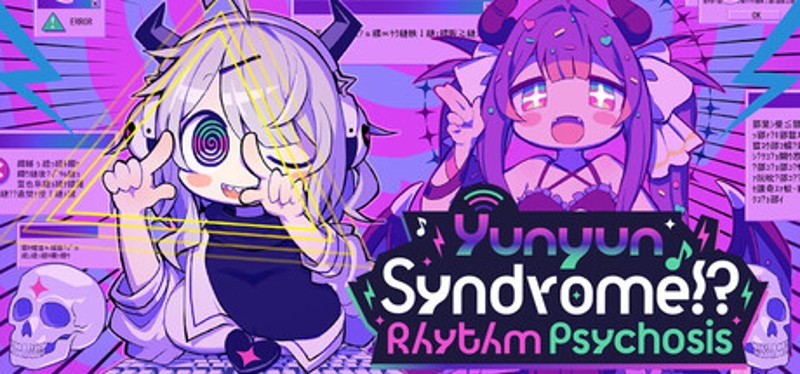
Yunyun Syndrome!? Rhythm Psychosis Game Cover

About

Yunyun Syndrome!? Rhythm Psychosis is a single player casual simulation game with horror and anime themes. It was developed by Alliance Arts and was released on April 23, 2026. It received positive reviews from players.

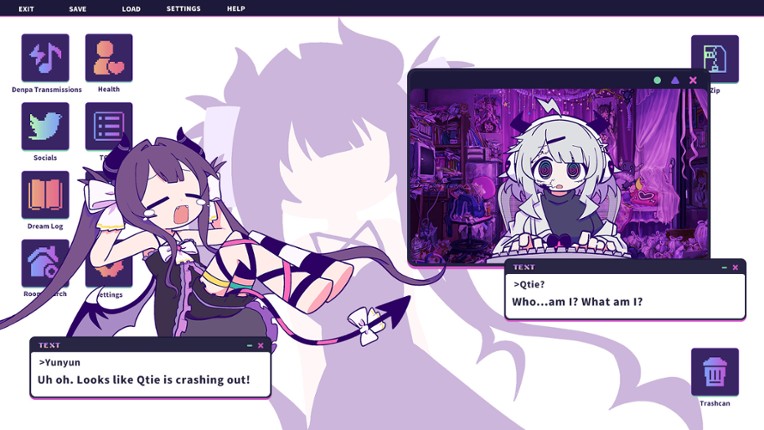
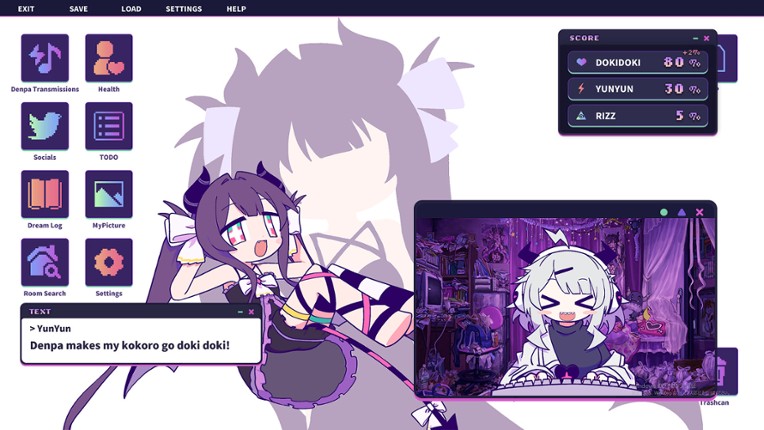
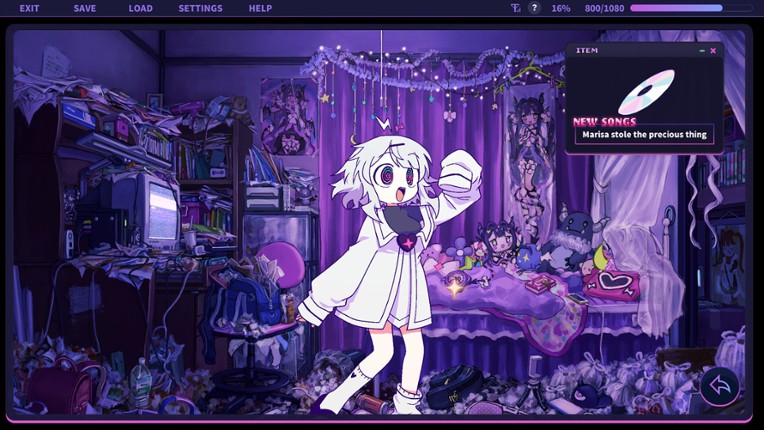
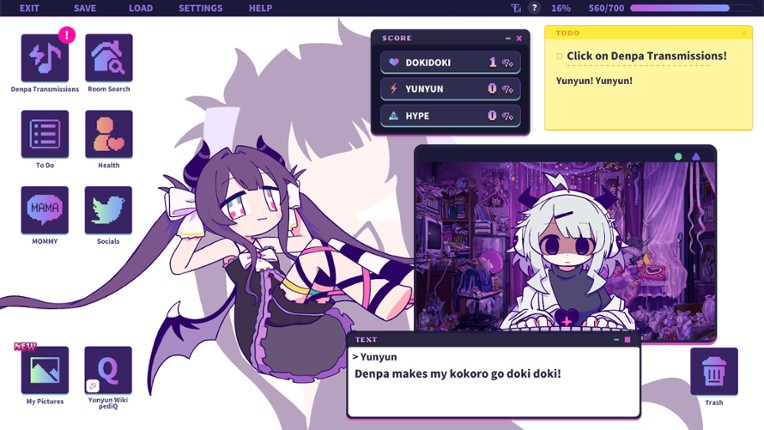
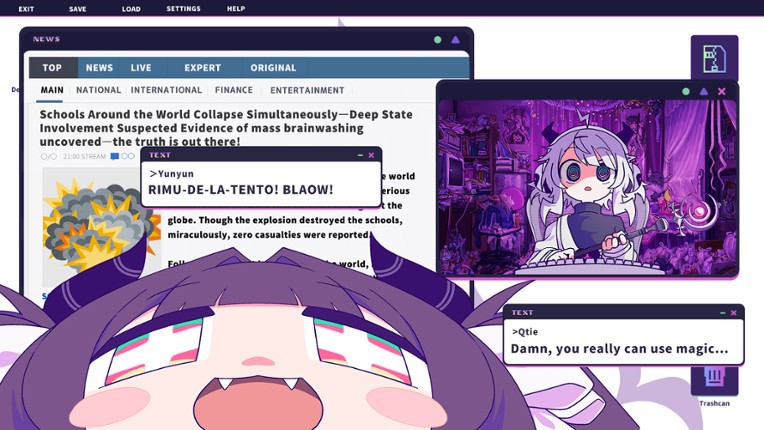
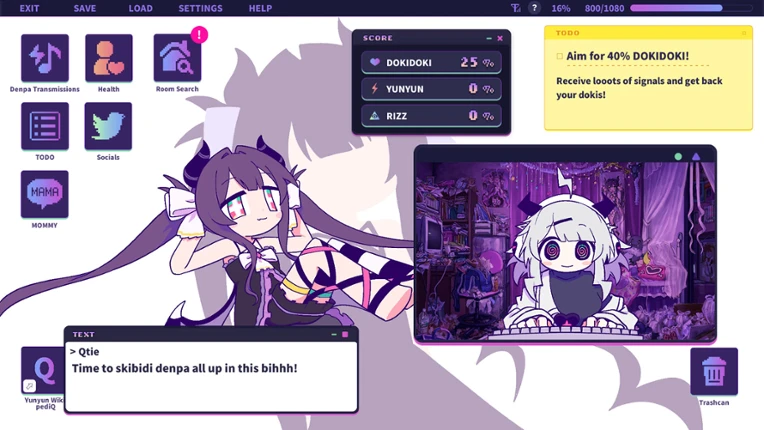
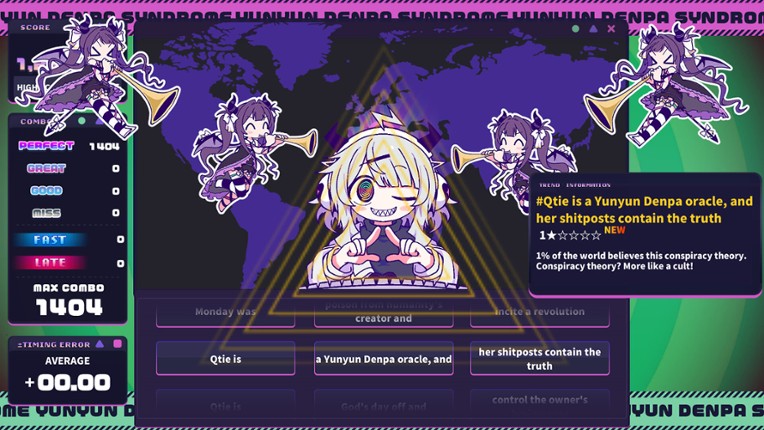
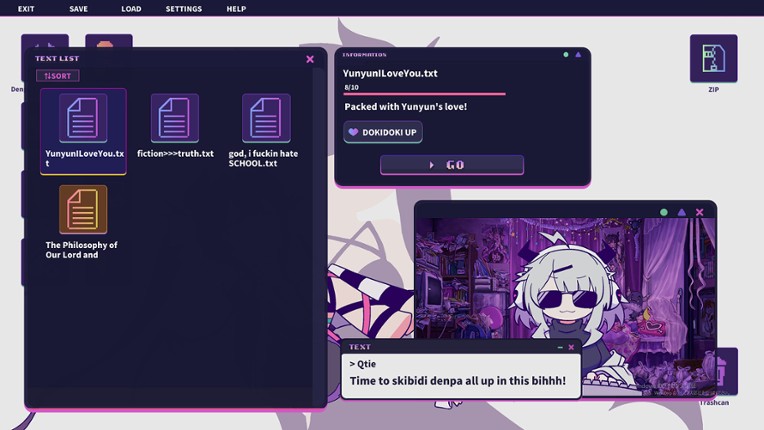
“Yunyun Syndrome!? Rhythm Psychosis” is a rhythm adventure game about a psychotic hikikomori girl - also an avid anonymous poster - who corrupts the world with her severe brain rot from listening to too many denpa songs. Yunyun all over this world with your degen otaku-posting.
Skip User Reviews

86%
Audience ScoreBased on 803 reviews
music92 positive mentions
grinding30 negative mentions

  • Engaging and fun rhythm gameplay with responsive controls and multiple difficulty levels suitable for both beginners and experienced players.
  • Unique and charming art style, animations, and character designs with strong voice acting, especially Nanahira as Qtie.
  • Excellent soundtrack featuring well-known denpa artists and nostalgic tracks from the early 2000s internet and otaku culture.
  • The game balances rhythm gameplay and visual novel elements well, creating a compelling experience for fans of denpa music and niche internet culture.
  • Developer is actively listening to player feedback and working on improving the English localization and reducing grind.
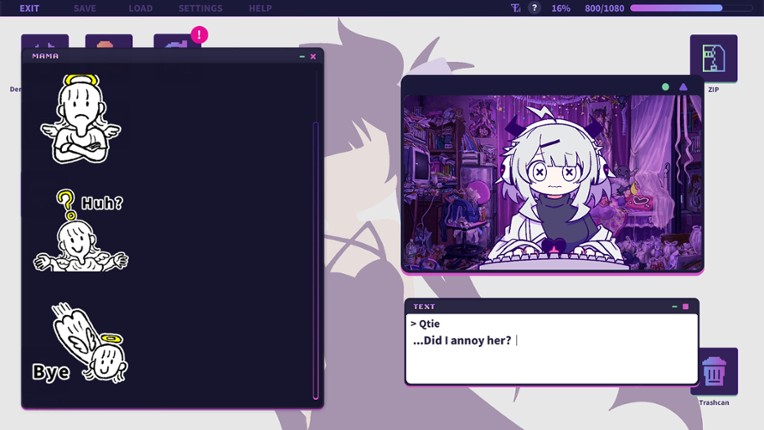
  • The story and characters, particularly the dynamic between Qtie (Q-chan) and Yunyun, resonate with players and offer emotional depth related to themes of isolation and mental health.
  • English localization was initially extremely poor, with inaccurate translations, added unrelated modern slang, and removal of cultural references, which detracts from the game's original tone and charm.
  • The amount of content in the base game is limited, with many songs locked behind pricey DLC packs leading to a repetitive and grind-heavy progression to unlock endings.
  • Some gameplay elements, like UI/UX and progression systems, feel clunky or underdeveloped, with excessive grinding required for achievements that can reduce player engagement.
  • The rhythm game portion, while accessible, may feel simplistic or repetitive to hardcore rhythm game enthusiasts due to standard 4-key mechanics and inconsistent charting.
  • Story pacing and variety of endings were criticized as underwhelming or lacking closure, with many 'endings' feeling like collectibles rather than meaningful conclusions.
  • music
    286 mentions Positive Neutral Negative

    The music in this rhythm game is widely praised for its catchy, niche-focused denpa soundtrack featuring classic and modern tracks from well-known artists like Nanahira and IOSYS. While the song selection is highly enjoyable and fits the game's quirky, anime-inspired theme perfectly, many reviewers note the base game has a limited number of songs, pushing players toward multiple DLCs to access a fuller library. Overall, the soundtrack is a highlight for fans of denpa and Japanese rhythm games, though the repetitive nature and grind to unlock all content can be a drawback.

    • “Lots of songs on launch, and with DLC it's almost 4x in song count.”
    • “This is the first rhythm game where I've actually played every available song and still found myself wanting more.”
    • “The song list’s actually top tier with lots of famous creators, plus tracks from Muse Dash and Touhou Project—a total banger lineup.”
    • “There are barely any songs even with the DLC; there are like a maximum of 20 songs, so to even complete the game, you're going to have to spend a lot of time grinding the same song over and over again, which is just not fun. Furthermore, the song selection is just not for me.”
    • “The rhythm game portion is very forgiving and the charting isn't good, often feeling off time or not synced to the music.”
    • “The amount of music is quite small even with DLC (especially considering how much you have to play for some achievements), and even basic features you'd expect in a rhythm game like marking a song as a favorite are currently not present as far as I can tell.”
  • story
    177 mentions Positive Neutral Negative

    The story in this rhythm game is generally praised for its engaging characters, dark and quirky themes, and emotional depth, resonating especially with fans of otaku culture and mental health narratives. However, many users note that the story is relatively short, sometimes repetitive or underdeveloped, and often hindered by poor English localization that diminishes the impact of the writing. While the narrative adds meaningful flavor to the gameplay and is appreciated by those who enjoy story-driven rhythm experiences, progression can feel grind-heavy, and the overall depth and presentation could benefit from further refinement.

    • “The story made me bawl my eyes out because of it hitting too close to home in some parts, especially the end credits song!”
    • “The story has some depth to it; the development doesn't feel rushed, it shows how Qtie develops over time, and we learn more about her and Yunyun.”
    • “Great visuals, the story aspects keep you engaged outside of just the rhythm game aspect, fun characters and writing.”
    • “The story is so short and poorly arranged it does not feel rewarding to progress the game.”
    • “But you picked up all of this and barely developed it, story wise.”
    • “The english translation is terrible, bordering on fanfic territory making a joke of the story it's trying to tell.”
  • gameplay
    101 mentions Positive Neutral Negative

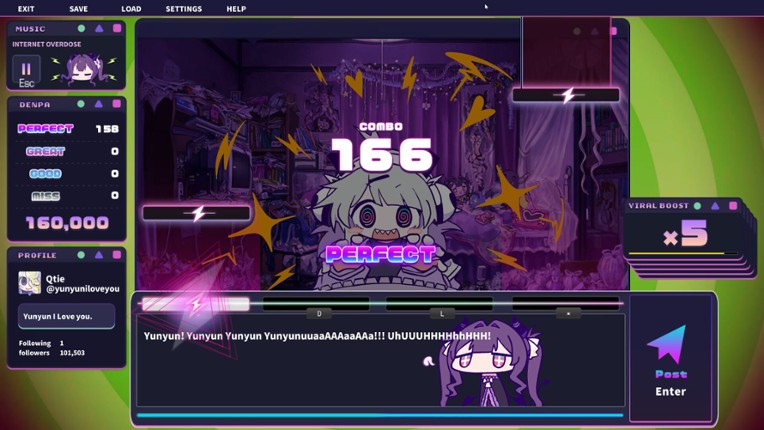
    The gameplay features a solid, fun, and accessible four-lane rhythm game with good sync and customizable difficulty, appealing especially to rhythm game fans and denpa music lovers. While engaging and supported by a strong soundtrack and art, some find it repetitive and grind-heavy due to multiple playthroughs required for endings, with occasional UI limitations and missed opportunities for gameplay variety. Overall, the core rhythm mechanics are well-made and enjoyable, though the progression and localization issues somewhat detract from the experience.

    • “As a rhythm loving person playing on any device possible, I love the mechanics, the story in itself, honestly everything.”
    • “The rhythm mechanics are forgiving enough that they actually make me want to keep trying and improve.”
    • “Gameplay: solid quality rhythm game with options to make it easier with unlocks.”
    • “Glaring issues with writing and gameplay are unfortunately commonplace; I went out of my way to get 100% for the game but a lot of the design is annoying.”
    • “I pray for your soul because the slow gameplay and some absurd requirements make it helllllllllll.”
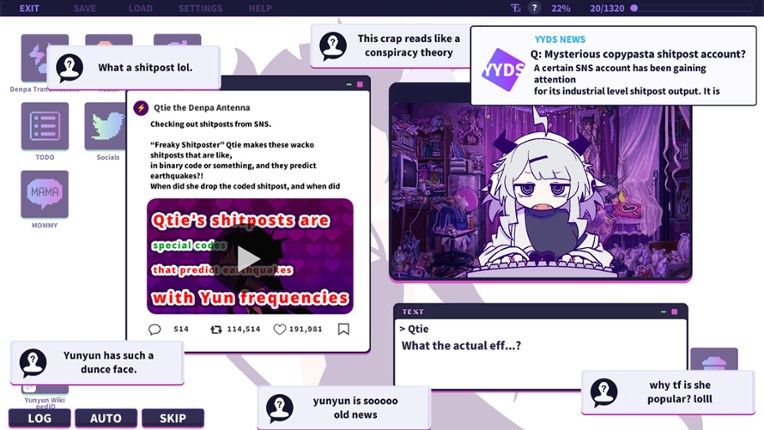
    • “The starting parts (what you might've seen in the demo) feel they're building up to a complicated game, with multiple interesting things to do--but in fact, once you enter the "posting conspiracy theories" stage (about 20 minutes in), that's it; you've seen everything the gameplay had to offer.”
  • graphics
    52 mentions Positive Neutral Negative

    The game's graphics receive widespread praise for their cute, vibrant, and distinctly Japanese anime-inspired art style, creating an aesthetically pleasing and engaging visual experience that complements the rhythm gameplay and story. However, some users note issues with frame drops and occasional visual-audio sync problems, which can affect gameplay precision. Despite localization and technical hiccups, the visuals are generally considered a major strength and key appeal of the title.

    • “This is a phenomenal rhythm game with an enticing story and absolutely hypnotic art style!”
    • “Visuals: very high quality through and through, just a visual eye candy.”
    • “The song selection is top tier and the artstyle is so incredibly cute, it’s just pure eye candy.”
    • “The visuals are insanely bad and symptomatic of the recent trend in Japanese pop music videos where every music video has two hundred different things happening on screen with no cohesion whatsoever.”
    • “All in all a terrible game, with awful visuals and music, with no interesting appeal or anything new to add to an already saturated genre.”
    • “Frequent frame drops make note timings unpredictable - it's almost impossible to perfect a map since at any point you can be subject to random frame skips that cause inputs to be delayed or missed. Hit sound effects constantly cut and interrupt each other, and they don't sync well with the visuals and audio due to timing problems.”
  • humor
    38 mentions Positive Neutral Negative

    The game's humor is characterized by its quirky, degenerate, and internet culture-inspired style, blending dark and silly elements with memorable, often hilarious dialogue and endings. While many praise its charm and niche appeal, especially for fans of denpa music and otaku culture, some criticize certain translations for awkward or outdated slang that detracts from the humor. Overall, it resonates well with its target audience, offering laughs through both its writing and cultural references.

    • “A short to mid-length game about a degenerate hikkikomori with a terrible life losing it so hard that she starts being able to speak with her beloved 2d 999 year old koakuma waifu; a soulful, funny, and memorable tribute to denpa music (and the culture surrounding it) and the niconico era that says what it has to say and doesn't overstay its welcome.”
    • “Not to mention it's just oozing with style, charm, and humor.”
    • “+the conspiracy endings are funny, good bits and gags that made me laugh.”
    • “Localization done by painfully unfunny millennial apes that think they're on the cutting edge for replacing half of the dialogue with memes from 2015 and their weird fetishes.”
    • “Tons of annoying, unfunny faux Gen-Z slang that only an out-of-touch millennial would think is how young people talk.”
  • grinding
    30 mentions Positive Neutral Negative

    The game is notably grind-heavy, especially after the initial story, requiring repetitive play of a limited song list to unlock endings and achievements, which some find tedious and monotonous. While updates have reduced the grind somewhat, progression can still feel slow without DLC content, making grinding a significant part of the experience. Fans of rhythm games may tolerate it, but casual players might find the extensive farming frustrating.

    • “There are barely any songs even with the DLC, only around 20 songs maximum. To complete the game, you have to grind the same songs repeatedly, which is not fun. Additionally, the song selection is not appealing to me.”
    • “After the first short part of the game, the main portion becomes just grinding songs until a bar reaches 100%, with no new story developments, areas, or objectives—just repetitive grinding.”
    • “Progression is tedious due to extensive grinding to increase meters and advance the story. The developers included an auto-play function that skips songs but still grants rewards to help progress.”
  • character development
    6 mentions Positive Neutral Negative

    Character development in the game is generally considered basic and somewhat lacking in depth, with more emphasis placed on appealing and cute character designs. While voice acting for certain characters is a highlight, the story and progression offer limited growth or complexity, leaving some players feeling that character development is minimal.

    • “The whole aesthetic and character designs are also amazing.”
    • “The only plus side I'd say was the amount of voice acting for Yunyun and Q-chan; every one of their direct lines is voiced throughout the whole game (their character design is nice too).”
    • “The game content is quite interesting, especially the female character designs are very cute.”
    • “Place your expectations low for the story and the character development, which is basic.”
    • “Chapter 2 was just grinding to 100% denpa and I didn't get that many conspiracy endings, so it felt a bit empty character development wise.”
  • optimization
    6 mentions Positive Neutral Negative

    The game is generally optimized and runs smoothly with occasional hard stuttering during higher difficulty songs, which can be somewhat mitigated by disabling certain effects. However, some users still experience performance issues and note timing problems that affect gameplay consistency.

    • “Qt and Yunyun are adorable and the game is very optimized, smooth and enjoyable.”
    • “Turning off hit sfx and all the other toggleable animations and visual effects seemed to improve performance by a bit, but didn't fix the issues for me.”
    • “The art direction, animation, content, and music are all fantastic but the game in my experience suffers from performance problems, note timing issues, and poor UI/UX, all of which remain mostly unchanged from the demo version.”
    • “Regarding performance, I only ever had some hard stuttering occasionally occur playing level 4 difficulty for songs (autoplay seemed to not have this issue), but outside of that I didn't have any issues or crashes.”
    • “In the end, turning off hit SFX and all the other toggleable animations and visual effects seemed to improve performance by a bit, but didn't fix the issues for me.”
  • emotional
    2 mentions Positive Neutral Negative

    The emotional impact of the game is profound, evoking strong reactions such as tears. Players note that certain lines carry deep, layered meanings or have been altered to change their emotional or conceptual significance, enhancing the overall experience.

    • “No words really, I cried.”
    • “There are lines where entirely new meaning was inserted; where references were deleted; where the emotional or conceptual content of a line was changed outright.”
  • replayability
    1 mentions Positive Neutral Negative

    The feedback on replayability is unclear and mixed, with users noting delays possibly related to improving the game's playability and appeal. However, specific details about the game's replay value remain vague.

  • atmosphere
    1 mentions Positive Neutral Negative

    The game's atmosphere is enhanced by adorable graphics and atmospheric background music, though the soundtrack is somewhat limited and includes a few niche denpa songs that may not appeal to everyone.

    • “The graphics are adorable and the background music is atmospheric, creating an immersive experience even with limited tracks.”
  • monetization
    1 mentions Positive Neutral Negative

    Users mention that the game heavily incorporates advertising as a form of monetization, including multiple in-game billboards and prominent placements.

Skip Game Offers

Buy Yunyun Syndrome!? Rhythm Psychosis

9h Median play time
13h Average play time
8-32h Spent by most gamers
*Based on 4 analyzed playthroughs
Skip Videos

Videos

Skip Game News
Skip FAQs

Frequently Asked Questions

Yunyun Syndrome!? Rhythm Psychosis is a casual simulation game with horror and anime themes.

Yunyun Syndrome!? Rhythm Psychosis is available on PC and Windows.

On average players spend around 13 hours playing Yunyun Syndrome!? Rhythm Psychosis.

Yunyun Syndrome!? Rhythm Psychosis was released on April 23, 2026.

Yunyun Syndrome!? Rhythm Psychosis was developed by Alliance Arts.

Yunyun Syndrome!? Rhythm Psychosis has received positive reviews from players. Most players liked Yunyun Syndrome!? Rhythm Psychosis for its music but disliked it for its grinding.

Yunyun Syndrome!? Rhythm Psychosis is a single player game.