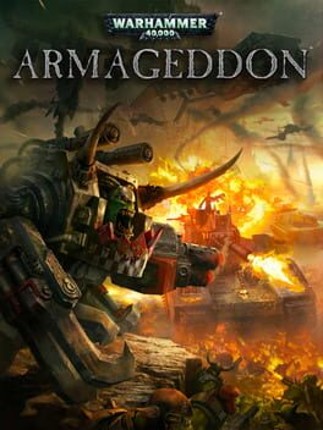
Warhammer 40,000: Armageddon Game Cover

About

Warhammer 40,000: Armageddon is a single player and multiplayer tactical role playing game with a science fiction theme. It was developed by The Lordz Games Studio and was released on November 26, 2014. It received neutral reviews from critics and positive reviews from players.

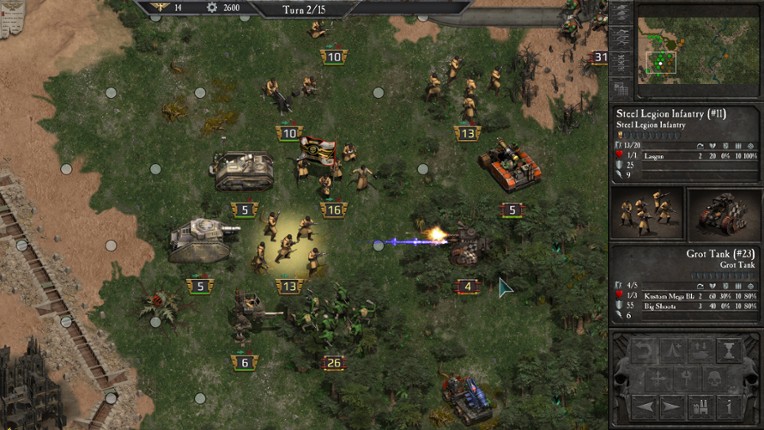
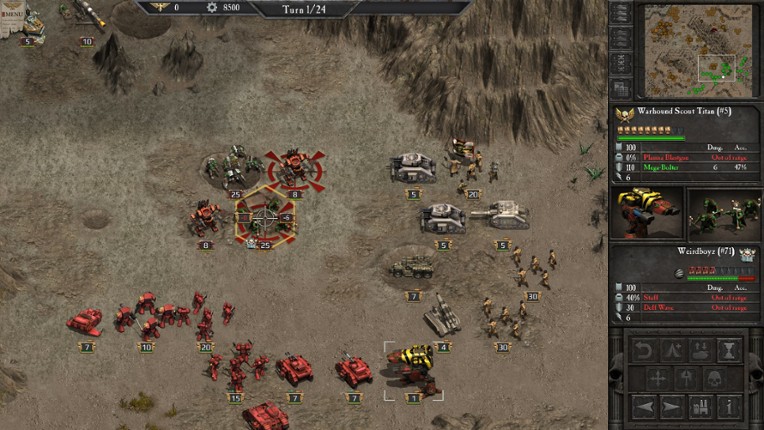
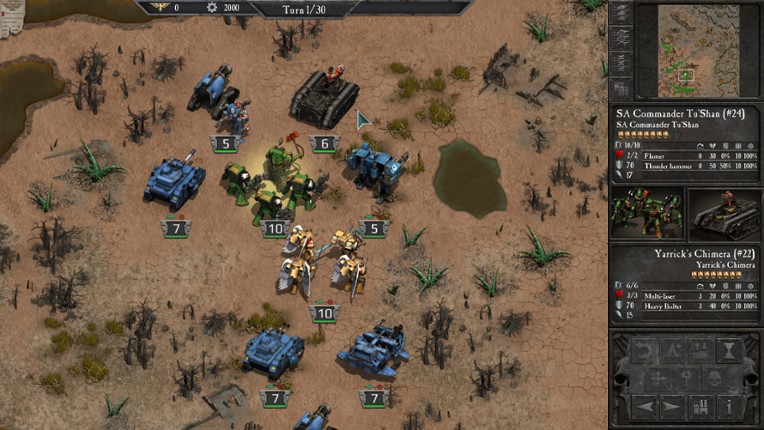
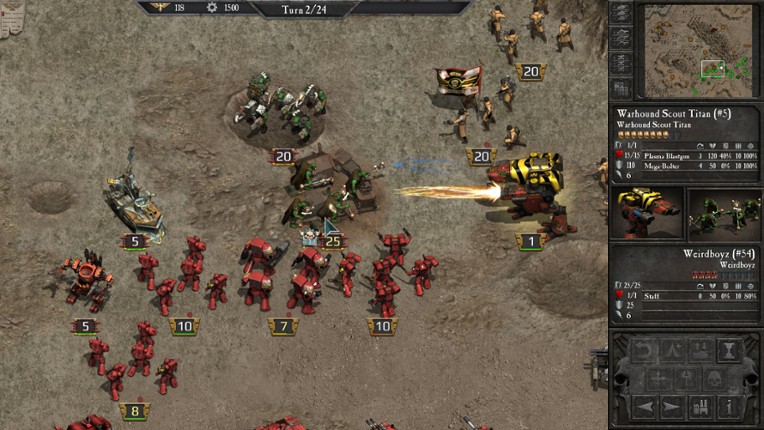
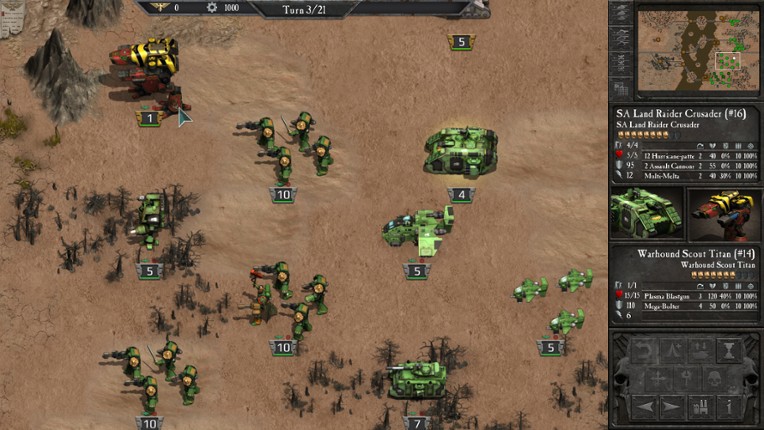
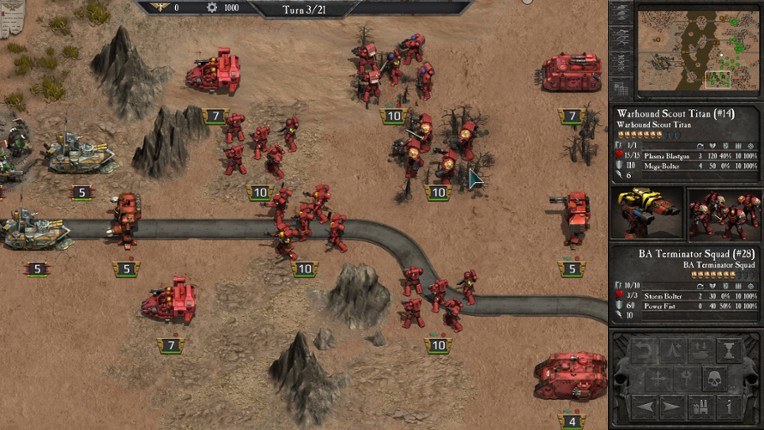
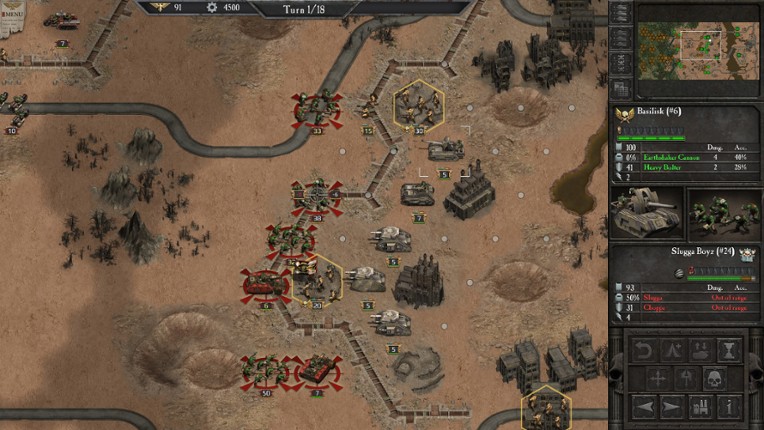
In this hex-based, turn-based strategy game, players will lead the Imperial forces of the Armageddon Steel Legion and Space Marines from a variety of Chapters against the Ork invasion through over 30 scenarios, on the hostile terrain of the planet and its gigantic Hive Cities.
Skip User Reviews

83%
Audience ScoreBased on 718 reviews
story70 positive mentions
stability11 negative mentions

  • Deep turn-based strategy gameplay with tactical depth and a wide variety of units true to Warhammer 40k lore.
  • Large, engaging campaigns featuring iconic 40k characters, multiple missions, and highly customizable armies.
  • Good voice acting and atmospheric sound effects that enhance immersion despite simple graphics.
  • Graphics and animations are dated and minimal, with limited unit movement and combat animation.
  • AI can be passive and predictable, sometimes resulting in repetitive and scripted battles with limited replayability.
  • High price point for the content and production values; some mechanics and interface elements lack clarity or polish.
  • story
    338 mentions Positive Neutral Negative

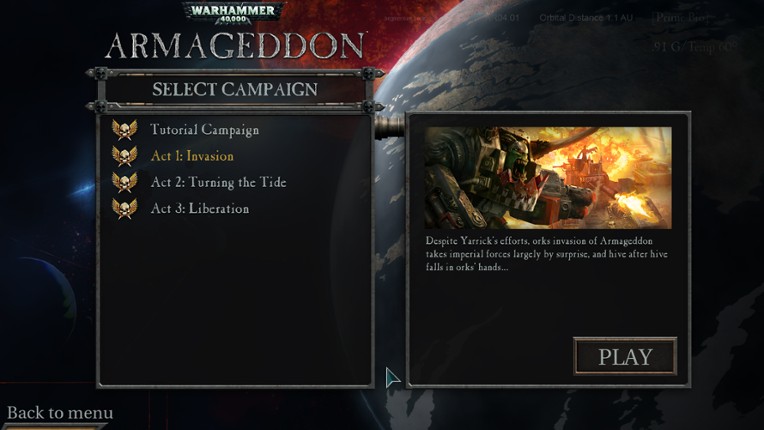
    Warhammer 40,000: Armageddon features a campaign-driven story set during the 2nd and 3rd wars for Armageddon, with well-known characters and lore elements that appeal to Warhammer fans. The narrative incorporates voice acting and branching missions, adding depth and replay value, though some find it repetitive, simplistic, and lacking immersive cutscenes. Overall, while the story enhances the tactical gameplay experience and is appreciated by fans for its faithful Warhammer atmosphere, it may feel limited or underdeveloped to newcomers or those seeking a more dynamic narrative.

    • “The campaign is full of engaging, story-driven missions that gradually ramp up the difficulty, keeping you on your toes.”
    • “Each mission feels like a battle for the survival of Armageddon, and the branching storylines allow for multiple outcomes, giving the game substantial replay value.”
    • “The story is presented in a mature way, with believable characters (orks will of course be orks).”
    • “The only saving grace is the story moments in between, but even those get tiresome after a while because it boils down to "commander, great job doing that thing, but the orks are relentless, so we need you to go do a thing." It's that for 30 missions, just slightly rephrased each time.”
    • “Sadly the level design is awful, the script was written by someone who has never played 40k and/or failed creative writing, the units are too samey, the only strategy is to out-range your opponent, none of the development mechanics are ever explained, if they do anything at all, and every mission feels exactly the same: find a bottleneck, hold it. Why you couldn't just deploy them at the bottleneck is never actually explained... and most missions you go into with no clear objective... then the AI will literally sometimes sit out of range turn after turn and get blown up by your artillery.”
    • “The story is very hollow and doesn't really immerse you into the Warhammer 40k universe very much and the gameplay gets old after a bit.”
  • gameplay
    162 mentions Positive Neutral Negative

    The gameplay of Warhammer 40k: Armageddon offers solid, turn-based hex strategy reminiscent of classic Panzer General titles, with a strong focus on tactical decision-making and unit variety. However, it suffers from dated mechanics, lack of clear tutorials or tooltips, occasional confusing or incomplete systems, and repetitive mission design, which can limit its depth and accessibility. Despite these flaws, dedicated players who invest time in external guides and appreciate its old-school style often find the gameplay challenging, thematic, and rewarding.

    • “Whether you’re leading an armored column of Leman Russ tanks or orchestrating a pincer movement with elite infantry squads, the game’s mechanics encourage thoughtful, calculated strategies.”
    • “The game mechanics are fun, intuitive, and dare I say balanced (as balanced as any battle against an unending tide of orks can be, I suppose!) — there is good voice acting and real strategy in this game. For example, making choices such as bottlenecking weak enemy units at choke points versus mowing down enemies simply to clear a path — keen initiative and calculated risk often win over a slogging sweep. The atmosphere is right, and the mechanics are fun and challenging.”
    • “All these mechanics, the huge unit variety along with varied routes within maps to complete objectives open up space for more strategic as well as tactical decision making.”
    • “Sure it could be enjoyable if you're looking for just any sort of strategy experience with a 40k skin... but if you're really bothered by nonsensical design choices (there is no mechanic for "blasts", basic infantry can shred aircraft), incomplete systems (none of the aircraft in the game are actual "flyers" even though the movement type exists in the game files—they "hover" and can't hover over cliffs or mountains), and not being able to see basic information in game (how much does this terrain impair my movement? why does my weapon do this much damage? what is my morale doing to my unit?), then I would give this game a pass.”
    • “It's virtually identical with the following differences: it doesn't seem to have the time pressure (in game turns, not real-time) to beat the missions that Elven Legacy had (great, the time pressure in Elven Legacy was oppressive, made it feel like a puzzle game); Armageddon's mechanics seem more complex which makes it difficult to predict the outcome of actions; Armageddon's mechanics are also more random which makes it impossible to predict the outcome of actions; units take longer to die which gets irritating—you have to pummel and pummel the enemy before they're gone; several factors make it harder to keep your units alive which sucks hard; Armageddon has a bewildering variety of units which you might think is a good thing but isn't—it's confusing, and you never know if you're using the right units; and, most dispiriting, it doesn't have anything like the rewards that Elven Legacy did.”
    • “One issue is that the game has almost no tooltips and the manual is both outdated and pretty thin in mechanics in general (seems like some mechanics were changed during development and no one bothered to fix the manual).”
  • graphics
    152 mentions Positive Neutral Negative

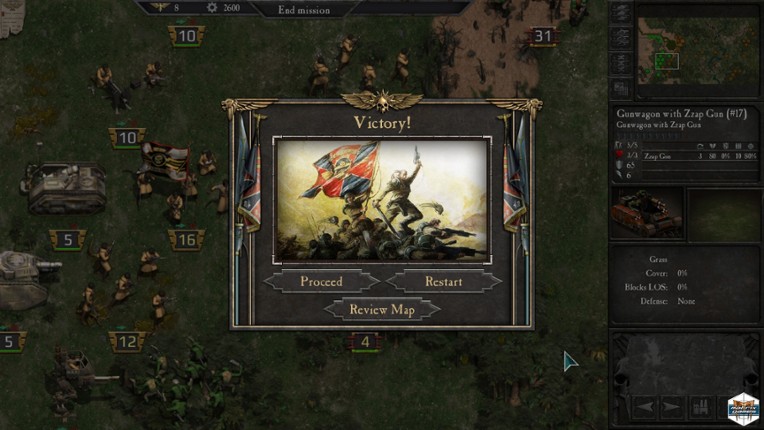
    The graphics of Warhammer 40,000: Armageddon are widely considered dated and basic, evoking a retro, early 90s to early 2000s 2D aesthetic that lacks polish and animation. While some appreciate its simplicity and faithful art style for a tactical board-game feel, many find the visuals unimpressive, minimalistic, and not up to modern standards, with occasional graphical bugs. Overall, the graphics are functional and serve the gameplay but may disappoint those expecting high-end or dynamic visuals.

    • “Warhammer 40,000: Armageddon is a fantastic game... the art, sounds, graphics, all are really fantastic.”
    • “Although the graphics are fully 2D, the units themselves are rendered in sharp detail and it looks great in my opinion.”
    • “Graphics are done really well with stunning detail where one can zoom in to indulge in the visceral imagery of units.”
    • “From the janky voice overs to the game-boy level graphics, this was a poorly executed butchery of what could have been a great game.”
    • “The graphics are appalling... truly, this game looks like it's 15 years old.”
    • “Total ripoff as the visuals are from 2004 and the sound effects are strangely bad.”
  • replayability
    24 mentions Positive Neutral Negative

    Replayability in the game is mixed, with some players appreciating the branching campaign and multiple outcomes that offer moderate replay value, while others find it limited due to predictable scenarios, lack of AI skirmish mode, and absence of features like a scenario editor. Multiplayer and modding potential are noted as strong points that enhance replayability, though many feel the single-player experience becomes repetitive after initial playthroughs.

    • “Each mission feels like a battle for the survival of Armageddon, and the branching storylines allow for multiple outcomes, giving the game substantial replay value.”
    • “The game has decent replayability if you want to attempt a higher difficulty or make different choices. While the choices aren't super impactful except for a few branching missions, it's still worth exploring different outcomes.”
    • “Either way, the campaign is great fun and offers a considerable amount of replayability.”
    • “The game has zero replay value; once you know how the scenarios will unfold, almost all these questions will be answered for you.”
    • “It's a solid wargame with no replay value and a way too hefty pricetag.”
    • “However, I think there is a huge need for AI to be added to the game so players can skirmish against the AI, as replayability is practically non-existent and this game is only being kept alive by the mountains of DLC being thrown in to add new missions.”
  • music
    20 mentions Positive Neutral Negative

    The music in the game is generally described as fitting and atmospheric, often serving as ambient or orchestral background that complements the visuals without being overwhelming. However, some users find it bland, repetitive, or nearly non-existent during gameplay, lacking memorable tracks or dynamic variety. Sound effects receive more mixed feedback, with some praising their impact and diversity, while others note a lack of polish and missing audio details that could enhance immersion.

    • “Music is very fitting to the atmosphere of the game but is not too intense in the mix.”
    • “Music is good, more like background ambient and orchestral pieces that set a meditative mood, which fits with the visual presentation.”
    • “With the patch update of 2-13-15 we even get to play with the brutish thumping ogryns while enjoying a ton of new added audio effects such as unit death sounds and more dramatic music at the start of turns, after a victory or defeat.”
    • “Very plain gameplay, bad tutorial, miserable sounds, no music, no effects, no atmosphere.”
    • “Not sure why there's a separate soundtrack for you to buy; I swear I've only heard one track on an infinite loop the entire time I've played.”
    • “On the negative side, it definitely feels stripped down to the bare essentials and lacking in some polish, a prime example being the complete omission of a soundtrack during gameplay.”
  • atmosphere
    19 mentions Positive Neutral Negative

    The game successfully captures the grim, dark, and immersive atmosphere of the Warhammer 40k universe through its rich lore, grim narration, and fitting music, creating a tense and captivating experience. While some note minimal presentation and occasional lack of sound effects, most praise the deep, strategic gameplay complemented by a well-realized industrial war setting. Overall, the atmosphere is a standout element that enhances the game's tactical depth and storytelling.

    • “The game does an excellent job of bringing the grimdark atmosphere to life, with its grim narration and dramatic setting.”
    • “With its rich lore, intricate tactical gameplay, and immersive atmosphere, it delivers a captivating experience for both Warhammer fans and strategy lovers alike.”
    • “I found they captured the 40k atmosphere well, the unit diversity is quite frankly incredible, and there's sufficient strategic depth to keep the strategy game fans among us interested.”
    • “Very plain gameplay, bad tutorial, miserable sounds, no music, no effects, no atmosphere...”
    • “The presentation is pretty barebones and the UI can feel clunky, but underneath there’s a surprisingly deep campaign with lots of unit variety, satisfying artillery and that grim, industrial 40k atmosphere.”
    • “Music is very fitting to the atmosphere of the game but is not too intense in the mix.”
  • stability
    13 mentions Positive Neutral Negative

    Stability reports are mixed, with many users encountering significant bugs, glitches, crashes, and unbalanced gameplay, especially in expansions, detracting from immersion. However, some players note the game runs smoothly and nearly bug-free on certain systems, praising its polish compared to similar titles. Overall, stability varies widely depending on platform and content, with hopes for future patches to improve the experience.

    • “Running this on an HP EliteBook with 1440p screen resolution, Intel Core M processor, and 8GB of RAM, runs great!”
    • “Well designed, nearly bug-free, and I can already tell I will be spending hours and weeks on this one.”
    • “Still buggy af nearly 10 years after release, unbalanced, no unit info except stats and a story that seems to be missing pieces.”
    • “The main quest line for the Imperial runs fine, but the other expansion quest lines are buggy, and the game crashes, booting you back to desktop.”
    • “I strongly hope that the game will be patched soon to fix some of the glitches, which while they don't completely break the game, do mar the experience and prevent any level of immersion.”
  • grinding
    8 mentions Positive Neutral Negative

    Grinding in the game is often described as tedious and repetitive, with early battles feeling monotonous until new factions arrive to diversify gameplay. While some appreciate the improved UI and tactical movement that reduce grind-like attrition, overall players find the balance and pacing can lead to a drawn-out, number-crunching experience that may not appeal to everyone.

    • “The whole game model is just a tedious grind where you get more infantry to act as shields while your armor beats down your opponent's infantry.”
    • “While you might think, especially early on where you only have Steel Legion forces (the Astra Militarum based on Armageddon), that the battles are the same and 'grindy', once the Space Marines land and you get to include Ultramarines and Blood Angels (the Sons of Vulkan appear and have their own mini campaign), the once mighty and indestructible Ork force starts to wither.”
    • “This game started off good, but quickly turned into a tedious rush to secure objectives (some of which were hidden) before the time limit expired.”
  • humor
    7 mentions Positive Neutral Negative

    The humor in the game is often described as amusing and lighthearted, especially in combat scenarios and weapon animations, adding an enjoyable layer to the experience. However, some users find the attempt to replicate tabletop mechanics humorously flawed, which, alongside technical issues, can detract from the overall enjoyment.

    • “It's funny, designed by the folks who did Panzer Corps 2; this is the better game overall.”
    • “The shooting is hilarious when the platform uses three different weapon systems installed.”
    • “The firing sequences are funny enough.”
  • monetization
    5 mentions Positive Neutral Negative

    The game's monetization is widely criticized for feeling like a cash grab, with overpriced DLC and limited content beyond the base game. While some enjoy the game itself, many advise against purchasing due to its aggressive pricing model and lack of value.

    • “It is the lack of such details and the DLC pricing model that make the game feel like an outrageous cash grab.”
    • “My advice is don't buy this cash grab; it looks like a potentially good strategy game but it simply isn't. Look elsewhere.”
    • “This is just a lazy cash grab from Games Workshop and I'm not impressed.”
  • optimization
    5 mentions Positive Neutral Negative

    The game's optimization is generally smooth on standard setups, but performance issues like stuttering and visual glitches occur during unit commands, affecting playability. Additionally, improvements in unit performance are not clearly reflected, impacting the overall experience.

    • “The game runs smoothly and, as far as I've seen, there aren't any bugs.”
    • “Performance: On my budget desktop, this game ran smoothly without issue.”
    • “It works up until I try to command units, then it starts stuttering (most notably the red damage numbers do not fade away and begin overlapping) and the game is effectively unplayable.”
    • “This is really annoying and one example of the bad performance by the software developers.”
    • “Performance: on my budget desktop this game ran smooth without issue.”
  • emotional
    1 mentions Positive Neutral Negative

    Users generally report a lack of emotional attachment, indicating that the game fails to evoke strong feelings or connections.

Skip Critic Reviews

60%Critics’ scoreBased on 1 critic reviews
Skip Game Offers

Buy Warhammer 40,000: Armageddon

143h Median play time
160h Average play time
30-160h Spent by most gamers
*Based on 6 analyzed playthroughs
Skip Videos

Videos

Skip Games Like Warhammer 40,000: Armageddon
Skip FAQs

Frequently Asked Questions

Warhammer 40,000: Armageddon is a tactical role playing game with science fiction theme.

Warhammer 40,000: Armageddon is available on PC, Phone, iPad, iPhone and others.

On average players spend around 160 hours playing Warhammer 40,000: Armageddon.

Warhammer 40,000: Armageddon was released on November 26, 2014.

Warhammer 40,000: Armageddon was developed by The Lordz Games Studio.

Warhammer 40,000: Armageddon has received neutral reviews from players and neutral reviews from critics. Most players liked this game for its story but disliked it for its stability.

Warhammer 40,000: Armageddon is a single player game with multiplayer support.

Similar games include Warhammer 40,000: Sanctus Reach, Warhammer 40,000: Battlesector, Order of Battle: World War II, Warhammer 40,000: Gladius - Relics of War, Warhammer 40,000: Dawn of War and others.