The Archetype Game Cover

About

The Archetype is a single player action game with a horror theme. It was developed by MacKenzie Kaser and was released on September 16, 2015. It received neutral reviews from players.

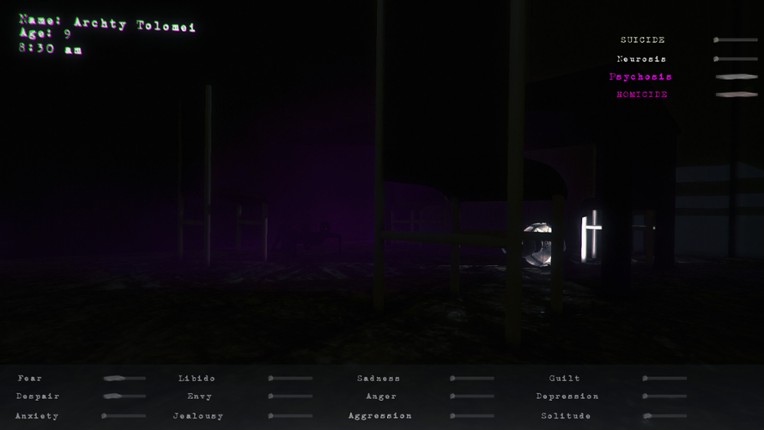
The Archetype is a psychological-horror where you'll be in control (or not) of Archty's psychological aspects, like Fear, Despair, Anxiety, Sadness, Jealousy, Anger, Aggression, Libido, Envy, Guilt, Depression and Solitude. As you explore the 4 chapters of Archty's life (Childhood, Adolescence, Marriage and Death), you'll have to deal with his anxiety disorder and schizophrenia and problems like h…
Skip User Reviews

53%
Audience ScoreBased on 74 reviews
gameplay9 positive mentions
stability7 negative mentions

  • Unique and ambitious psychological horror narrative exploring mental health and trauma with emotional depth.
  • Innovative gameplay mechanic of managing multiple emotional and psychological states affecting protagonist's experience.
  • Atmospheric sound design and abstract visual style effectively create unsettling and introspective mood.
  • Technical issues including bugs, unpolished controls, lack of customization, and awkward mouse behavior causing frustration.
  • Poor graphics and level design using low-quality Unity asset flips, compounded by overly dark visuals and no brightness options.
  • Gameplay can feel tedious with confusing objectives, slow pacing, and limited replayability; some mechanics (e.g. mood meters) considered overcomplicated.
  • gameplay
    31 mentions Positive Neutral Negative

    The gameplay is deliberately slow-paced and atmospheric, emphasizing exploration, observation, and psychological elements over traditional mechanics, creating a unique but sometimes frustrating experience. It features intriguing mechanics like mood and psychosis meters that affect gameplay, though controls and movement can feel unintuitive, and some minor technical issues persist. Overall, it offers a rich, emotionally driven experience suited for players who appreciate narrative depth and subtle gameplay rather than fast, action-oriented play.

    • “Rather than relying on conventional scares or fast-paced mechanics, the game builds tension through atmosphere, symbolism, and the slow unraveling of its protagonist’s inner world.”
    • “Gameplay in the archetype is deliberately restrained, favoring exploration, observation, and dialogue over traditional mechanics.”
    • “The game's superb, emotionally responsive gameplay and storytelling set it apart from many other titles in the genre, making it a worthwhile experience for players willing to overlook its minor technical hiccups.”
    • “I have tried this game a few times, and it always faces a few significant cons: poorly done movement and completely unintuitive gameplay.”
    • “I ended up looking up gameplay on YouTube and I still have no idea what you're supposed to do besides walk around aimlessly for hours.”
    • “I'm really torn about this game, as on the one hand I do love the idea and would suspect I really enjoy this plotline, if not for the utterly infuriating gameplay.”
  • story
    29 mentions Positive Neutral Negative

    The story in The Archetype offers a unique, emotionally driven narrative that follows protagonist Archty Tolomei across different life stages, exploring themes of mental illness and inner conflict. While some praise its depth and integration with gameplay, others find the storytelling abstract, confusing, and lacking conventional resolution. Overall, it appeals most to players seeking an introspective, psychological horror experience, though it may have limited replayability and uneven execution.

    • “The story follows Archty Tolomei across several distinct stages of his life, beginning in childhood and extending through adolescence, adulthood, and old age.”
    • “The progression through different life stages gives the story a rare sense of scope, showing how emotional scars persist, evolve, and sometimes deepen rather than fade.”
    • “Narrative-driven experience: the story focuses heavily on the protagonist’s inner conflict, making it more of an emotional journey than a typical horror game.”
    • “Others may struggle with the abstract storytelling and the lack of conventional resolution.”
    • “From clunky controls (no customization) to murky graphics (with ugly green filters the game looks even worse) to boring, confusing and uninspired story and level design.”
    • “But if my literary education blessed me with any kind of expertise when it comes to story consistency, it cannot be anything revolutionary enough to justify the crap-fest that I've witnessed for 2 chapters.”
  • emotional
    18 mentions Positive Neutral Negative

    The game delivers a deeply emotional and psychologically rich experience by exploring trauma, mental health, and inner conflict through fragmented storytelling and a unique system tracking multiple emotional states. Its art direction and emotionally charged atmosphere prioritize reflection and discomfort over traditional gameplay, making it a challenging yet profoundly authentic journey for players seeking narrative-driven, emotionally resonant horror. While its niche appeal and uneven pacing may limit accessibility, those who engage with its themes find it a memorable exploration of emotional endurance.

    • “The progression through different life stages gives the story a rare sense of scope, showing how emotional scars persist, evolve, and sometimes deepen rather than fade.”
    • “A defining feature of the game is its system of emotional states, which track feelings such as fear, despair, anxiety, guilt, anger, and solitude.”
    • “However, for players willing to engage with its subject matter on its own terms, the game offers a rare kind of depth, using interactive systems to explore mental health, trauma, and emotional endurance in a way few games attempt.”
  • atmosphere
    14 mentions Positive Neutral Negative

    The game excels in creating a tense and unsettling atmosphere through sound design, symbolism, and a slow narrative unraveling rather than jump scares, though some find the intentional darkness and lack of brightness options a hindrance. While the eerie visuals and audio effectively build mood, level design issues and occasional bugs can disrupt immersion. Overall, the game is praised for its atmospheric depth but criticized for some execution flaws that affect player navigation and engagement.

    • “Rather than relying on conventional scares or fast-paced mechanics, it builds tension through atmosphere, symbolism, and the slow unraveling of its protagonist’s inner world.”
    • “Sound design plays a crucial role in reinforcing the atmosphere.”
    • “Atmospheric sound and visual design: the game uses eerie sounds and subtle visual elements to create an unsettling atmosphere.”
    • “Game filter is intentionally too dark to hide the lack of environmental detail, and it really doesn't add to the atmosphere.”
    • “The lack of brightness choices is intentional, made for atmosphere, but I think it's a misstep.”
    • “I have no problems in terms of framerate drops and crashes but I’ve witnessed several non-gamebreaking bugs that ruin the atmosphere at times.”
  • graphics
    10 mentions Positive Neutral Negative

    The graphics are generally considered modest or primitive, with limited customization options and some users criticizing murky visuals and poor filters. However, many appreciate the strong art direction that effectively conveys mood and emotion, contributing to the game's unsettling atmosphere despite technical simplicity.

    • “While the graphics are modest from a technical standpoint, the art direction succeeds in conveying unease, isolation, and emotional weight, often leaving interpretation deliberately open-ended.”
    • “The graphics are excellent and put together extraordinarily well.”
    • “The graphics are great and though the lighting is low it's not too dark to be playable.”
    • “From clunky controls (no customization) to murky graphics (with ugly green filters the game looks even worse) to boring, confusing and uninspired story and level design.”
    • “This game was made in 2015, and you can’t adjust the graphics in it!”
    • “Besides the configuration menu common to Unity games, there are no other graphical options.”
  • stability
    7 mentions Positive Neutral Negative

    The game suffers from frequent glitches and crashes that negatively impact gameplay and stability. Users report issues such as unreadable text, unexplained damage, mouse problems, and unexpected crashes, making the experience frustrating. However, the developer is responsive to bug reports, indicating potential improvements in future updates.

    • “However, due to no explanation of controls or objectives, along with mandatory HP hits for unknown reasons, the game becomes frustrating. Fortunately, it is very buggy and crashed in chapter 2.”
    • “Too buggy to even be worth the low price.”
    • “You'll either experience a buggy stretched fullscreen or mouse issues in windowed mode.”
  • music
    3 mentions Positive Neutral Negative

    The music features subtle ambient sounds and sparse cues that enhance the game's introspective and vulnerable atmosphere. However, the lack of proper audio controls frustrates some players, requiring workarounds to mute the sound. Overall, the music effectively contributes to the mood, offering moments of calm and reassurance.

    • “Subtle ambient noises, unsettling silences, and sparse musical cues heighten the sense of introspection and vulnerability.”
    • “I relaxed for 5 minutes listening to this music, long enough to realize that I would be okay.”
    • “Bewilderingly, the game doesn't include proper audio controls, so you can't turn off the annoying sound/background music; you'll need to alt+tab out and stop it using the Windows sound mixer.”
  • monetization
    3 mentions Positive Neutral Negative

    The monetization is heavily criticized for being a greedy cash grab, charging $30 for low-quality, plagiarized content with no credit to original artists or developers. Users view it as unethical shovelware that exploits other creators' work for profit.

    • “The developers here didn't credit any of the artists and real, actual game developers who created the assets, so this is plagiarism as well as cash grab shovelware.”
    • “Mackenzie Kaser, Rafael Barreto, and SA industry have shown a repeated pattern of unethically dumping other people's work onto Steam as a cheap, nasty cash grab through this account or closely linked alternate accounts.”
    • “The Archetype has a greedy, cash grab price of $30 USD, for which you could easily get any number of older AAA games.”
  • replayability
    2 mentions Positive Neutral Negative

    The game offers limited replayability, as once the story is experienced, there is little incentive to revisit it. Overall, it lacks engaging narrative consistency and does not provide lasting enjoyment.

    • “Limited replayability: once you’ve experienced the story, there’s not much reason to revisit it.”
    • “As a last verdict, the game is not enjoyable, doesn't contain replay value and any kind of appreciable narrative consistency.”
  • optimization
    1 mentions Positive Neutral Negative

    Users report several performance and bug-related issues affecting optimization, indicating that the game struggles with stability and smooth gameplay. These problems suggest that the optimization could benefit from further improvements to enhance the overall experience.

  • humor
    1 mentions Positive Neutral Negative

    Users find the humor in the game stems from unexpected glitches, which they consider genuinely funny and entertaining.

Skip Game Offers

Buy The Archetype

Skip Videos

Videos

Skip Games Like The Archetype
Skip FAQs

Frequently Asked Questions

The Archetype is a action game with horror theme.

The Archetype is available on PC and Windows.

The Archetype was released on September 16, 2015.

The Archetype was developed by MacKenzie Kaser.

The Archetype has received neutral reviews from players. Most players liked The Archetype for its gameplay but disliked it for its graphics.

The Archetype is a single player game.

Similar games include The Survey, The Town of Light, Enola, The Suicide of Rachel Foster, The Cat Lady and others.