SimpleRockets 2

A game for budding geniuses to hone their skill in rocket science. Hours of endless possibilities await.
SimpleRockets 2 Game Cover
87%Game Brain Score
graphics, story
stability, grinding
89% User Score Based on 2,106 reviews
Critic Score 80%Based on 1 reviews

Platforms

PCTabletAndroidMac OSPhoneiPadMobile PlatformiPhoneWindows
SimpleRockets 2 Game Cover

About

SimpleRockets 2 is a single player open world simulation game with a science fiction theme. It was developed by Jundroo, LLC and was released on January 26, 2023. It received mostly positive reviews from critics and positive reviews from players.

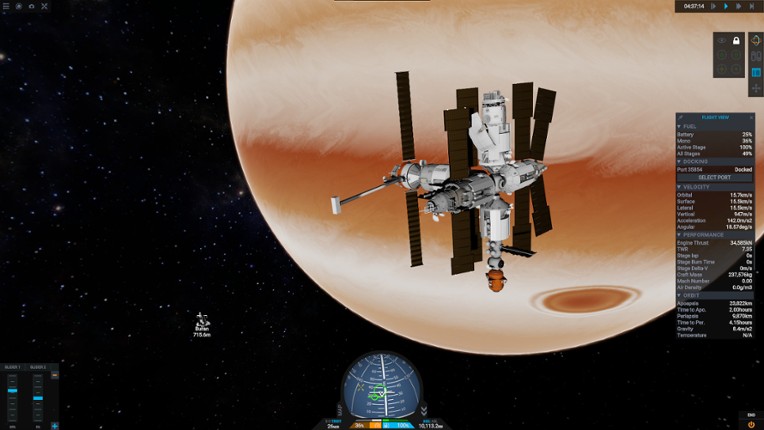
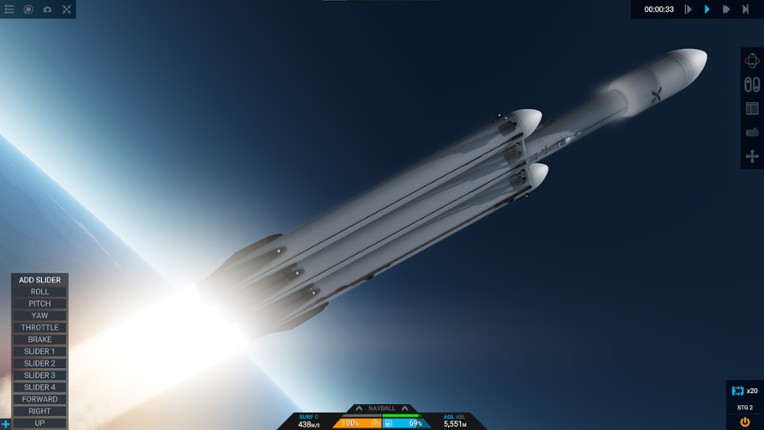
SimpleRockets 2 is a physics-based space simulation game that lets players build and launch rockets. The game features a detailed design system, realistic orbital physics, and a variety of challenges to complete. With a sandbox mode and career campaign, SimpleRockets 2 offers endless possibilities for creative and technical exploration in space.

Skip User Reviews

89%
Audience ScoreBased on 2,106 reviews
graphics107 positive mentions
stability30 negative mentions

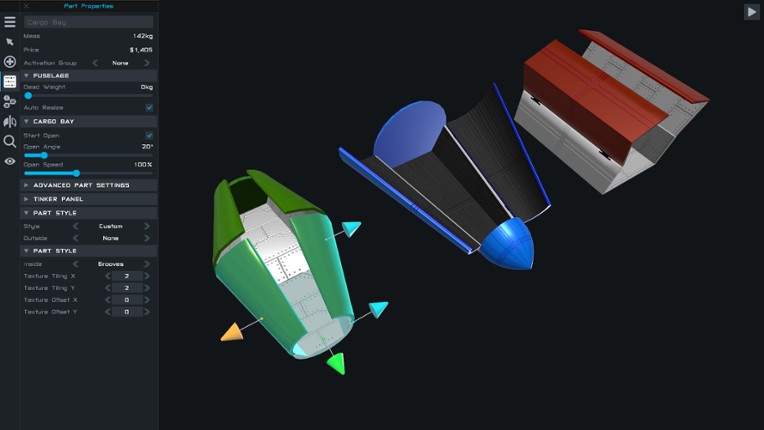
  • The game features great graphics and a highly customizable rocket-building system, allowing for endless creativity.
  • The integration of a visual programming language (Vizzy) enables players to automate rocket launches and other tasks, enhancing gameplay.
  • The career mode offers a structured progression system with contracts and milestones, making it engaging for players.
  • The user interface can be confusing and unintuitive, making it difficult for players to navigate and build effectively.
  • The career mode can feel unbalanced, with some missions being tedious or overly challenging, leading to frustration.
  • There is a lack of comprehensive tutorials and documentation, which can leave new players feeling lost and overwhelmed.
  • graphics
    224 mentions Positive Neutral Negative

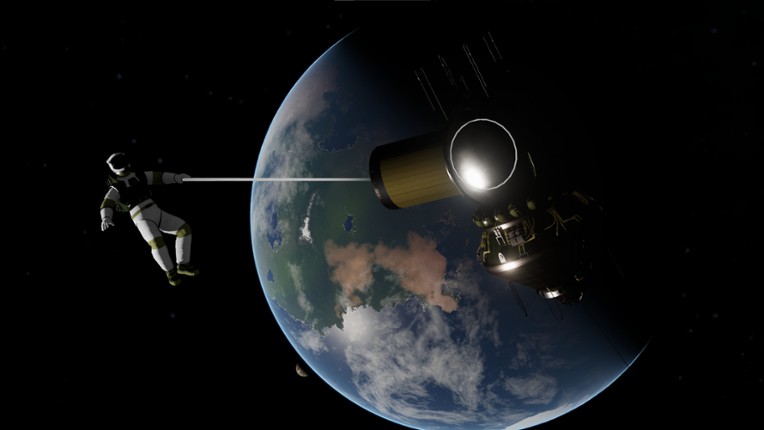
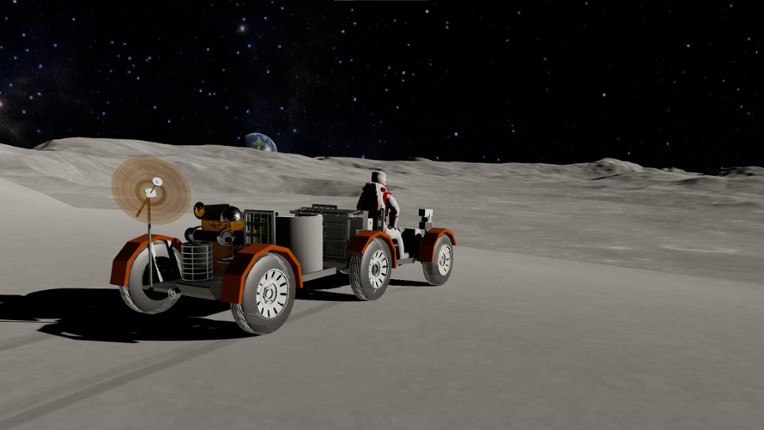
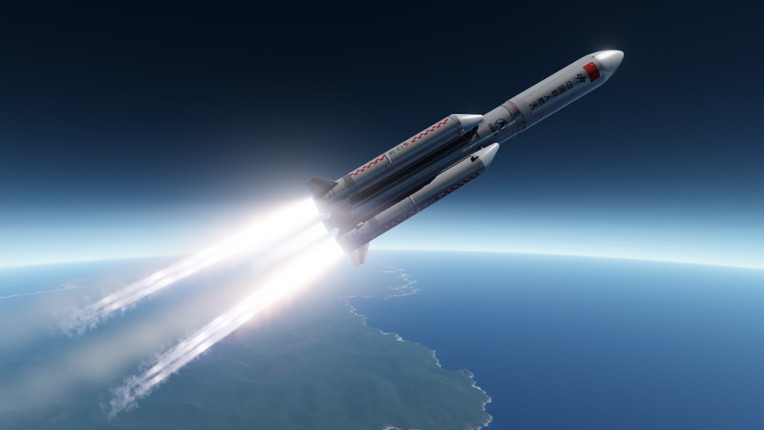
    The graphics of the game have received a mixed but generally positive reception, with many users praising the stunning visuals and clean, modern aesthetic that surpasses previous titles like Kerbal Space Program (KSP). While some players noted that the graphics can feel simplistic or "bare bones," especially on lower-end devices, others highlighted the impressive detail in environments and the overall smooth performance. Overall, the game is recognized for its good graphics, which enhance the immersive experience, despite some calls for further improvements in specific areas like terrain detail and visual effects.

    • “The graphics are stunning, it is easy to run on a low powered computer, there are plenty of features with more to come, the physics are on point.”
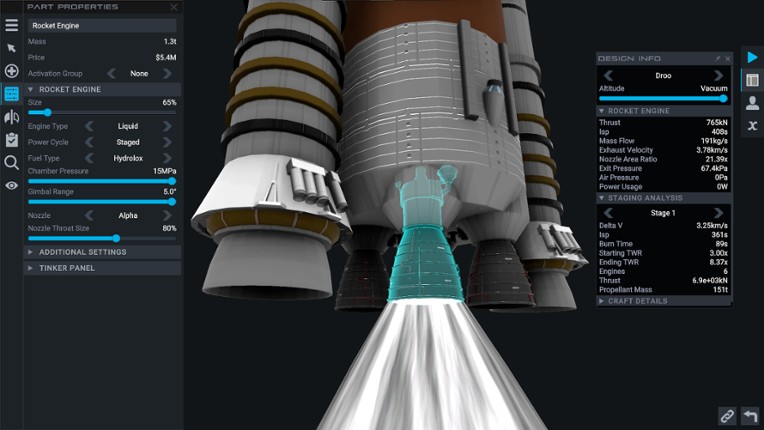
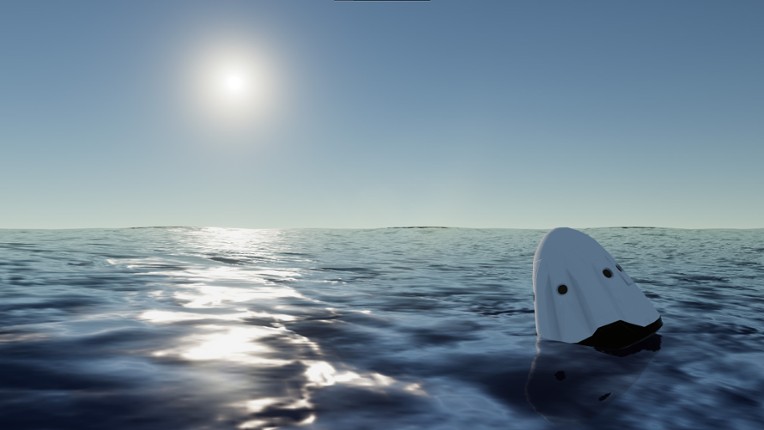
    • “The graphics are very good with reflective water, atmospheric scattering, and realistic engine effects.”
    • “The visuals and sound design are incredible.”
    • “The graphics are pretty basic, but the game is solid.”
    • “In terms of visuals, it looks very bland; the parts are technically textured but they might as well be solid color.”
    • “Even on max graphics, the quality looks like that of a low-quality mobile game.”
  • story
    205 mentions Positive Neutral Negative

    The game's story aspect is largely criticized for its lack of depth and variety, with many players finding the career mode missions repetitive and frustrating. While some missions offer engaging challenges, the overall progression feels limited, often requiring players to grind through mundane tasks before unlocking more interesting content. Additionally, the absence of a cohesive narrative or meaningful context for missions detracts from the immersive experience, leaving players desiring more substantial story elements and mission diversity.

    • “One particularly noteworthy aspect is the collaboration with the European Space Agency, which added a JUICE mission simulation to the game—a thoughtful nod to real-world science that demonstrates the game’s potential as an educational tool.”
    • “I've played this a 'little' bit, and I've run into truly momentous and awe-inspiring moments, ranging from two astronauts independently sent on a mission to a distant planet meeting up and meeting face to face, to deploying an orbital observatory and powering it up for the first time. It has given me an amazing and truly unique experience I would never have reached before.”
    • “The campaign missions so far are a lot more fun than many found in the original KSP, and there are 'progression' missions which act as onboarding for new players, which I personally prefer to the system in place in KSP 1/2.”
    • “The game is in dire need of a story.”
    • “Some career missions are just crazy hard, or maybe not fully thought out, or quickly become repetitive.”
    • “Career is unplayable; missions randomly stop appearing in the available list.”
  • gameplay
    149 mentions Positive Neutral Negative

    The gameplay of the game has received mixed reviews, with many praising its depth and mechanics, particularly in the context of rocket design and orbital mechanics, likening it to Kerbal Space Program (KSP) but with a more approachable learning curve. While the career mode adds complexity and realism, some players find the building mechanics cumbersome and the overall presentation lacking charm. Despite these criticisms, the game is noted for its smooth controls, customization options, and potential for creativity, making it a solid choice for both newcomers and seasoned players interested in aerospace simulation.

    • “The addition of a full-featured career mode significantly enriches the gameplay loop.”
    • “This mechanic adds a layer of realism and complexity rarely found in similar games, and it’s one of the aspects that pushes Juno from a typical builder into the realm of a true simulation platform.”
    • “The gameplay is immersive and the graphics are way better than KSP, with the difference of this game being much cheaper.”
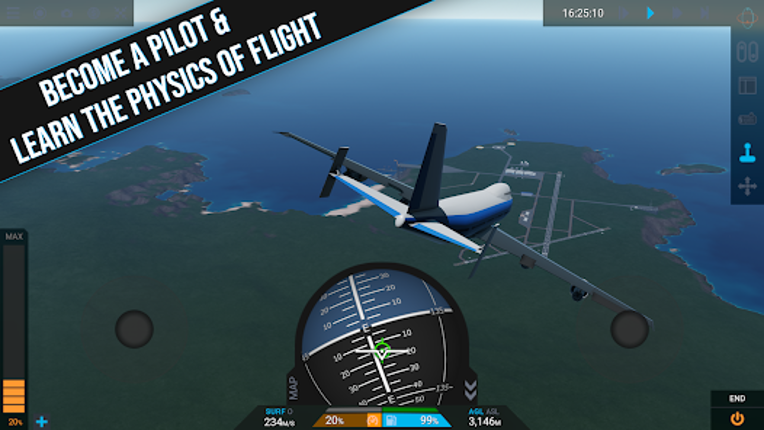
    • “The airplane mechanics are a letdown.”
    • “The career mode feels a lot slower; you'll struggle achieving early 'easy' missions like climbing a hill because of unspoken mechanics on tire type friction.”
    • “Unfortunately, the game suffers from complicated control schemes and mechanics.”
  • optimization
    94 mentions Positive Neutral Negative

    Overall, the optimization of "Juno: New Origins" is highly praised, with many users noting its smooth performance even on lower-end devices and the ability to handle complex builds without significant lag. The game features real-time performance metrics that enhance the design process, and its procedural engine customization allows for detailed optimization. While some players experienced performance issues with intricate designs, the general consensus is that it offers superior optimization compared to similar titles like "Kerbal Space Program."

    • “Real-time updates to performance metrics while you tinker with designs turn what could be a frustrating process into a learning tool, one that rewards players who invest time in mastering the systems.”
    • “Juno has optimized the game experience, bug reduction, and memory usage to the extreme of aerospace simulation games.”
    • “The game looks better, runs smoothly with at least four times as many parts and has many features built-in, which you needed to mod into KSP.”
    • “I used to own this game and I still own it on my phone; everything is great except the performance. For some reason, I get really poor performance even at the lowest settings and with small rockets. It can't be my PC because it is more than enough to run the game very smoothly. I hope the devs make a fix and maybe I'll try it again.”
    • “Pretty low performance on a decent system, 13-30 fps when other similar games run much better.”
    • “The game does unfortunately still have some problems with optimization.”
  • stability
    34 mentions Positive Neutral Negative

    Overall, the game's stability is a mixed bag, with many users noting that while it has significant bugs and glitches, especially in physics and the user interface, it runs relatively well on lower-end systems. Some players report a smoother experience with fewer crashes compared to previous titles, but others express frustration with persistent issues that detract from gameplay. As the game is in early access, many hope for improvements in future updates, acknowledging the potential for a more polished experience.

    • “Easier to understand what is and isn't working, and it runs great on a potato.”
    • “It runs great even on Intel HD graphics.”
    • “Overall, it's not buggy and runs mostly smooth.”
    • “This is really bad for planes and pretty buggy, but hopefully will improve with time as it has so much potential.”
    • “The engine jank is my major issue, but I should also say the editor is way too intuitive and bug-ridden to be enjoyable for a game aiming to be easy to jump into.”
    • “I get it, it's in early access, bugs are expected and it's not going to be as mature as SP; however, I don't expect myself to give a dislike to this game, but I did, which left me with a bitter taste. In my opinion, this game felt somewhat rushed, maybe my complaints will be addressed by the next update or when it leaves early access, but for now, I don't like it; it feels too quirky and too buggy.”
  • atmosphere
    29 mentions Positive Neutral Negative

    The atmosphere in the game is a mixed bag, with players appreciating the realistic physics and visual effects, such as atmospheric scattering and re-entry heating, which enhance the engineering experience. However, some users find the atmospheric mechanics less satisfying compared to similar games, noting issues like limited time warp and a lack of detailed information on atmospheric parameters. Overall, while the game offers a solid foundation for atmospheric exploration and customization, it leaves room for improvement in depth and clarity.

    • “The game even lets you design your own solar systems, with the planet studio feature giving you procedural control over terrain, atmosphere, gravity, and climate.”
    • “I am a particular fan of the atmospheric effects such as the re-entry heating and the condensation on the wings when turning hard on a fast airplane; that last one was a very pleasant surprise.”
    • “The graphics are very good with reflective water, atmospheric scattering, and realistic engine effects.”
    • “I struggle with playing Juno over KSP because of the atmospheres of the game.”
    • “Not enough atmosphere.”
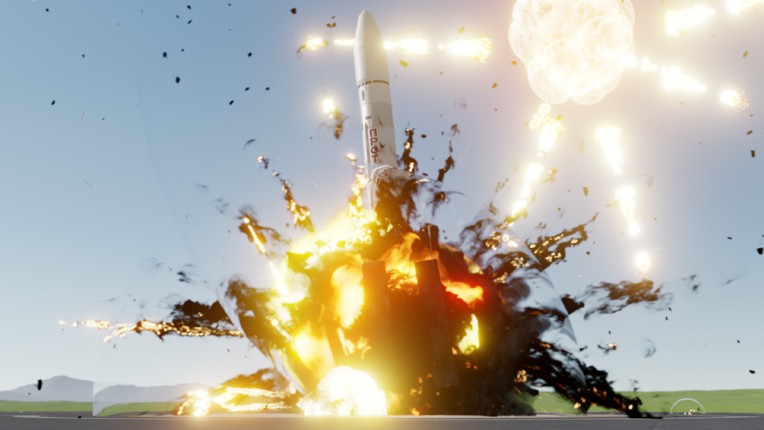
    • “I like the realism and HD quality of the explosions; wish they added grass and atmospheric clouds/weather in general.”
  • music
    28 mentions Positive Neutral Negative

    The music in the game has received mixed reviews, with some players finding it calming and well-suited to the game's atmosphere, while others criticize it for being repetitive and lacking variety, often describing it as bland or forgettable. Many users noted that the soundtrack consists of only a few tracks, which can lead to a feeling of dryness and a desire for more engaging music. Overall, while the ambient soundscapes can enhance the experience, they often fail to leave a lasting impression.

    • “The soundtrack ranges from techy to inspiring and serene instrumental tracks that just keep you company without getting in your face.”
    • “The in-game music suits the game well and transitions between tracks are seamless; it really gives off the space vibe.”
    • “The music, to me, is very relaxing and calming.”
    • “Personally, I vastly prefer the lack of Kerbals that make KSP feel like it's made for children, but this game does come off as dry due to the soundtrack only being two songs.”
    • “Technically there are a couple of music tracks, but it's so infrequent and simplistic that I forget it's there.”
    • “The soundtrack also contributes a bit to that; it's not bad per se, but it's just very neutral ambient music that doesn't have a lot of character.”
  • humor
    24 mentions Positive Neutral Negative

    The humor in the game has received mixed reviews, with many players noting a stark contrast to the charm and comedic elements found in similar titles like Kerbal Space Program (KSP). Critics argue that the game lacks personality and fails to deliver engaging humor, often feeling more like a serious engineering simulator than an entertaining adventure. While some players find moments of humor, the overall consensus is that the absence of quirky characters and witty writing diminishes the game's comedic appeal.

    • “Right now, 50% of the hazards you encounter on the ground are just hitting an edge transition a little funny and triggering a really wacky collision that throws your vehicle.”
    • “I'm not too deep into it yet, so far it's good, intuitive interface, easy tutorials, funny missions.”
    • “Simplerockets 2 is a funny little game with a lot of potential.”
  • grinding
    22 mentions Positive Neutral Negative

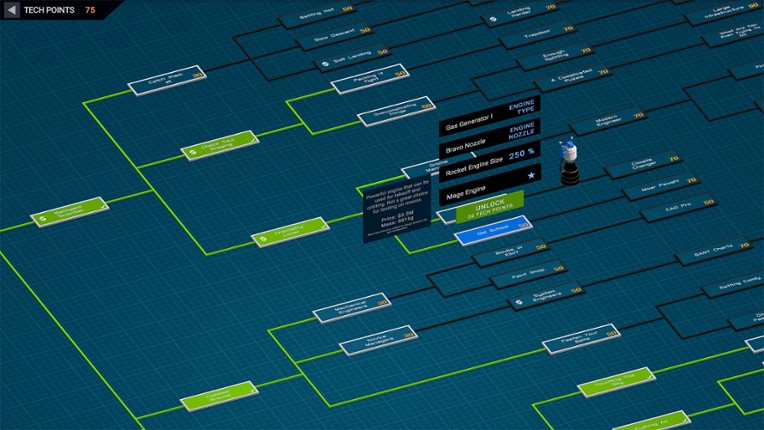
    The grinding aspect of the game is widely criticized for being tedious and repetitive, with players expressing frustration over the steep progression curve and the need to complete monotonous missions to unlock content. While some find satisfaction in the crafting process, many feel that the grind detracts from the overall enjoyment, making it feel more like a chore than a rewarding experience. The contract system offers some relief, but the general sentiment is that the game could benefit from a more generous approach to tech point rewards to alleviate the grind.

    • “You'll need a second life for grinding.”
    • “The career mode is an exercise in frustration, with a progression curve that swings violently from a tedious, repetitive grind to expert-level missions demanding impossible precision.”
    • “Instead of having fun flying, I'm grinding boring missions that are hard gates to every bit of content.”
    • “Even if it is worth your money, it isn't worth the time you have to put in learning how to use it and grinding through the career.”
  • emotional
    5 mentions Positive Neutral Negative

    The emotional aspect of the game is mixed; while some players feel a sense of achievement and engagement from the engineering challenges, others find the lack of humor, charm, and immersive elements limits emotional connection. The game is perceived more as an industrial simulation than a traditional game, which may hinder deeper emotional investment, despite its potential for growth. Overall, players express a desire for more emotional depth to enhance their experience.

    • “In the beginning, it didn't matter how they looked; the surreal feeling of engineering something physically plausible and performing well in the game made me feel like a rocket scientist. It kept me hooked to the extent that I stuck faithfully with the game until the day my tablet finally passed on.”
    • “If you are a sentimental person like me, I'd say watch the progress of this game for the moment. It does have a lot of potential; I just don't think it's there in terms of emotional investment yet to beat out KSP.”
    • “Made me feel like I have an extra chromosome because it took me 83 minutes to get out of the stratosphere, with the spaceman disintegrating or the rocket just exploding.”
  • monetization
    3 mentions Positive Neutral Negative

    The monetization of Juno: New Origins has been criticized as a blatant cash grab, with users feeling it is poorly positioned as a serious PC game despite its mobile origins. While some appreciate its value compared to typical mobile apps, the overall sentiment suggests it primarily seeks to exploit the popularity of similar titles like Kerbal Space Program.

    • “I don't usually buy games or in-game purchases, but in my opinion, this is the most worthy app I've bought.”
    • “Juno: New Origins is a mobile app that's been dumped on Steam as if it were a real PC game (it's not)... it's a cash grab from mobile developers. The game, at least, is somewhat honorably positioned as a more 'serious business' ripoff of Kerbal Space Program... all the fake physics and rocket building but without the cutesy veneer.”
    • “This to me is just a brutal cash grab capitalizing on the hype generated by Kerbal Space Program.”
  • replayability
    2 mentions Positive Neutral Negative

    Users emphasize the importance of design freedom and the ability to replay tutorials for enhancing replayability. While custom pre-made parts can improve narrative, the overall experience benefits from greater flexibility and opportunities for experimentation.

    • “While having custom-made pre-done parts like in KSP allows for a better narrative function, for me, replayability and design freedom are important.”
    • “Speaking of, dev please make the tutorials replayable!”
    • “Once you've completed the game, there's little incentive to go back and play again.”
    • “The lack of varied outcomes makes replaying feel more like a chore than an enjoyable experience.”
Skip Critic Reviews
Skip Game Offers

Buy SimpleRockets 2

9h Median play time
799h Average play time
5-300h Spent by most gamers
*Based on 16 analyzed playthroughs
Skip Videos

Videos

Skip Games Like SimpleRockets 2

Games Like SimpleRockets 2

Juno: New Origins Complete Ed. ImageJuno: New Origins Complete Ed. ImageJuno: New Origins Complete Ed. Image
KitHack Model Club Image
Homebrew: Vehicle Sandbox Image
SimpleRockets Image
Archean Image
Skip FAQs

Frequently Asked Questions

SimpleRockets 2 is a open world simulation game with science fiction theme.

SimpleRockets 2 is available on PC, Mac OS, Phone, iPad and others.

On average players spend around 799 hours playing SimpleRockets 2.

SimpleRockets 2 was released on January 26, 2023.

SimpleRockets 2 was developed by Jundroo, LLC.

SimpleRockets 2 has received mostly positive reviews from players and mostly positive reviews from critics. Most players liked this game for its graphics but disliked it for its stability.

SimpleRockets 2 is a single player game.

Similar games include Juno: New Origins Complete Ed., KitHack Model Club, Homebrew: Vehicle Sandbox, SimpleRockets, Archean and others.