Danganronpa Another Episode: Ultra Despair Girls

Danganronpa did it again. Another Episode was heartpounding, mind blowing, and for the millionth time, filled with despair. So do yourself a favour, fill yourself with hope, and absolutely play this must have entry in the Danganronpa franchise.
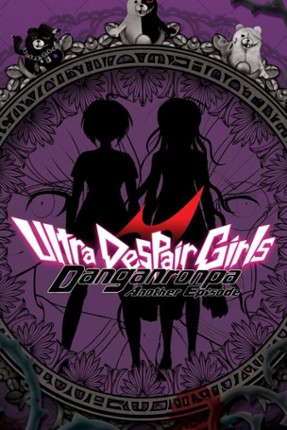
Danganronpa Another Episode: Ultra Despair Girls Game Cover
76%Game Brain Score
Most mentioned positive aspects:story, gameplay
Most mentioned negative aspects:grinding, stability
78% User Score Based on 3,580 reviews
Critic Score 74%Based on 23 reviews

Platforms

PCTabletPlaystation 5PhonePlaystation 4WindowsPlayStationPlaystation Vita
Danganronpa Another Episode: Ultra Despair Girls Game Cover

About Danganronpa Another Episode: Ultra Despair Girls

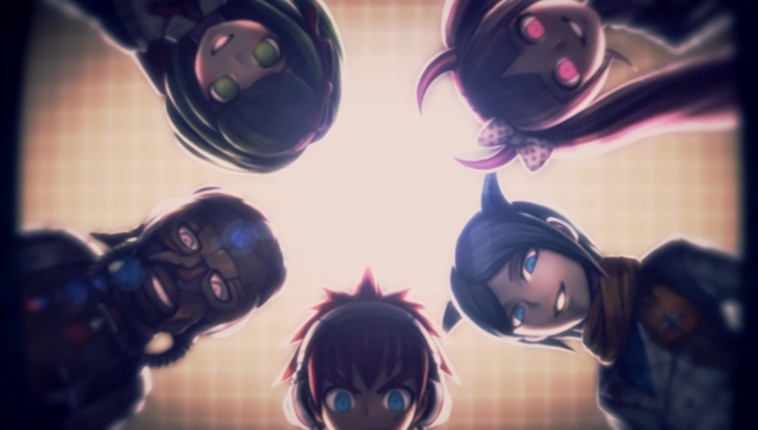
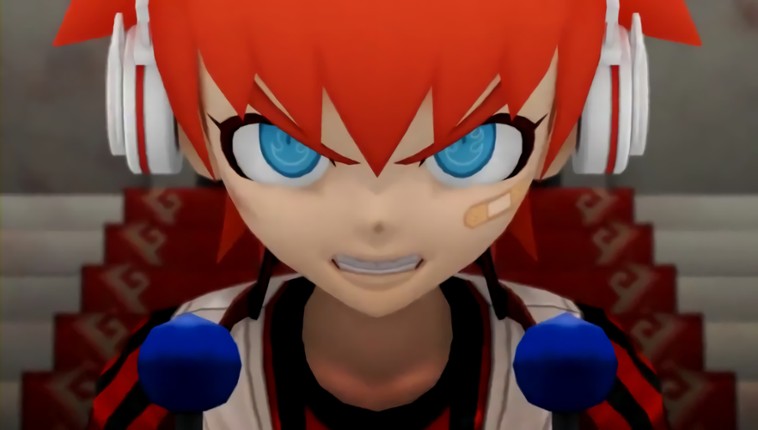
Danganronpa Another Episode: Ultra Despair Girls is a single player survival hack and slash game with horror, mystery, thriller, anime and others themes. It was developed by Spike Chunsoft Co., Ltd. and was released on June 27, 2017. It received mostly positive reviews from both critics and players.

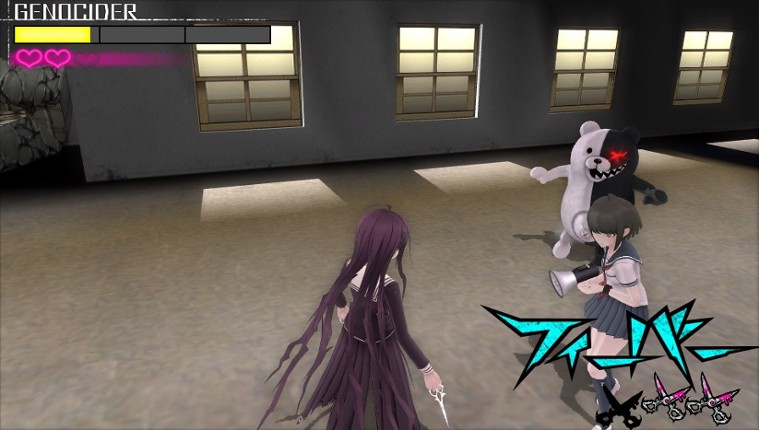
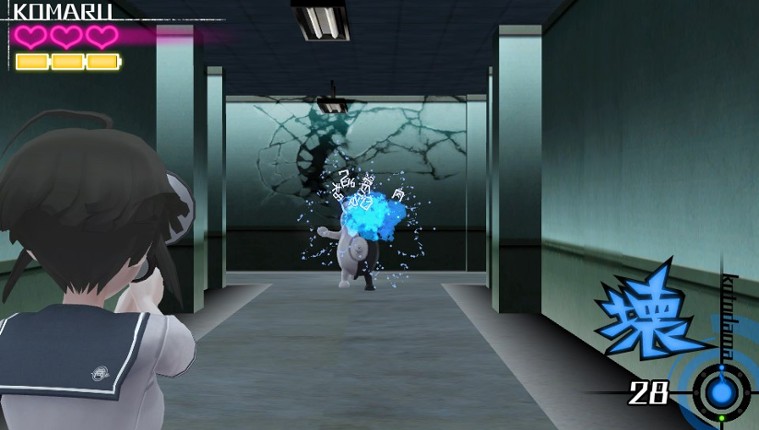
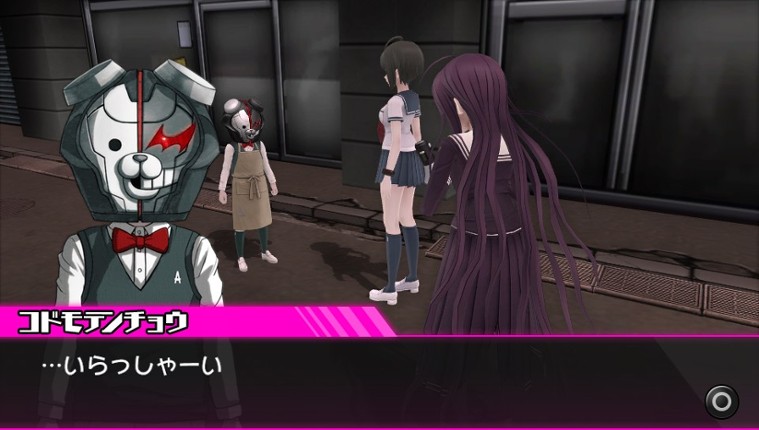
Danganronpa Another Episode: Ultra Despair Girls is a horror action adventure spin-off game in the Danganronpa series of visual novel games, taking place between the events of Danganronpa: Trigger Happy Havoc and Danganronpa 2: Goodbye Despair. Unlike the visual novel gameplay of the previous games, Ultra Despair Girls is a third-person adventure game with horror elements, in which players control…
Skip Games Like Danganronpa Another Episode: Ultra Despair Girls

Games Like Danganronpa Another Episode: Ultra Despair Girls

Looking for games like Danganronpa Another Episode: Ultra Despair Girls? Here are top survival hack and slash recommendations with a horror, mystery, thriller, anime, violence, science fiction and erotic focus, selected from player-similarity data — start with Danganronpa: Trigger Happy Havoc, Danganronpa V3:Killing Harmony or Danganronpa 2: Goodbye Despair.
Danganronpa: Trigger Happy Havoc Image
Games like Danganronpa: Trigger Happy Havoc
Danganronpa V3:Killing Harmony Image
Games like Danganronpa V3:Killing Harmony
Danganronpa 2: Goodbye Despair Image
Games like Danganronpa 2: Goodbye Despair
Changed Image
Games like Changed
The Evil Within Image
Games like The Evil Within
Daymare: 1998 Image
Games like Daymare: 1998
AI: THE SOMNIUM FILES Image
Games like AI: THE SOMNIUM FILES
SILENT HILL f Image
Games like SILENT HILL f
Lust from Beyond ImageLust from Beyond ImageLust from Beyond Image
Games like Lust from Beyond
Zero Escape: Zero Time Dilemma Image
Games like Zero Escape: Zero Time Dilemma
Skip User Reviews

Reviews

78%Audience ScoreBased on 3,580 reviews
story496 positive mentions
grinding27 negative mentions

  • Strong story with interesting character development, especially the evolving relationship and growth of Komaru Naegi and Toko Fukawa.
  • Unique gameplay for the series as a third-person shooter with puzzle elements, adding variety to the typical visual novel format.
  • Good worldbuilding and lore expansion connecting Danganronpa 1 and 2; memorable soundtrack and voice acting enhancing the atmosphere.
  • Gameplay is clunky, repetitive, and can become tedious with awkward camera control and underdeveloped combat mechanics.
  • Heavy use of fanservice and sexualization of minors, including disturbing and inappropriate scenes related to child abuse and sexual assault, handled insensitively.
  • Controversial and uncomfortable narrative elements, especially in chapter three; some character portrayals (e.g., pedophile character and child antagonists) are problematic and off-putting to many players.
  • story

    1,619 mentions Positive Neutral Negative
    31% positive mentions, 63% neutral mentions, 6% negative mentions

    The story of Danganronpa Another Episode: Ultra Despair Girls is a dark, engaging, and essential bridge between the first two main games, expanding on characters like Komaru Naegi and Toko Fukawa while exploring mature and disturbing themes. Though it diverges into a third-person shooter format, the narrative remains the game's strongest asset, featuring complex character development, moral dilemmas, and connections to the broader franchise lore. However, some find its handling of sensitive topics problematic and uneven in tone, and the pacing can be slow, making it best suited for fans deeply invested in the Danganronpa universe.

    • “The story line is really creative and gets you hooked; there is lots of action, more than in earlier entries, making it a great game overall if you like the other Danganronpa games!”
    • “Where the game really shines is its story, world building, and character development, providing a deeper exploration of characters and plot.”
    • “Overall, ultra despair girls is a worthwhile spin-off if you’re invested in the Danganronpa universe and want more story and character development outside the trial format.”
    • “The story feels like something written on vibes rather than structure, and the scenes of the kids being sexualized or showing uncomfortable CGs of implied sexual assault was even worse.”
    • “It served no purpose to the story and simply felt like an excuse to make fanservice of a little girl that was sexually abused in her life by flashing her undergarments and even making it a damage mechanic when you fight her.”
    • “Besides that the entire game is filled with lousy writing that drags on, fanservice for people who are attracted to children, gameplay that never gets any more interesting past the second mechanic introduced, and a story that isn't even necessary to understand the rest of the games in the series.”
  • gameplay

    1,121 mentions Positive Neutral Negative
    27% positive mentions, 58% neutral mentions, 15% negative mentions

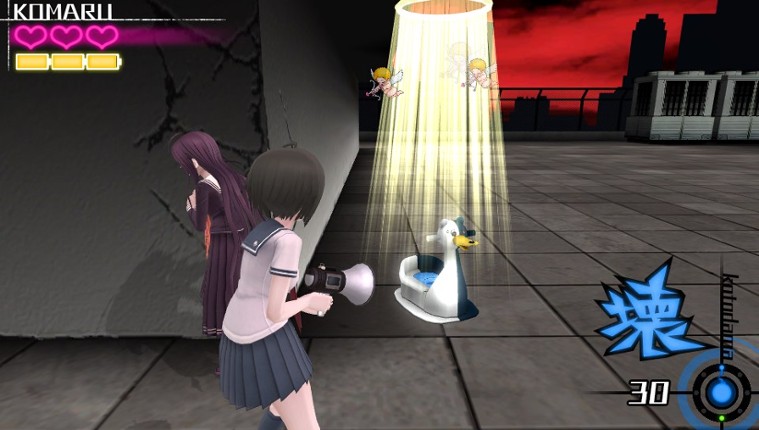
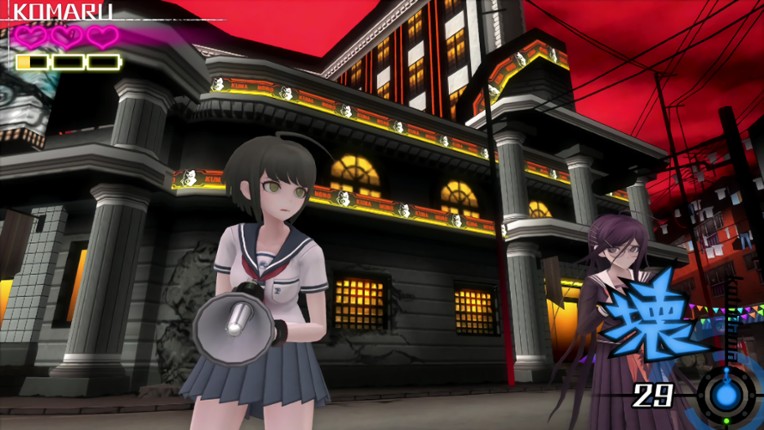
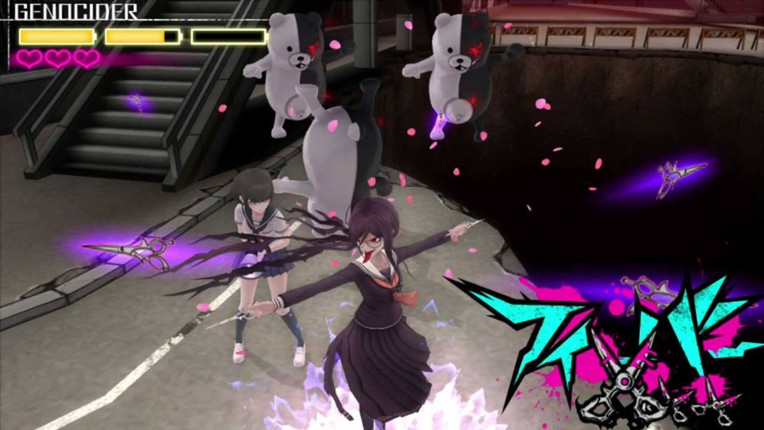
    The gameplay of Danganronpa Another Episode: Ultra Despair Girls is a significant departure from the main series, featuring third-person shooter mechanics combined with puzzle-solving and occasional stealth. While some players find the shooter mechanics and bullet variety fun and a refreshing change, many criticize the gameplay as clunky, repetitive, and lacking depth, with issues like awkward camera angles, poor controls, and simplistic enemy AI. Despite its flaws, the gameplay is often considered serviceable or enjoyable by fans invested in the story and characters, though it may deter those expecting the classic visual novel style or polished action gameplay.

    • “I truly enjoyed how it's basically a shooter game; it's a bit refreshing, and getting new bullet types every now and then feels great.”
    • “Gameplay-wise, this is a puzzle/adventure shooter game with a whole lot of visual novel elements as well.”
    • “The gameplay has merit. It never feels like any mechanic was introduced and then forgotten—truth bullets are consistently integrated into puzzles and combat alike, and just when you think the game has dropped a mechanic, it reappears in a meaningful way.”
    • “The gameplay itself is tedious and such a slog to get through, the game gives you a few bullet types to work with but 80% of them are situational resulting in you using the basic one for most of the game, not to mention the puzzles which don't work half the time (you're better off skipping them), boring as hell.”
    • “The gameplay basically consists of going from point A to point B, killing 50 of the exact same enemy in the exact same combat, with janky controls, then triggering 7 cutscenes before heading to point C and repeating the whole process.”
    • “The shooting mechanics immediately reminded me of Resident Evil-style aiming, where precision and targeting weak points matter more than fast-paced action, but the controls are clunky and the camera movement is awkward, making gameplay frustrating at times.”
  • graphics

    213 mentions Positive Neutral Negative
    25% positive mentions, 63% neutral mentions, 12% negative mentions

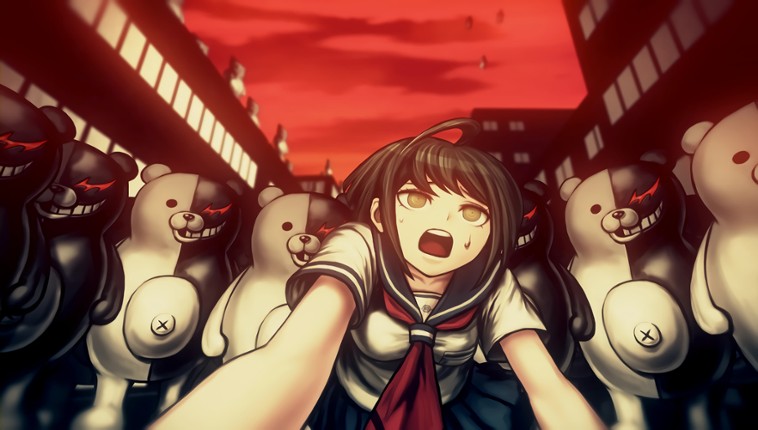
    The graphics of this game, originally a PS Vita port, are widely regarded as subpar, with many noting outdated 3D models and inconsistent art styles that range from classic 2D anime cutscenes to low-quality 3D visuals. While some appreciate the unique "psycho-pop" aesthetic and colorful character designs that maintain the series' charm, others find the visuals rough, glitchy, and reminiscent of early console-era graphics. Overall, while the graphics are not a highlight and often criticized, they are generally considered acceptable given the platform limitations and do not significantly detract from the enjoyment for fans.

    • “The mix of 3D models, the iconic execution art style, and the usual sprites made a visually interesting game.”
    • “Graphically I feel it slightly above your average Vita game, and also Danganronpa's "psycho pop" art style allows it to get away with very simple things, which makes it look even better in its simplicity.”
    • “Even if you've already played DRAE on Vita, I'd recommend giving it another go on PC; the smoother controls and high-resolution graphics should make it worth your while.”
    • “Gameplay is jank, 3D graphics suck, game really overstays its welcome, and there were several moments in this game that were genuinely nauseating.”
    • “Compared to the character sprites, the graphics gave me the feeling of playing a high-rendered PS2 game.”
    • “Graphically i feel it slightly above your average Vita game, and also Danganronpa's "psycho pop" art style allows it to get away with very simple things, which makes it look even better in its simplicity.”
  • music

    187 mentions Positive Neutral Negative
    52% positive mentions, 46% neutral mentions, 2% negative mentions

    The music in this Danganronpa title is consistently praised for maintaining the series’ signature style, with a blend of iconic tracks from previous games and new jazzy, upbeat compositions by Masafumi Takada. While some note the soundtrack is somewhat repetitive and reliant on remixes, most agree it effectively enhances the game's atmosphere, story, and tension, making it one of the standout aspects despite mixed opinions on other elements. Overall, the soundtrack is considered catchy, memorable, and a key highlight for fans of the series.

    • “The audio design complements the visuals well, with a haunting and energetic soundtrack that fluctuates between unsettling atmospheres and adrenaline-pumping combat themes, alongside strong voice acting that brings emotional weight to the narrative.”
    • “As always expect the god level music and bizarre borderline nonsensical story proper of the series you learnt to love if you are playing this.”
    • “The music, visual and the game setting environment plus the chaos of despair girls world reach a good and high quality effect.”
    • “Apart from the music and spritework, which are the only things saving this game from being complete garbage, most other aspects fall flat.”
    • “There are only about three songs on the entire soundtrack that are subtly changed by adding or removing a single audio track, making the music very repetitive.”
    • “The music is often recycled from previous games with little original content, making the soundtrack feel uninspired and not very innovative.”
  • humor

    152 mentions Positive Neutral Negative
    98% positive mentions, 0% neutral mentions, 2% negative mentions

    The humor in Danganronpa: Ultra Despair Girls is a polarizing mix of dark, absurd, and often crass comedy that fans of the series may appreciate for its character-driven quips and signature style. However, many find its handling of serious themes—particularly involving children and abuse—distasteful and uncomfortable, with inappropriate sexual humor and fanservice detracting from the experience. Overall, while it retains classic Danganronpa wit and some genuinely funny moments, the tone is inconsistent and may feel off-putting or offensive to some players.

    • “The story was really good and had me laughing through many dialogue sequences.”
    • “Experiencing Danganronpa’s trademark humor and writing through this gameplay style is unexpectedly hilarious.”
    • “The characters are perfect: Komaru is a very likeable protagonist, and her bickering with Toko is hilarious.”
    • “This game is really unfunny and does not handle problematic topics well. It seems to cater to many fetishes and tries to capitalize on them, which I find inappropriate.”
    • “Some characters are flat and bland, such as Jataro, who I find annoying and unfunny.”
    • “The addition of Haiji and his general creepiness felt unnecessary and not funny.”
  • character development

    124 mentions Positive Neutral Negative
    37% positive mentions, 61% neutral mentions, 2% negative mentions

    Character development in the game is widely praised, particularly the growth of Komaru and Toko, with many noting Toko's transformation from a disliked to a beloved character. The evolving friendship between the two protagonists is highlighted as a core strength, providing emotional depth and enriching the overall narrative. While some criticize the game’s pacing and certain scenes, the character arcs and their impact on the story are consistently recognized as standout elements.

    • “The character development for Toko and Komaru is objectively the best in the entire franchise.”
    • “The story was interesting, the character development was amazing, and the plot twists were really good.”
    • “The two leads are awesome, their bond feels real and authentic, and their character development is just *chef's kiss*.”
    • “Most of their character development is bludgeoned into the player.”
    • “The character development isn't as good as DR1 and DR2.”
    • “She's whiny, neurotic, annoying and insulting pretty much all the time and while they try to give her some kind of character development it falls far too short as she's still just as irritating as she's always been.”
  • emotional

    79 mentions Positive Neutral Negative
    97% positive mentions, 0% neutral mentions, 3% negative mentions

    The game delivers a deeply emotional and dark narrative with strong character development, particularly highlighting the heartfelt friendship between Komaru and Toko, and explores heavy themes like child abuse and despair. While many players found the story moving and impactful—often more so than the main series—some criticized the inconsistent tone, unsettling fanservice, and jarring gameplay elements that occasionally undermine the emotional storytelling. Overall, it offers a unique and memorable experience for those willing to embrace its difficult themes and stylistic quirks.

    • “While you progress through the game, you are given answers little by little, and the bigger revelations are saved for emotional moments, of which there are plenty.”
    • “Honestly, the story in this game is darker, more disturbing, and has more emotional weight than the main trilogy combined.”
    • “The main character you play as, Komaru Naegi, an average high-school girl, starts off as a perfect blank slate that over the game's duration gets molded into an emotionally complex character with clear motives.”
    • “It's just a really boring story, the gameplay is mediocre, and there's way too much repetitive gameplay in each chapter.”
    • “Boring story and underwhelming gameplay”
  • grinding

    31 mentions Positive Neutral Negative
    0% positive mentions, 13% neutral mentions, 87% negative mentions

    Grinding in the game is widely considered tedious and repetitive, with lengthy backtracking, frequent use of basic weaponry due to situational options, and monotonous sections like shooting mini-games that quickly lose appeal. While some players find the lore and characters engaging enough to push through, the excessive grind required for full completion and the often dull gameplay make it a major drawback for many.

    • “Besides the more unsavory parts of the game, the thing I wouldn't recommend it for is how much grinding it takes to 100% the achievements.”
    • “The gameplay itself is tedious and such a slog to get through, the game gives you a few bullet types to work with but 80% of them are situational resulting in you using the basic one for most of the game, not to mention the puzzles which don't work half the time (you're better off skipping them) boring as hell.”
    • “However, the gameplay itself is utterly unbearable, just grinding your way through dull monokumas.”
  • atmosphere

    30 mentions Positive Neutral Negative
    43% positive mentions, 47% neutral mentions, 10% negative mentions

    The game delivers a dark, intense, and often disturbing atmosphere that effectively blends bleakness with moments of humor, maintaining the signature Danganronpa vibe while exploring new tonal depths. Its haunting soundtrack, strong voice acting, and rich world-building through notes and lore deepen immersion, making the atmosphere one of the series' best despite some tonal heaviness and divisive elements. Overall, the atmosphere is praised for enhancing the storytelling and emotional impact, even if the gameplay pacing sometimes feels slow.

    • “The literature and notes are really cool because they actually give you glimpses into what the world is like beyond the killing games for the first time, and some of them are really harrowing reads that add a lot of atmosphere to the otherwise very anime and goofy elements.”
    • “The audio design complements the visuals well, with a haunting and energetic soundtrack that fluctuates between unsettling atmospheres and adrenaline-pumping combat themes, alongside strong voice acting that brings emotional weight to the narrative.”
    • “This game does a great job of fleshing out the despair-stricken world we've grown to love all while maintaining the atmosphere and vibe of the series.”
    • “In comparison to the other three Danganronpa games, this one has by far the goriest and creepiest atmosphere.”
    • “The story and atmosphere are really different from the other games, mostly because most of the main characters don't die, so you don't really feel like you're in much danger, and you might actually feel bad for the 'villains' in this game.”
    • “The setting and atmosphere are brutal.”
  • stability

    20 mentions Positive Neutral Negative
    0% positive mentions, 0% neutral mentions, 100% negative mentions

    The game suffers from numerous graphical and gameplay glitches, including visual errors in cutscenes, buggy hit registration, and occasional progression-blocking bugs. While some find these issues frustrating and detracting from the experience, others feel the overall plot and gameplay still provide entertainment despite the technical flaws. Stability is inconsistent, with notable problems in fullscreen mode and minor camera or achievement glitches.

    • “The very beginning has an unacceptable bug in which half of the screen is covered by a black overlay that seems intended as a fade for cutscenes and gameplay, but is improperly designed and doesn't always work. This kind of visual glitch kills interest immediately, especially for fans expecting a polished experience.”
    • “The game was really buggy with shots not registering as headshots (technically eye-shots in this game) or sometimes not registering at all, leading to frustrating and inconsistent gameplay.”
    • “There are several glitches within the game and some achievements are glitchy too, which even prevented progress and forced me to restart a few levels.”
  • optimization

    20 mentions Positive Neutral Negative
    30% positive mentions, 55% neutral mentions, 15% negative mentions

    Optimization for this game is mixed: while some users report stutters, random performance drops, and issues reminiscent of a poor port—especially at 4K resolution—others find the PC port runs smoothly with no major problems. The experience largely depends on hardware specs, as higher-end systems handle the game better, but overall optimization remains inconsistent.

    • “It's the best version of the game, certainly better than the bafflingly bad PS4 port though both are preferable to the Vita version, for performance reasons.”
    • “The port for this game is good - I have not had any problems in terms of performance so far.”
    • “+ runs smoothly”
    • “For now I have only played the prologue, but the game looks very good and has no performance issues.”
    • “The port is fine overall, I haven't found any bugs nor performance issues.”
    • “The presentation is pretty good (for a Vita port), and the port itself is great performance wise, although has some options missing that I would want.”
    • “Stutters, weird optimization issues, random performance drops… it genuinely feels like a bad port half the time.”
    • “Not optimized for PC very well, mediocre port at best, so your specs need to be way higher than anything sensible.”
    • “Optimization is rough on 4K.”
  • replayability

    7 mentions Positive Neutral Negative
    29% positive mentions, 28% neutral mentions, 43% negative mentions

    Replayability for this game is generally low, with most players finding it worth only a single playthrough primarily for the storyline. While some praise its characters and gameplay, the overall consensus is that it lacks incentives for multiple replays, making it less appealing for repeated sessions.

    • “Infinitely replayable.”
    • “Exquisite gameplay, interesting characters, has replayability, good storyline.”
    • “For a game that I really only played once and have no intention of playing again, I can't recommend it for its full price. I mainly played it for the storyline as it explains some plot holes, but the gameplay and animation quality were extremely mediocre. If you don't care for the overarching storyline of Danganronpa, I wouldn't recommend playing it compared to the other games. Overall, not a bad game but not worth the higher price tag, especially since it has very little replayability.”
    • “There is little to no replay value and you only get a book for beating the game (yes, like a book you read), so that first time is what you're paying for.”
    • “Little to no replayability.”
  • monetization

    3 mentions Positive Neutral Negative
    0% positive mentions, 0% neutral mentions, 100% negative mentions

    The monetization in the game is heavily criticized for feeling like a cash grab, with frequent and intrusive advertising featuring characters that detract from the experience.

    • “There are so many of them, they’re almost like ads.”
    • “This game is a cash grab.”
Skip Critic Reviews
Skip Game Offers

Buy Danganronpa Another Episode: Ultra Despair Girls

Some of these are affiliate links — if you buy through them, we may earn a commission at no extra cost to you.

Play Times

23h Median play time
28h Average play time
17h Main story
26h Completionist
18-31h Spent by most gamers
*Based on 11 analyzed playthroughs
Skip Videos

Videos

Skip FAQs

Frequently Asked Questions

Danganronpa Another Episode: Ultra Despair Girls is a survival hack and slash game with horror, mystery, thriller, anime and others themes. Common tags for Danganronpa Another Episode: Ultra Despair Girls include science, hentai, trading, female protagonist, psychological and others.

Danganronpa Another Episode: Ultra Despair Girls is available on PC, PlayStation 5, Phone, PlayStation 4 and others.

The main story can be completed in around 17 hours, while the entire game is estimated to take about 26 hours to finish. On average players spend around 28 hours playing Danganronpa Another Episode: Ultra Despair Girls.

Danganronpa Another Episode: Ultra Despair Girls was released on June 27, 2017.

Danganronpa Another Episode: Ultra Despair Girls was developed by Spike Chunsoft Co., Ltd..

Danganronpa Another Episode: Ultra Despair Girls has received mostly positive reviews from both players and critics. Most players liked Danganronpa Another Episode: Ultra Despair Girls for its story but disliked it for its grinding.

Danganronpa Another Episode: Ultra Despair Girls is a single player game.

Similar games include Danganronpa: Trigger Happy Havoc, Danganronpa V3:Killing Harmony, Danganronpa 2: Goodbye Despair, Changed, The Evil Within and others.