NIMBY Rails Game Cover

About

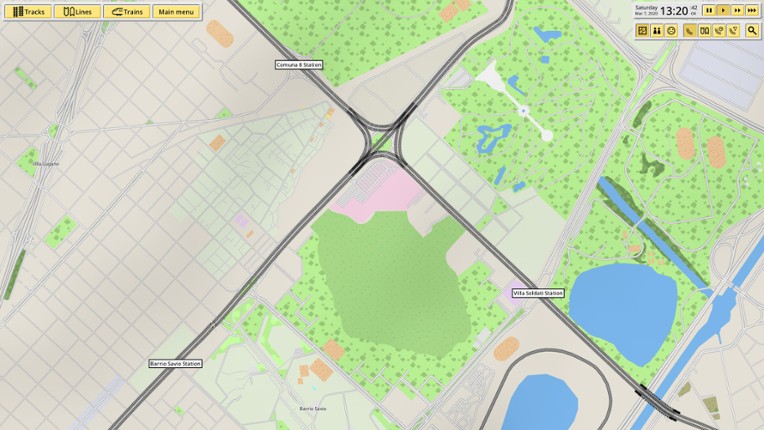
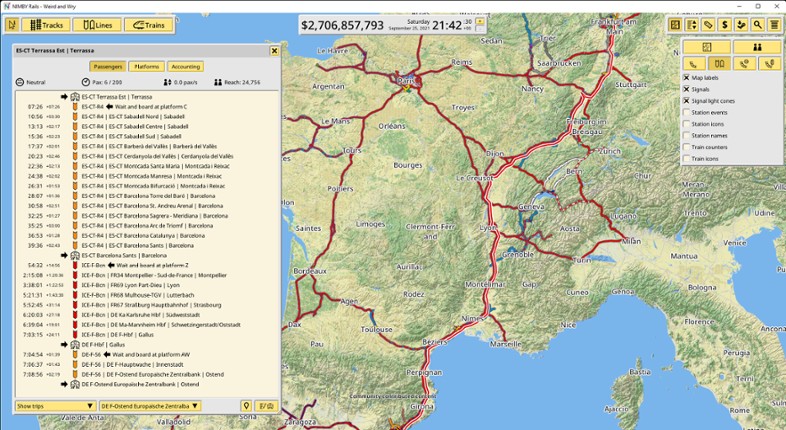
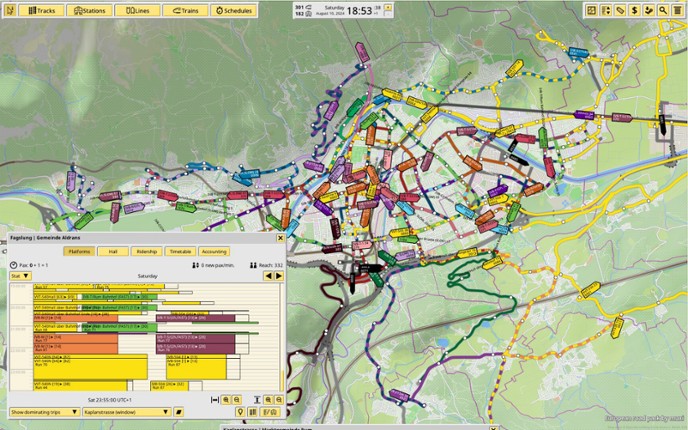
NIMBY Rails is a single player and multiplayer open world city builder game with a economy theme. It was developed by Weird and Wry and was released on January 26, 2021. It received positive reviews from players.

Design and run your own railroads for the real world. Fix global transportation dilemmas. Unleash your inner railway engineer and transit policy manager.
Skip User Reviews

89%
Audience ScoreBased on 1,260 reviews
gameplay21 positive mentions
optimization4 negative mentions

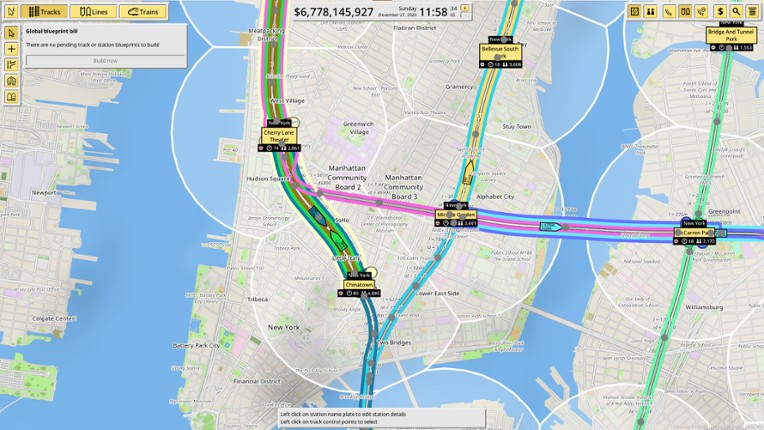
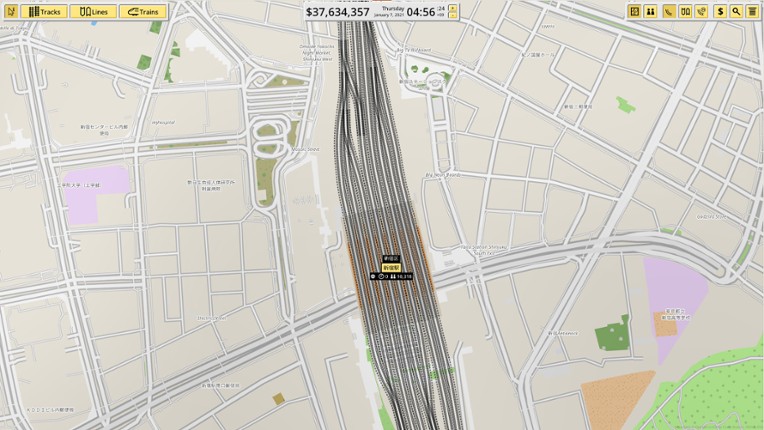
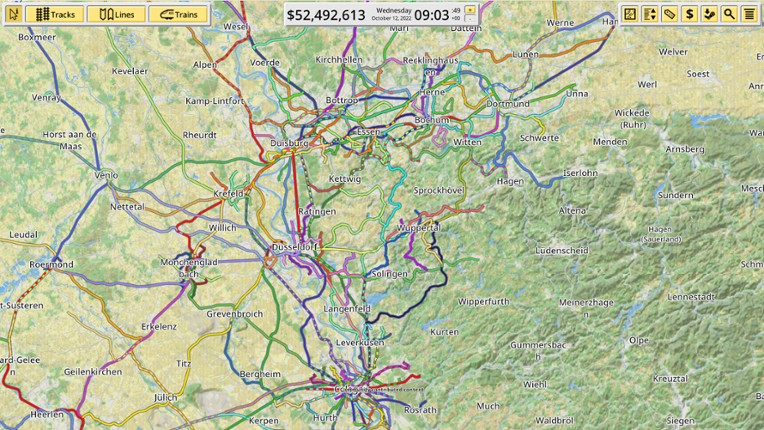
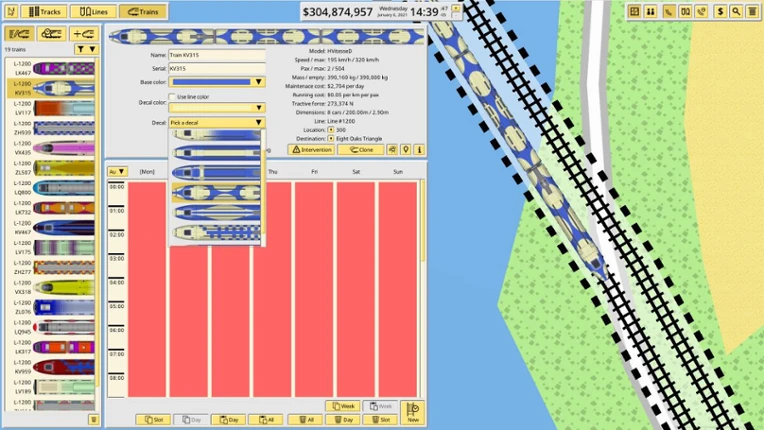
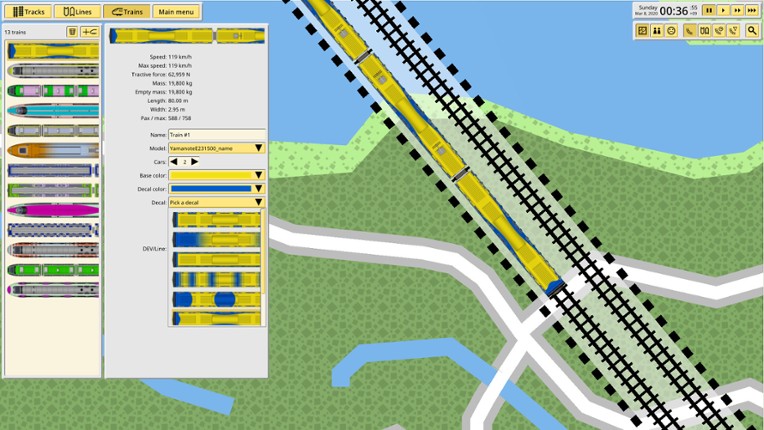
  • Allows players to create and manage detailed rail and transit networks anywhere in the real world using a 1:1 scale map.
  • Highly modifiable with extensive community-created trains, stations, and assets, enhancing realism and customization.
  • Active developer with frequent updates improving features, fixing bugs, and expanding gameplay.
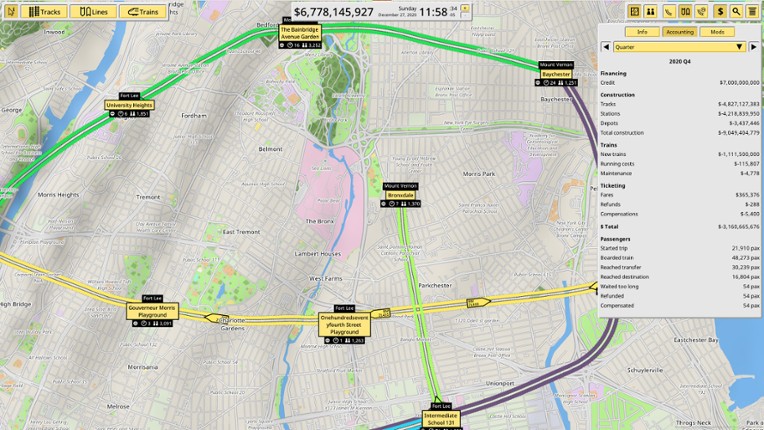
  • Deep simulation elements including passenger dynamics, scheduling, and financial management provide a satisfying challenge for enthusiasts.
  • Strong multiplayer support allows collaborative rail network building and management.
  • Good performance optimization, playable on modest hardware and through Linux via Proton.
  • Steep learning curve with unintuitive UI/UX and lack of in-game tutorials, requiring external guides or trial and error.
  • Currently incomplete features such as absence of single tracks, limited station configurations (no curved platforms), and simplistic passenger AI.
  • Economic and simulation limitations including unrealistic passenger demand patterns, static world with no growth, and incomplete terrain/elevation effects.
  • Game lacks sound effects or music, reducing immersion.
  • Timetabling system is currently complex, confusing, and difficult to set up efficiently.
  • Large initial download size due to worldwide map data and occasional performance drops on extensive networks.
  • gameplay
    88 mentions Positive Neutral Negative

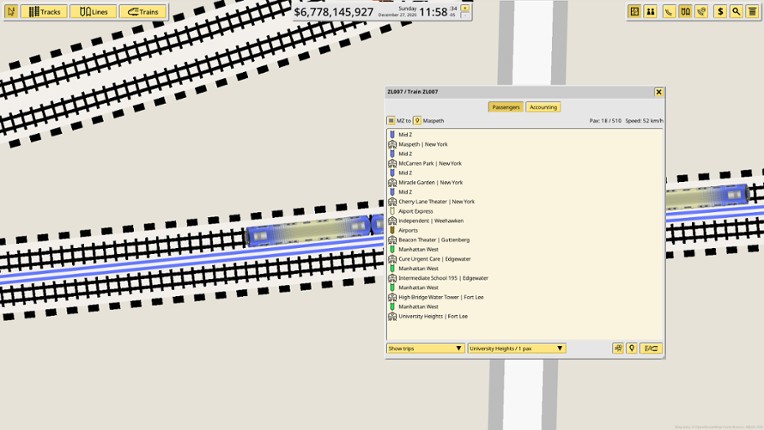
    The gameplay offers a blend of creative freedom and management strategy with addictive, emergent mechanics centered on train network building. While the learning curve is steep and some foundational features (like terrain impact and advanced track switching) are limited or missing, the sandbox style and active development promise ongoing improvements. Players appreciate the simple yet rewarding core loop, though initial complexity and lack of tutorials can hinder newcomers.

    • “The core gameplay blends creative freedom with management strategy.”
    • “The building mechanics are simple and useful, the signalling is too (unless you want to go further, which the game allows you to with all sorts of code options), and there's many useful functions that let you send trains where you want, when you want and whether x or y happens.”
    • “It has a very steep learning curve, but rewards you with some addictive gameplay after.”
    • “My main gripe is that I don't want to follow real-life railways, but anything else requires me to either build purely underground or bulldoze (not a game mechanic, just visually) existing dense buildup - which deeply hurts my soul.”
    • “I hope this will get improved after a while and I get to properly experience the game fully without rage-quitting it at the very start, because the concept looks genuinely quite interesting and fun, but the foundational building block of gameplay (building tracks) is currently a tough barrier to entry.”
    • “Gameplay features promised on the roadmap are still missing, whilst the dev is putting time and effort into stuff nobody asked for - like adding collision to trains, reworking the scheduling system twice, and now implementing a custom scripting language accessible ingame.”
  • graphics
    50 mentions Positive Neutral Negative

    The graphics are minimalist and simplistic, focusing on functionality over visual flair, which may disappoint players seeking detailed or modern visuals. While the basic map and icon-based visuals lack aesthetic appeal and can sometimes cause minor glitches, this simplicity allows smooth performance even with large-scale simulations. Overall, the graphics serve the gameplay’s strategic and expansive focus rather than providing a visually immersive experience.

    • “The fantasy the game allows, the simplistic but charming and functional visuals, the track system that has just enough detail to be interesting but is not bogged down by complicated details, the freedom to build anywhere in the whole world and build anything from street-to-street trams to continental-length rail lines, the optimized passenger demand map and simulation... it's an almost perfect, massive, top-down, train tycoon game that serves the unique fantasy of certain players.”
    • “And while the graphics are just simple vectors and shading - you can't even see the trains unless you zoom right in - there is a peculiar thrill to watching your high-speed intercity express rocket through landscapes you can instantly visualise in your mind's eye.”
    • “The graphics are minimalist, but that helps the game run smoothly even when running massive transportation systems.”
    • “If you want graphics that actually justify any GPU made after 2010, this is not the game for you.”
    • “The interface and graphics are also overall just ugly.”
    • “My first complaint would be the graphical performance of the game: on a small scale, it's perfectly playable, but it can easily get very slow, with slideshow FPS.”
  • optimization
    26 mentions Positive Neutral Negative

    Optimization in the game has shown marked improvement over time, with solid multi-core support and efficient background simulation enabling large networks, though performance can still degrade noticeably with very large or complex builds. While small to medium-scale gameplay runs smoothly, some users report unoptimized CPU utilization and frame rate drops when managing extensive rail systems, especially in intercity or intercountry contexts. Overall, the minimalist graphics aid performance, and ongoing developer efforts continue to enhance optimization, aiming to support the vast, detailed networks the game encourages.

    • “I have watched it come a long way with bug fixes and performance improvements, from struggling to handle more than a couple lines worth of trains, to being able to handle tens of thousands with relative ease.”
    • “The game has some problems with optimization and this is probably its only significant disadvantage (the rest are not so critical).”
    • “That said, the game is optimized for multi-core processing and handles background simulation impressively well.”
    • “Way too few updates for an early access, and so poorly optimized it becomes unplayable after a certain point.”
    • “My first complaint would be the graphical performance of the game: on a small scale, it's perfectly playable, but it can easily get very slow, with slideshow FPS.”
    • “There's obvious things that aren't quite right like performance when making bigger networks... not huge massive networks like 100 lines thousands of trains but the game definitely slows down visibly when you make a network maybe 10 lines and a few hundred trains.”
  • story
    19 mentions Positive Neutral Negative

    The game lacks a traditional story or structured quests, offering no narrative progression and only repetitive gameplay tasks. Players must set their own goals, as there is no tutorial or mission-driven content, resulting in a lack of meaningful progression or engagement from a storyline perspective.

    • “It doesn't need to even be a storyline or a rigid quest list, it just needs to be a large list of achievements so that players can get a sense of progress instead of feeling it's just a couple of repetitive actions of laying tracks and setting up lines over and over.”
    • “There isn't a tutorial at the moment or story missions, you have to make your own goals.”
    • “On top of this, there's an economic model that's been tacked on, to provide something to do while you plot out the railroad of your dreams.”
  • stability
    17 mentions Positive Neutral Negative

    The game's stability has significantly improved over time, with many users noting fewer crashes and minor glitches compared to earlier versions. While still considered somewhat buggy and raw due to its early access status, it generally runs smoothly without major stuttering or graphical issues, making it enjoyable despite occasional freezing or clunky tools.

    • “No stuttering, no glitches, no graphics tearing, nothing.”
    • “Runs great on Linux using Proton.”
    • “The good thing is it seems bug free, and this makes it enjoyable.”
    • “Unplayable, bug-ridden, permanent early access game.”
    • “If you purchase this game, you should know that sometimes it completely freezes.”
    • “This game is still very raw and buggy at times.”
  • grinding
    14 mentions Positive Neutral Negative

    Grinding in this game can be quite tedious, especially when placing rails, setting station ranges, and managing timetables, often requiring excessive clicks and reopening menus. While constructing routes and managing tracks offers complexity and depth, the repetitive tasks and lack of automation, such as importing real-world data, make the process time-consuming and sometimes frustrating. However, the system balances challenge and engagement without overwhelming the player.

    • “Everything is unnecessarily tedious, basic stuff takes a lot of clicks, the text boxes are unresponsive, you need to constantly close and open random tabs because some of them.”
    • “In the current version it is impossible to import real world railroad data, and the player will have to construct it all from scratch, which I find both tedious and time consuming.”
    • “Timetabling is out of whack in terms of being extremely tedious when creating your times.”
  • music
    13 mentions Positive Neutral Negative

    The game currently lacks background music and sound effects, which many users find makes the experience feel incomplete or less engaging. While some appreciate the absence of music to avoid annoyance during long play sessions, there is a common desire for at least subtle audio feedback and a relaxing soundtrack to enhance immersion. Incorporating music and sound effects, along with a tutorial, is frequently suggested to improve the overall experience.

    • “Music might help, or just a helping hand on what to do, something... all in all, it is a powerful thing to play with and maybe after it evolves a bit more, I'll try it again.”
    • “Do hope that an in-game soundtrack will come down the line and maybe some form of progression/achievement system!”
    • “Also some music in the background would be cool.”
    • “The lack of background music is fine, it would probably get annoying after multiple hours on end, but some sound effects for clicking buttons or placing buildings/track would make the experience so much better.”
    • “It has very simple graphics and no soundtrack with one game mode with no goals or achievements.”
    • “Please note that this game doesn't have any kind of sound effect/music, or any kind of interactive tutorial.”
  • humor
    4 mentions Positive Neutral Negative

    The humor in the game is often found in quirky, unintended moments like funny station names generated by OpenStreetMaps and the ironic complexity of gameplay elements. Players appreciate these humorous touches, even when some mechanics feel unnecessarily complicated. Overall, the humor adds a lighthearted and entertaining layer to the experience.

    • “Funny station names (they just lock on to the nearest OpenStreetMap name and it can produce some very funny results).”
  • replayability
    4 mentions Positive Neutral Negative

    The game offers high replay value, though users suggest that improved tracking of progress and choices over time would enhance the replayability experience further.

    • “Replay value is high”
    • “Replay value rated at 4 out of 5 stars”
    • “Replayability”
    • “I feel like for replayability there needs to be a way to track the lines with much more detail over a longer period.”
  • emotional
    2 mentions Positive Neutral Negative

    Users feel the emotional engagement is hindered by limitations in station connectivity, wishing for more flexible ways to link nearby platforms without requiring them to be directly adjacent, which would enhance strategic creativity and immersion.

  • monetization
    1 mentions Positive Neutral Negative

    The game's monetization is well-received, as updates consistently add meaningful content and depth, enhancing overall value without feeling pay-to-win.

  • atmosphere
    1 mentions Positive Neutral Negative

    Users criticize the game's atmosphere due to the complete absence of sound, which significantly diminishes immersion; they especially miss essential train sounds in the simulation.

    • “On the other hand, this game has no sound and therefore a tremendous lack of atmosphere. I want to hear the sounds of trains in a train simulation.”
Skip Game Offers

Buy NIMBY Rails

68h Median play time
189h Average play time
10-250h Spent by most gamers
*Based on 18 analyzed playthroughs
Skip Videos

Videos

Skip Games Like NIMBY Rails
Skip FAQs

Frequently Asked Questions

NIMBY Rails is a open world city builder game with economy theme.

NIMBY Rails is available on PC and Windows.

On average players spend around 189 hours playing NIMBY Rails.

NIMBY Rails was released on January 26, 2021.

NIMBY Rails was developed by Weird and Wry.

NIMBY Rails has received positive reviews from players. Most players liked NIMBY Rails for its gameplay but disliked it for its optimization.

NIMBY Rails is a single player game with multiplayer and local co-op support.

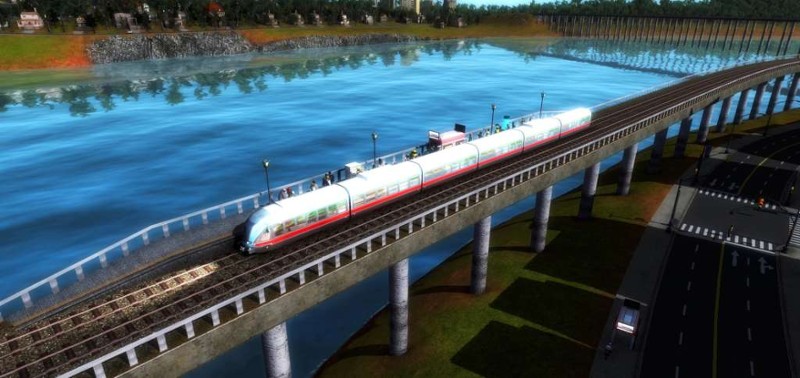
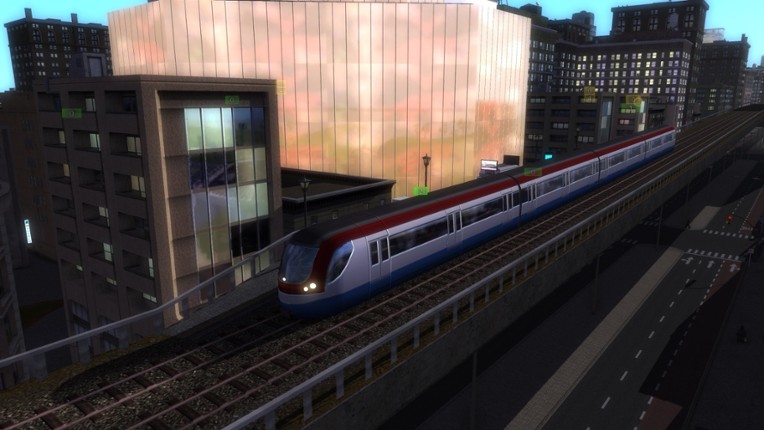
Similar games include Train Fever, Cities in Motion 2, Transport Fever, Mashinky, Voxel Tycoon Pre-Alpha and others.