Machinika: Atlas Game Cover

About

Machinika: Atlas is a single player casual puzzle game with mystery and science fiction themes. It was developed by Littlefield Studio and was released on September 17, 2024. It received mostly positive reviews from players.

Embark on a mesmerizing puzzle game adventure with Machinika: Atlas. Stranded within a crashed alien ship on Saturn's moon, "Atlas", assume the role of the museum researcher, the protagonist of Machinika: Museum, whose escape pod led them to the heart of an alien vessel. Machinika: Atlas is the direct sequel to Machinika: Museum, unfolding its narrative on Atlas, a moon of Saturn. Whi…
Skip User Reviews

73%
Audience ScoreBased on 223 reviews
story30 positive mentions
stability22 negative mentions

  • Engaging and enjoyable puzzle gameplay with a good balance of challenge that appeals to fans of mechanical and escape-room style puzzles.
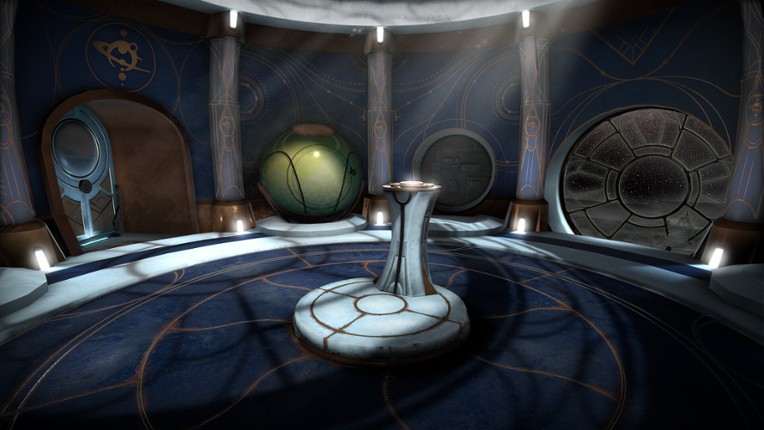
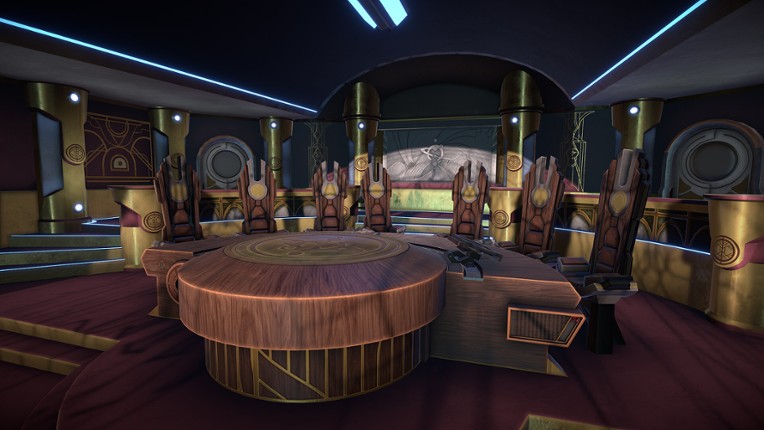
  • Beautiful graphics and well-designed environments that create a convincing sci-fi alien spaceship atmosphere.
  • The game provides a satisfying sequel experience with a story continuation and improvements like free movement and hints without being overly hand-holding.
  • Numerous bugs and technical issues including crashes, glitches, and puzzles that sometimes require reloading chapters or restarting the game.
  • Puzzles are unevenly balanced, often being too easy or confusing with unclear objectives, and lack meaningful integration with the story.
  • The dialogue and story presentation are considered weak or cheesy by many players, detracting from immersion, and some feel the game is short with poor replay value and questionable polish.
  • story
    83 mentions Positive Neutral Negative

    The game's story is a lighthearted continuation of the first title, expanding the lore and maintaining an engaging, if somewhat simple and occasionally confusing, narrative conveyed through letters and walkie-talkie dialogue. While the plot provides a suitable backdrop and keeps players interested, it is often seen as secondary to the puzzle gameplay, with some critics noting uneven pacing, sparse development, and moments of awkward or forced storytelling. Overall, the story enhances the immersive atmosphere but is best appreciated by those familiar with the prequel and looking for a casual narrative experience.

    • “The storylines are engaging enough to provide the backdrop needed to build a fun world where you could believe these weird contraptions exist and serve a purpose.”
    • “The storyline here builds upon the previous Machinika Museum, but this game is larger and more engaging than the first.”
    • “I also like it that this one has a proper story (the first one was very sparse in that respect) and you even get to have some discussions with people using a radio.”
    • “Another example of lazy story development.”
    • “The game's story is a bit strange and awkwardly presented - it can feel unserious or forced at times, and at worst can potentially take you out of your appreciation of the rest of the game.”
    • “The game does expand a bit on the lore of the first game, although it's kind of forgettable, and also confusing since the plot is metered out in small doses so every bit feels like you have missed out on something.”
  • graphics
    49 mentions Positive Neutral Negative

    The game features generally nice and visually appealing graphics with a unique art style and smooth animations reminiscent of similar puzzle series, though not as polished. However, several users noted occasional graphical glitches and bugs that sometimes affect gameplay, with some visuals feeling flat or less detailed compared to expectations. Overall, the graphics are praised for their design and atmosphere but occasionally hold back the experience due to inconsistency and technical issues.

    • “The graphics, the texturing, lighting, an incredible number of animations and camera moves... very impressive!”
    • “Visuals are gorgeous once again and all the transitions are done beautifully well.”
    • “Love this game it has awesome graphics and the puzzles are great would highly recommend.”
    • “The story is flimsy, and the graphics suffer from trying to deliver a bigger game.”
    • “It's not graphically much better than the first game, still looking like it's either a mobile port or decades old.”
    • “Graphics: so basic it will appeal to cryogenically unfrozen from the year 2003.”
  • gameplay
    29 mentions Positive Neutral Negative

    The gameplay features smooth, mechanically intricate puzzles with satisfying tactile interactions, reminiscent of the Room series but set in a more abstract, sci-fi environment. While generally accessible and relaxing with solid production values, the puzzles tend to be relatively simple and occasionally repetitive, with some minor clunkiness and bugs that rarely impact overall enjoyment. The addition of limited free movement adds freshness, though it doesn't significantly alter puzzle mechanics, making the experience well-suited for fans of mechanical puzzle adventures seeking a short but engaging challenge.

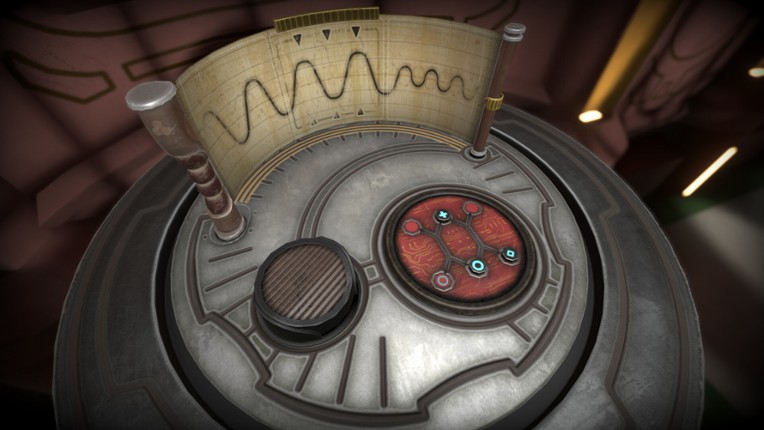
    • “Beautiful mechanical puzzles with smooth animations that make every solution feel rewarding.”
    • “Great atmosphere, satisfying gameplay, and perfect for anyone who enjoys mystery mechanisms and puzzle boxes.”
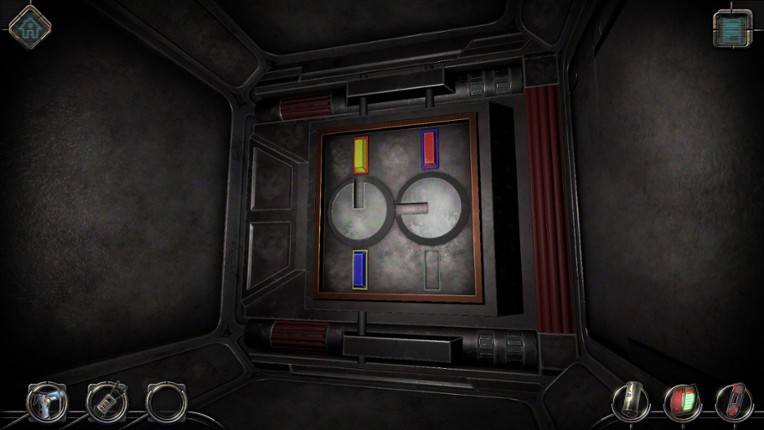
    • “This game falls into the puzzle game subgenre most iconically defined by the Room series, with several chapters, each confined to a specific space and containing a series of intensely tactile mechanical interfaces and mechanisms for the player to toy with and solve.”
    • “I liked it enough to play it through to the end, but I felt like it really cheaped out on the puzzles this time - nothing very challenging, only one or two satisfying 'a-ha' moments, and it overuses the little drone mechanic.”
    • “Since the machines are meant to be alien, it is 100% abstract mechanical puzzles, with nothing grounding, no recognizable objects, no language puzzles or riddles.”
    • “That's another issue I have with Atlas... the mechanisms are no longer completely indecipherable, and look more like 19th century steampunk technology; lots of gears, pistons, electrical conduits, etc. Why does this hyper-advanced alien spacecraft still use gigantic gears to transfer mechanical energy?”
  • stability
    22 mentions Positive Neutral Negative

    The game suffers from frequent bugs and technical issues, including freezing during level transitions, softlocks, non-responsive controls, and puzzle glitches that often require restarting. While some glitches are minor and do not break the experience, many players find the stability problems frustrating and disruptive to gameplay. Developers are working on fixes, but the game remains notably buggy and unstable in its current state.

    • “Even today, after multiple patches, the game is still a pain to get through, with softlocks, glitches, non-responsive UI, and so on.”
    • “The game glitches out every chapter or so, mostly during chapter transitioning animations, softlocking your game.”
    • “The last chapter glitched out, wasting 45+ minutes of my life trying to solve the buggy puzzle.”
  • atmosphere
    14 mentions Positive Neutral Negative

    The atmosphere of the game is generally praised for its immersive sound design and unique, mysterious vibe that enhances the puzzle-solving experience. However, some players feel the inclusion of dialogue and certain story elements detract from the previously unsettling and immersive tone, making parts of the atmosphere feel less effective or inconsistent. Overall, while the atmosphere varies in impact, it remains a strong and defining feature for many players.

    • “Great atmosphere, satisfying gameplay, and perfect for anyone who enjoys mystery mechanisms and puzzle boxes.”
    • “The sounds and atmosphere worked and felt perfect.”
    • “I found this game interesting and surprisingly deep in terms of its atmosphere, which is quite unique and a strength for this genre.”
    • “Almost joke-like, which doesn't fit the atmosphere well.”
    • “That's right, there's dialogue in this game, with other living things, which seems totally out of genre, and spoils the atmosphere and tone.”
    • “The environment is severely lacking in atmosphere.”
  • music
    6 mentions Positive Neutral Negative

    The music is consistently praised for its quality and ability to set the tone, described as sentimental, dreamy, and nicely complementing the gameplay. Overall, the soundtrack enhances the immersive experience alongside the game's great graphics.

    • “It has a great storyline, sentimental ambient music, great graphics and gameplay.”
    • “Secondly, I thought the graphics were really beautiful and I really enjoyed the soundtrack as well.”
    • “Excellent riddle game with very good graphics & soundtrack.”
  • optimization
    6 mentions Positive Neutral Negative

    The game's optimization is inconsistent, with performance issues and occasional shakiness at higher settings, especially on lower-end systems. While it runs faster than its predecessor and can achieve high frame rates on better hardware, there are noticeable smoothness problems and a lack of polish compared to the first installment. Overall, optimization could be improved to ensure a more stable and seamless experience across various setups.

    • “Performance is fast, though!”
    • “A more optimized, polished game, which will run on almost any hardware in high quality (the first part itself ran at 30-50 fps even without a discrete video card), which is very pleasing.”
    • “In terms of optimization, the game seems to run shakily at the highest settings, though my computer isn't the best and I didn't experiment extensively, so my judgment may not be fully accurate.”
    • “But even that wouldn't put the game in a non-recommended state: stretched textures across longer walls to avoid making a second one, reused assets not only inside the game but from the first game as well (shoutout to the anti-gravity machine XXL), lack of polish, bad performance, and most of all, a complete lack of logic in its world building.”
    • “It is not optimized like the first part "Machinika Museum"; even with 144fps, there seem to be issues with smoothness.”
  • replayability
    5 mentions Positive Neutral Negative

    Replayability is limited due to static puzzles that rely on memory rather than new challenges, resulting in little incentive for multiple playthroughs. While achievements add some value, overall the game offers a short experience with minimal replay potential, especially compared to its predecessor.

    • “I played the first game several times and enjoyed it for its replay value.”
    • “I appreciate the developers' attempt to add some replay value via some of the achievements, but the puzzles don't change playthrough to playthrough, so going through it again to make it under 3 hours was just a test of memory more than a test of skill.”
    • “The replayability is nonexistent.”
    • “I got about 4 hours of play from this with no replay value.”
    • “As of now, I can't recommend the game for its current pricing; it's short, has no replayability, and while the museum was fun, this one seems clunky and poorly thought out. Some puzzles don't work properly and are bugged, which led me to check an online walkthrough and see that I did exactly what was supposed to be done.”
  • grinding
    2 mentions Positive Neutral Negative

    Grinding in the game is often marked by tedious and inconsistent puzzles that can feel either overly simplistic or frustratingly difficult, detracting from the overall experience.

    • “Quite a few of the puzzles rely on you struggling to figure out how to interact, so they're tediously easy or unreasonably difficult with no relation to your intelligence either way.”
    • “Some of which were tedious and boring.”
  • humor
    2 mentions Positive Neutral Negative

    The game's humor is light and occasionally amusing, with some funny moments despite elements like the ending script feeling a bit rushed. Overall, the humor adds charm without impacting gameplay.

    • “The ending script of the game felt a bit rushed, but it was funny.”
    • “It stops when the cutscene is supposed to stop, so it's not game-breaking, but I just found it funny.”
  • emotional
    1 mentions Positive Neutral Negative

    Users find the emotional aspect of the game lacking, citing a boring story with poor writing, alongside technical issues like bugs and lengthy animations that detract from engagement.

    • “Very buggy, baby puzzles, long and annoying animations, boring story, bad writing.”
Skip Game Offers

Buy Machinika: Atlas

5h Median play time
5h Average play time
4-5h Spent by most gamers
*Based on 2 analyzed playthroughs
Skip Videos

Videos

Skip Games Like Machinika: Atlas
Skip FAQs

Frequently Asked Questions

Machinika: Atlas is a casual puzzle game with mystery and science fiction themes.

Machinika: Atlas is available on PC and Windows.

On average players spend around 5 hours playing Machinika: Atlas.

Machinika: Atlas was released on September 17, 2024.

Machinika: Atlas was developed by Littlefield Studio.

Machinika: Atlas has received mostly positive reviews from players. Most players liked Machinika: Atlas for its story but disliked it for its stability.

Machinika: Atlas is a single player game.

Similar games include Machinika Museum, The House of Da Vinci, The House of Tesla: Definitive Edition, The House of Da Vinci 2, The House of Da Vinci 3 and others.