Replica

Games that have you snooping through someone’s personal phone or computer are fairly common.
Replica Game Cover
72%Game Brain Score
story, gameplay
grinding, atmosphere
77% User Score Based on 481 reviews
Critic Score 64%Based on 5 reviews

Platforms

Nintendo SwitchPCTabletAndroidMac OSPhonePlaystation 4Xbox OneXboxMobile PlatformWindowsPlayStation
Replica Game Cover

About

Replica is a single player casual simulation game with a mystery theme. It was developed by Somi and was released on July 11, 2016. It received mostly positive reviews from both critics and players.

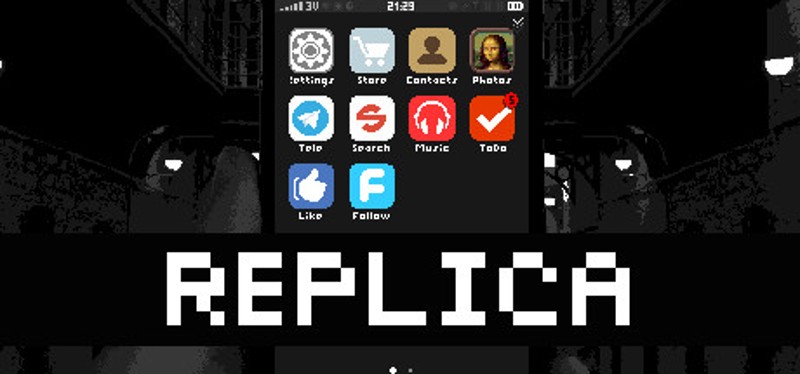
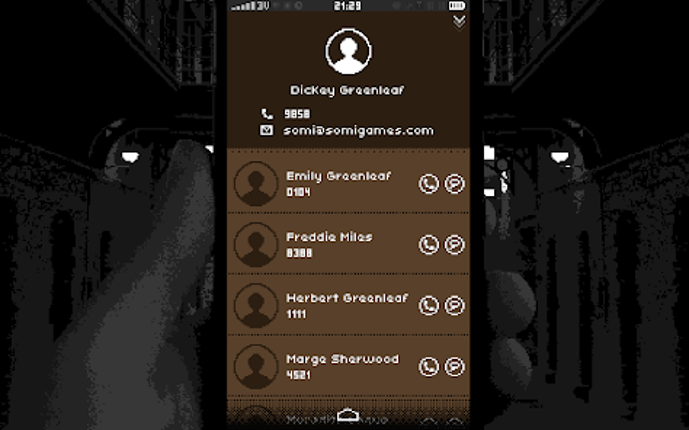
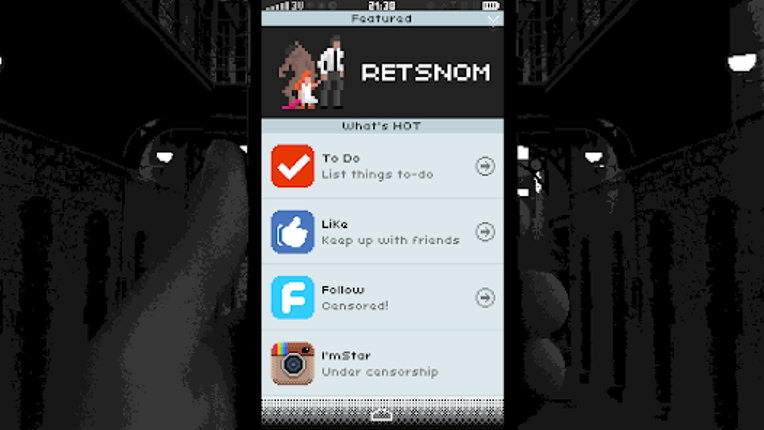
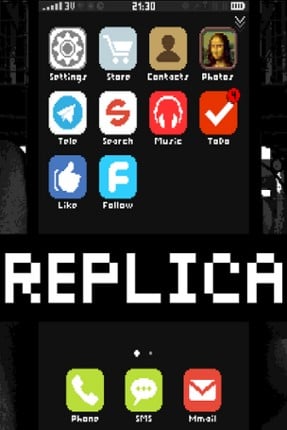
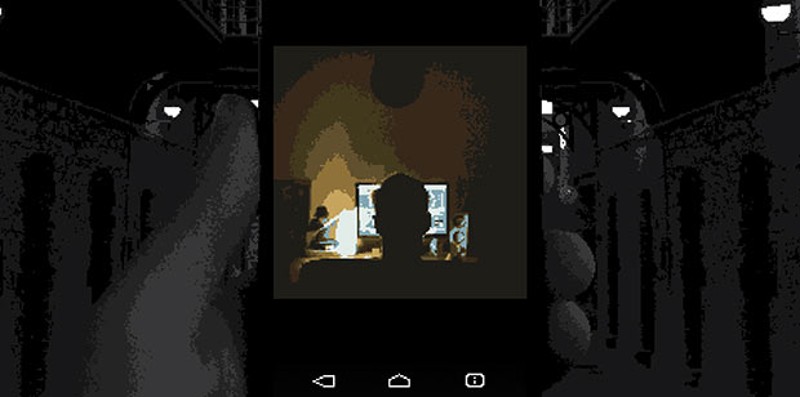
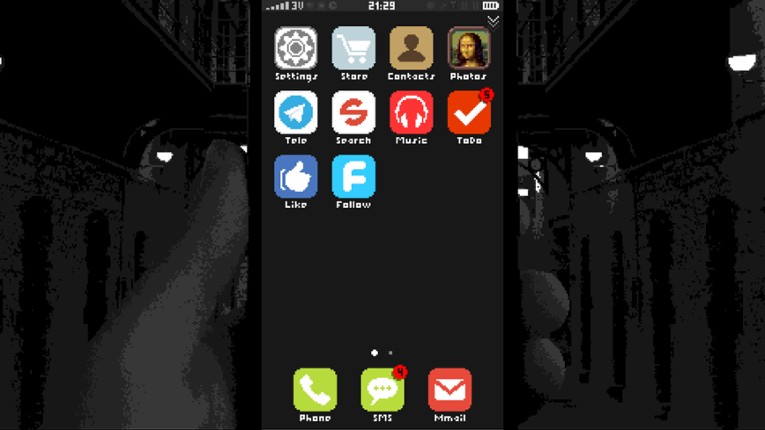
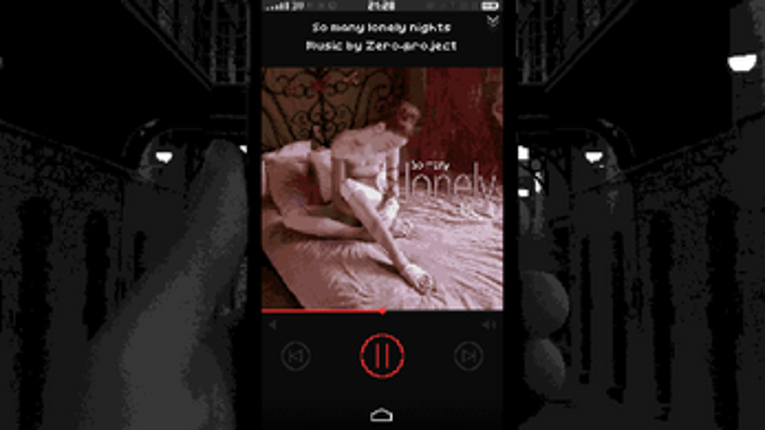
Replica is an innovative interactive novel game played through a simulated cellphone and social media interface. As the player, you uncover a mystery by snooping through the phone's messages, calls, photos, and apps, making decisions that impact the story's outcome. This immersive game explores themes of surveillance, privacy, and control in a technologically driven world.

Skip User Reviews

77%
Audience ScoreBased on 481 reviews
story44 positive mentions
grinding9 negative mentions

  • Replica offers a unique and immersive storytelling experience, effectively using a smartphone interface to engage players in a thought-provoking narrative about surveillance and state control.
  • The game features multiple endings based on player choices, encouraging replayability and moral reflection on complicity and rebellion.
  • The minimalist pixel art style and sound design create a tense atmosphere that enhances the emotional impact of the story.
  • The game is quite short, typically lasting under two hours, which may leave players wanting more content and depth.
  • Some puzzles can feel unintuitive or frustrating, leading to moments of trial and error that may detract from the overall experience.
  • The writing can be heavy-handed and lacks subtlety, making the political commentary feel overly simplistic or cartoonish at times.
  • story
    155 mentions Positive Neutral Negative

    The story of *Replica* is a compact yet unsettling exploration of surveillance and state control, drawing comparisons to Orwellian themes. While some players appreciate its intriguing premise and moral implications, many criticize the narrative for being simplistic, heavy-handed, and lacking depth, with multiple endings that fail to significantly enhance the overall experience. Overall, the game offers a unique interactive storytelling approach, but its execution leaves much to be desired in terms of character development and plot complexity.

    • “Replica, developed by somi and published in collaboration with Zero Rock Entertainment, is a compact yet deeply unsettling interactive story that examines the human cost of surveillance and state control.”
    • “The game’s minimalist storytelling, paired with its believable interface, delivers a chilling portrayal of how totalitarian control can infiltrate the most mundane aspects of daily life.”
    • “The story is mysterious and makes me want to discover more and more.”
    • “While I like some of the things that the game is trying to relay, the interface was clunky, the story was kind of meh, and the characters were pretty unlikable.”
    • “In spite of some minor ambiguity (is it really a satire of fascism, or is it mainly a metaphor for late-stage capitalism?), the premise is very obvious, the social commentary too in-your-face, and the story a bit too simplistic in its straightforwardness.”
    • “The story itself isn’t particularly complex, there are no twists, and it’s pretty much what you would expect from the premise.”
  • gameplay
    71 mentions Positive Neutral Negative

    The gameplay of "Replica" is primarily focused on exploration and deduction, involving mechanics like snooping through a character's phone to uncover clues and report findings. While some players appreciate the unique premise and the investigative aspects, many criticize the gameplay for being simplistic, repetitive, and lacking depth, with a short playtime that diminishes its replay value. Overall, the game offers an interesting narrative experience but may not satisfy those seeking more complex gameplay mechanics.

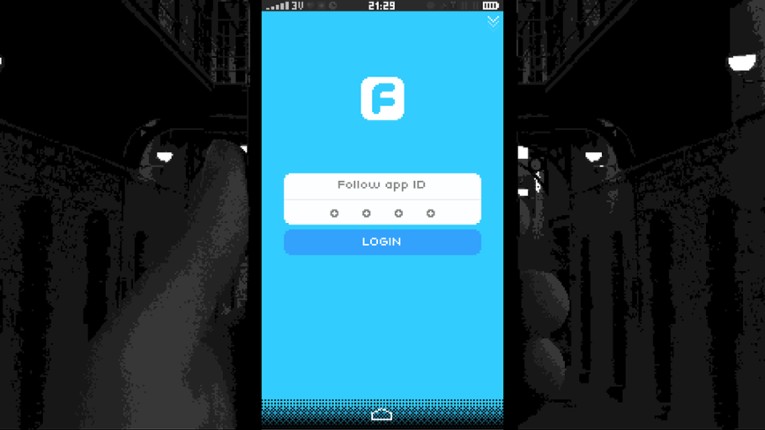
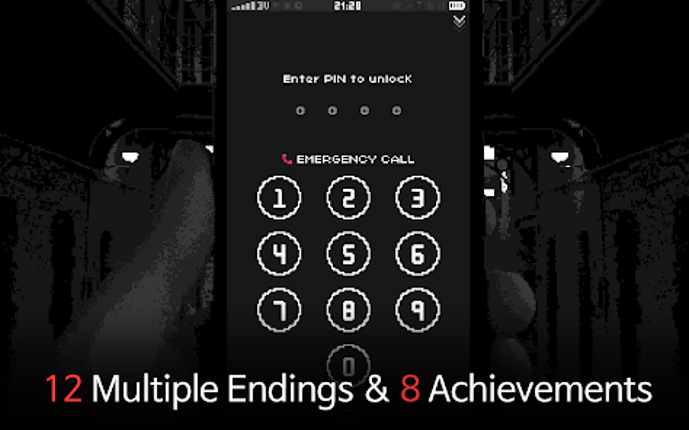
    • “The gameplay revolves around exploration and deduction—unlocking the phone, piecing together passwords, identifying clues, and choosing what information to report.”
    • “The puzzle/investigation gameplay is simple yet very effective, and it provides some actual replay value in spite of most puzzle answers being the same every time.”
    • “The gameplay is tight and good, the story is interesting and draws you in, and it pulls off the psychological fear factor very well.”
    • “Some players may find its short length and minimalist mechanics limiting, while others might wish for more expansive dialogue or deeper branching paths.”
    • “The writing is juvenile, the gameplay is simplistic, and it's very short (which, as bad as it is, maybe is for the best).”
    • “The whole controls are a mess and the whole gameplay is to click senseless by guessing on the ‘right’ information.”
  • graphics
    37 mentions Positive Neutral Negative

    The game's graphics feature a distinctive pixelated aesthetic that evokes a retro charm, appealing to fans of minimalist art styles. While some players appreciate the nostalgic visuals and intuitive interface, others criticize the choice of pixel art as outdated, especially given the modern context of the game's smartphone theme. Overall, the graphics are described as simplistic yet effective, contributing to the game's immersive experience.

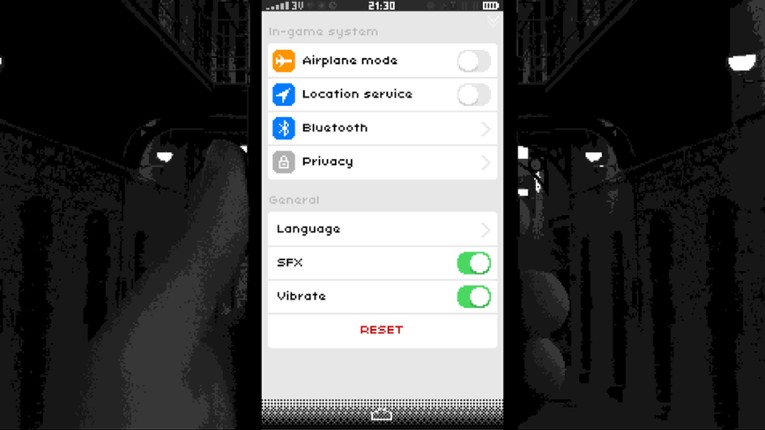
    • “The visuals are highly pixelated with a minimalist yet intuitive phone UI that very accurately resembles our own real-life devices.”
    • “Good music and the retro pixel art style matches the feel of the game.”
    • “The game has wonderful and simplistic pixel graphics.”
    • “Graphically, the game is okay; it looks like an old phone and everything has the same style.”
    • “The use of lazy pixel graphics is both inexcusable and nonsensical here. The protagonist uses a smartphone from an era where pixel graphics were abandoned as no longer necessary due to advancements in display technology.”
    • “The graphics are very low, the sounds are minimalistic, and the gameplay is only annoying and cruel.”
  • music
    31 mentions Positive Neutral Negative

    The music in the game receives mixed reviews, with many players appreciating its calming and nostalgic qualities that enhance the overall atmosphere, particularly in puzzle-solving contexts. However, some critics find the soundtrack repetitive or mismatched with the game's pace, suggesting that improvements could be made. Overall, while the music is often described as soothing and fitting, opinions vary on its effectiveness and appropriateness for the gameplay experience.

    • “The music is very peaceful and I think it’s a good match for a puzzle game like that.”
    • “The game's soundtrack is nostalgic in some way; it also fits very well according to the gameplay.”
    • “The absence of traditional music adds to the tension—each silence feels deliberate, leaving space for unease to grow.”
    • “Music is dull.”
    • “But, gameplay is dry and music is repetitive.”
  • replayability
    29 mentions Positive Neutral Negative

    The game's replayability is primarily driven by its multiple endings and the exploration of different moral choices, though many players find the repetitive gameplay and unskippable dialogue diminish the overall experience. While some appreciate the potential for varied outcomes, others feel that the lack of gameplay variety and the short length limit its long-term appeal. Overall, opinions are mixed, with some players enjoying the replay value while others find it insufficient to warrant multiple playthroughs.

    • “Its replay value comes from exploring different outcomes and moral perspectives rather than from gameplay variety.”
    • “The fact that there are multiple endings and a decent amount of replayability as well is an absolute must for a game like this.”
    • “Eleven possible endings yield high replay value.”
    • “The only replayability stems from trying to solve how to unlock achievements and get alternative endings, but it's just not worth a replay for me.”
    • “The game itself is short, although it has hidden achievements and replayability with multiple endings - although you always start with the same written dialogue which made me find it quite repetitive.”
    • “I was pretty satisfied once I was done, but the 'replayability' of multiple endings to get achievements wasn't enough for me to want to play it through again.”
  • emotional
    10 mentions Positive Neutral Negative

    The emotional aspect of the game is characterized by a profound sense of discomfort and claustrophobia, serving as a meta commentary on privacy and security in modern society. While some players find a strong emotional connection despite the simplicity of the story and lack of character faces, others feel that the game's moralizing can detract from its initial impact. Overall, the emotional experience is subjective, with players able to engage with it on different levels.

    • “It’s a quiet, claustrophobic experience that unfolds almost entirely within a small screen, yet its emotional and political implications extend far beyond.”
    • “The discomfort it provokes is intentional, and that emotional discomfort becomes its most memorable feature.”
    • “I made an emotional connection even though there were no faces.”
    • “The story is very simple and boring.”
    • “The emotional depth is lacking, making it hard to connect with the characters.”
    • “I felt no emotional impact throughout the game; it was all very flat.”
  • grinding
    9 mentions Positive Neutral Negative

    Players generally find the grinding aspect of the game to be tedious and frustrating, often requiring multiple playthroughs to unlock achievements and endings. Many reviewers express a desire for better user experience features, such as skipping options and save functionality, to alleviate the repetitive nature of the gameplay. While some appreciate the game's concept, the overall sentiment leans towards the grinding being a significant drawback.

    • “It seemed like something I'd enjoy, but to be honest I found the experience kind of tedious.”
    • “Cool idea, it really is and it can be fun but is very tedious and annoying just to unlock the phone.”
    • “But the plot is not-so-credible and the UX is painful and slow, which is all the more of an issue as you have to go through the same story a few times to get the multiple endings... this would be much less tedious with proper skipping features.”
  • atmosphere
    8 mentions Positive Neutral Negative

    The game's atmosphere is a mixed bag; while some players appreciate its sound design and visual presentation, others find it lacking depth and coherence, particularly in its writing and character development. Comparisons to similar titles highlight that it falls short in storytelling and overall atmosphere, despite some sharp dialogues and a tense, Orwellian-dystopian vibe that may appeal to puzzle enthusiasts. Overall, it offers a unique experience but may not fully satisfy those seeking a rich narrative.

    • “The atmosphere is further reinforced by the game’s sound design and visual presentation.”
    • “There are many sharp dialogues, a tense atmosphere, and some endings are hard to find.”
    • “If you enjoy puzzle games with a side of Orwellian-dystopian atmosphere, then this game will be well worth your $2.99!”
    • “It is super short and a little bit incoherent in the atmosphere.”
    • “I like the idea of this game, but without good writing to go along with it, it really lacks the atmosphere that this game desperately needs... it just feels like it's using all the tropes about the surveillance state with very generic kind of antagonists, with not too much depth to any of the characters.”
    • “I'm aware that the limits of what a lost-phone simulator can offer, but of the exact same price, 'A Normal Lost Phone', a similar indie game made by Accidental Queens, has exceeded this one in many ways, in terms of depth of story, interface design, and atmosphere.”
  • humor
    8 mentions Positive Neutral Negative

    The humor in the game is a mixed bag, with some players finding it clever and darkly funny, while others criticize it as overly comical or unrealistic. Many appreciate the funny endings, though they often lack depth, and some feel that the humor detracts from the game's serious themes. Overall, reactions to the humor vary widely, with some enjoying the comedic elements and others feeling disappointed or irritated by them.

    • “Replica is clever, darkly funny, and more true than people allow themselves to accept.”
    • “There is a way to cheese your way to the 'true ending' (advance time), but when you do this, you get a humorous ending.”
    • “The overall concept and implementation of the game really excels, with writing that may be too comical or unrealistic for some, which could break the game for those with very high expectations.”
    • “I actually had really high hopes and felt excited upon figuring out the Bluetooth password, only to be disappointed by the painfully unfunny farting ending locked behind it.”
  • stability
    4 mentions Positive Neutral Negative

    The stability of the game is generally perceived as lacking, with users reporting minor bugs and glitches, while some describe the overall experience as plagued by numerous issues.

    • “The game itself is a big terrarium for bugs and glitches.”
    • “There are a few bugs and glitches that affect gameplay.”
    • “There are minor bugs and glitches that can be distracting.”
  • character development
    3 mentions Positive Neutral Negative

    Reviews indicate a lack of character development for the protagonist, with players expressing disappointment over the absence of growth or evolution throughout the game.

    • “There is no character development for the character you are playing.”
    • “The character progression feels stagnant and uninspired.”
    • “I expected more depth and growth, but the characters remain one-dimensional.”
  • optimization
    1 mentions Positive Neutral Negative

    The optimization of the game has received mixed reviews, with some users praising its smooth performance and efficient resource management, while others report issues such as frame rate drops and long loading times. Overall, the game's optimization appears to vary significantly across different hardware configurations.

Skip Critic Reviews
Skip Game Offers

Buy Replica

2h Median play time
2h Average play time
2-2h Spent by most gamers
*Based on 3 analyzed playthroughs
Skip Videos

Videos

Skip Games Like Replica

Games Like Replica

Orwell: Keeping an Eye On You Image
SIMULACRA Image
Another Lost Phone: Laura's Story Image
Song of Farca Image
This Bed We Made Image
Skip FAQs

Frequently Asked Questions

Replica is a casual simulation game with mystery theme.

Replica is available on Nintendo Switch, PC, Mac OS, Phone and others.

On average players spend around 2 hours playing Replica.

Replica was released on July 11, 2016.

Replica was developed by Somi.

Replica has received mostly positive reviews from both players and critics. Most players liked this game for its story but disliked it for its grinding.

Replica is a single player game.

Similar games include Orwell: Keeping an Eye On You, SIMULACRA, Another Lost Phone: Laura's Story, Song of Farca, This Bed We Made and others.