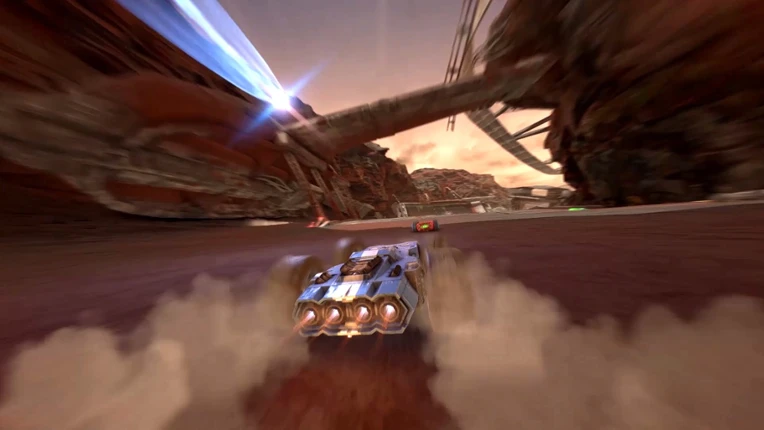
Redout 2

While the difficulty spikes are on the tall side, the unlockable system missed a few spot checks, and the AI may be off its meds, I can see far more than 34 big things to love about Redout 2 and I can’t wait to see where this series takes AG Racing to next.
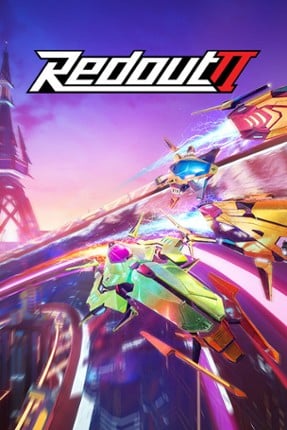
Redout 2 Game Cover
82%Game Brain Score
music, gameplay
optimization, grinding
83% User Score Based on 1,087 reviews
Critic Score 80%Based on 3 reviews

Platforms

Nintendo SwitchXbox Series X|SPCPlaystation 5Playstation 4Xbox OneXboxSteam DeckWindowsPlayStation
Redout 2 Game Cover

About

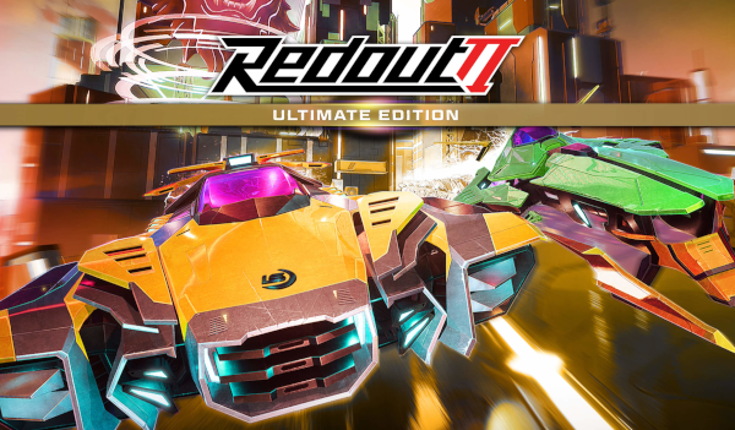
Redout 2 is a single player and multiplayer arcade racing game with a science fiction theme. It was developed by 34BigThings srl and was released on March 21, 2022. It received mostly positive reviews from critics and positive reviews from players.

The Deluxe Edition of Redout 2 includes the base game and the Redout 2 - Season Pass. The Redout 2 - Season Pass includes 2 future DLC packs with new locations, career events, rewards and more, all at a discounted rate.
Skip User Reviews

83%
Audience ScoreBased on 1,087 reviews
music142 positive mentions
grinding27 negative mentions

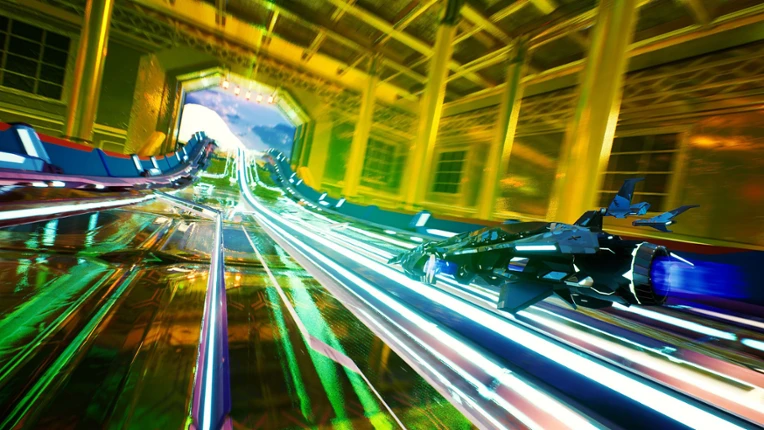
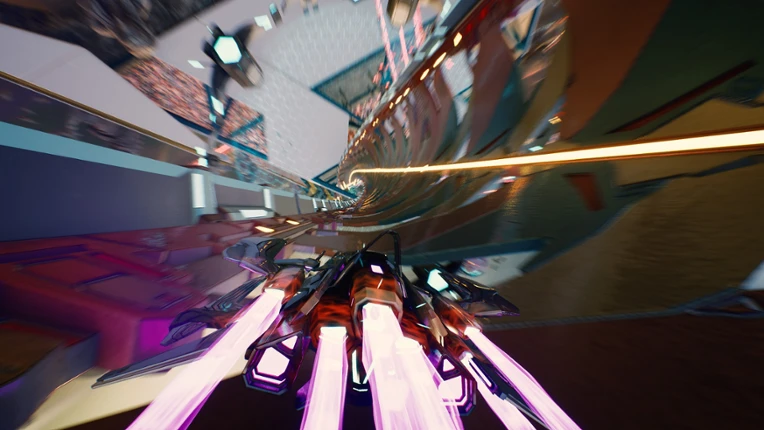
  • Incredible sense of speed and highly satisfying boost mechanics that reward skillful play and risk management.
  • Deep vehicle customization including performance tuning and extensive cosmetic options giving players strong ownership of their racing craft.
  • Beautiful, distinct track environments with challenging layouts, dynamic music that complements gameplay, and a robust, content-rich career mode offering long playtime and high replay value.
  • Steep learning curve and high difficulty that may be frustrating and off-putting to new or casual players, requiring practice and memorization.
  • Some tracks have confusing design including blind turns, difficult jumps requiring precise aerial control, and reuse of track portions reducing variety and track distinction.
  • Multiplayer mode is limited and sparsely populated, with barebones features and occasional technical issues; campaign progression can feel repetitive with slow and grindy unlock systems.
  • music
    399 mentions Positive Neutral Negative

    The music in Redout 2 features a dynamic electronic soundtrack that largely complements the high-speed gameplay and enhances the adrenaline-fueled experience. While many praise its energetic, immersive tracks and sound design, a significant portion of players find it less memorable and less distinctive compared to the acclaimed, atmosphere-rich soundtrack of the original game. Overall, the soundtrack is effective and fits the game well, though it polarizes fans who either appreciate its fresh take or prefer the first game's more iconic compositions.

    • “The soundtrack further enhances the experience, featuring energetic electronic compositions that align seamlessly with the game’s high-speed tone.”
    • “- soundtrack really does slap (though i do miss what aram shahbazians and nils holtar brought to redout 1's soundtrack) and with new environmental incorporation (bass hits on contact with border barriers, hi/lo pass filters on boost and bandpass in the air) the soundtrack feels alive and reactive as much dance music does when DJ'd live.”
    • “The dynamic thumping soundtrack washing away as I left the track, and as I hit the track again, I felt my heart restart as the music kicked back in.”
    • “The soundtrack is a massive downgrade compared to the first game's as it feels like 10 second loops now.”
    • “Not a single song (that I have heard so far) can even get me excited, and almost every single song on the Redout 1 OST can get my adrenaline going.”
    • “The soundtrack isn’t bad, and there are some real bangers, but compared with how awesome most of the soundtrack was for the original, a lot of the music here feels like an afterthought.”
  • gameplay
    322 mentions Positive Neutral Negative

    Redout 2 significantly deepens and refines the gameplay of its predecessor through a risk-reward boost and overheat mechanic, high-speed racing with nuanced control including strafing and pitch/roll adjustments, and a steep learning curve requiring mastery of mechanics and track memorization. While praised for its satisfying and intense racing experience, improved controls, and engaging boost system, the game is criticized for frustrating difficulty spikes, problematic mid-air mechanics, inconsistent tutorials, and some design and technical issues that may deter casual players. Overall, it rewards dedicated players seeking a challenging, skill-intensive futuristic racing experience but can feel overwhelming or punishing for newcomers.

    • “As a sequel to the original Redout, it expands the scale, customization, and mechanical depth of its predecessor while doubling down on the franchise’s commitment to blistering pace.”
    • “The progression structure pushes players to refine both driving skill and vehicle setup, often requiring mastery of particular mechanics to advance.”
    • “The sense of speed is unparalleled, the amount of control you have over the craft both on and off track is great, the boost/overheat mechanic feels both risky but also really rewarding if used right... overall, the game's mechanics all feel fantastic, and have a lot of depth to them.”
    • “The cherry on top is several tutorial stages that explain advanced and/or critically important lessons like "you can detach from the track and it can be useful" are also locked behind huge sections of gameplay that arguably force you to learn this stuff through blind failure - so coming back to find them feels more like an insult than help.”
    • “Mechanics are solid, but poor track design (mismarked turns as well as sharp, blind turns with no guard rail are common) and horrible jump mechanics (many jumps make it very unclear as to where you're even supposed to land, and floaty, borderline unresponsive, controls while midair make it far more frustrating than it should be), as well as a few bugs (e.g. falling through the track after certain jumps) spoil an otherwise good game.”
    • “The devs tried to band-aid over this with a really dumb "Prince of Persia: Sands of Time"-style rewind mechanic, which is itself disastrous in a racing game, because it's completely flow-ruining.”
  • graphics
    193 mentions Positive Neutral Negative

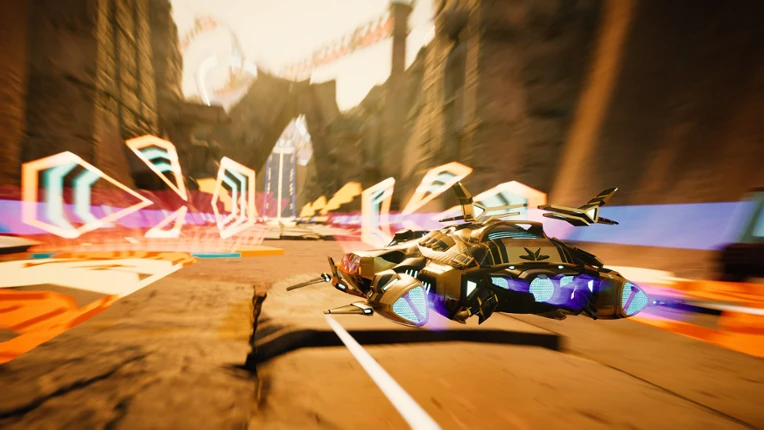
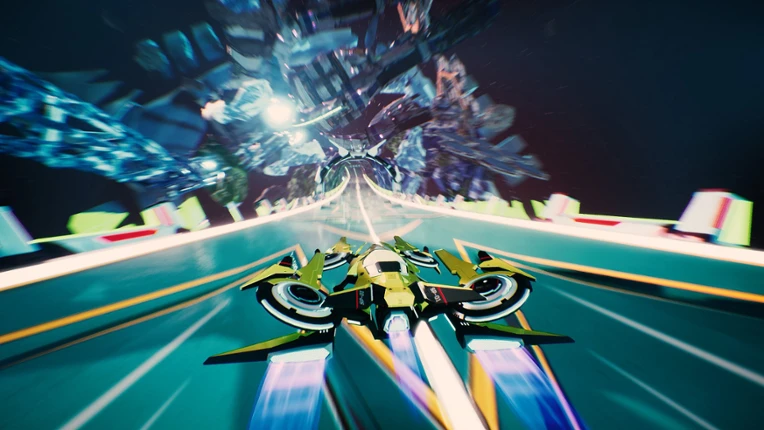
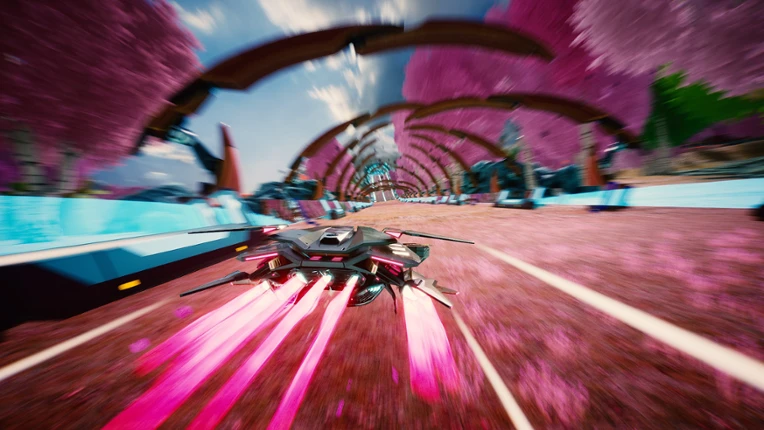
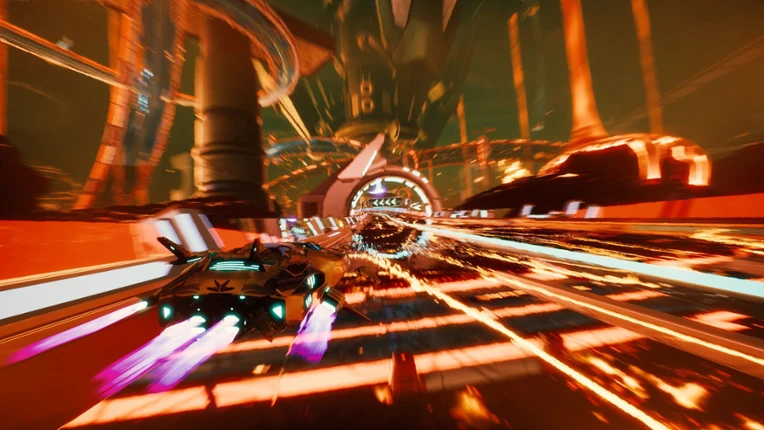
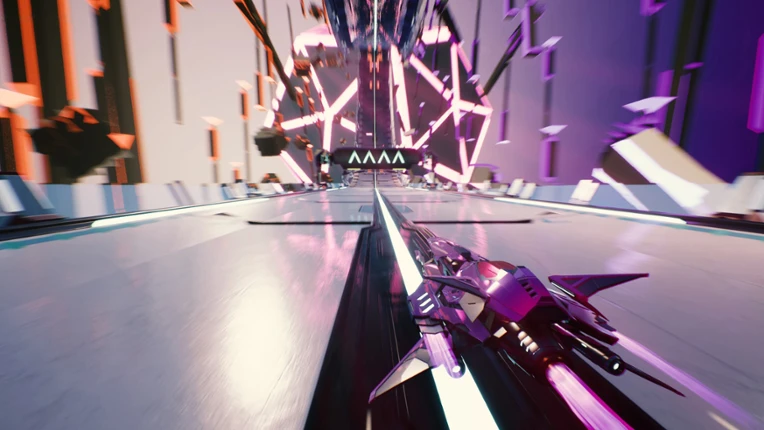
    The graphics in the game are widely praised for their stunning visuals, vibrant colors, and improved detail over the predecessor, delivering a spectacular sense of speed and eye-catching environments. Customization options enhance the aesthetic appeal, though some users note occasional performance issues and visual clutter that can hinder track visibility. Overall, the game sets a new standard in futuristic racing visuals with smooth optimization on a range of hardware, despite minor bugs and mixed feelings about the shift from the original's minimalist art style.

    • “The visuals are stunning—runs like a dream on my Steam Deck, and looks jaw-dropping on my RTX 4070 rig.”
    • “Graphics are beautiful, tracks are quality, mechanics immaculate and very satisfying.”
    • “Beautiful graphics and optimization that makes it run like butter on even lower-end hardware.”
    • “Welp ... stuttered in the tutorial and cutscene, then crashed when I changed graphics settings.”
    • “This game requires manual tweaking of the engine's config files to remove the forced depth of field, and it looks very blurry until you mess around and lower the graphics.”
    • “The main downside is some track locations have busy visuals behind walls on corners, causing you to crash because the corner is obstructed or hidden in visual clutter.”
  • optimization
    120 mentions Positive Neutral Negative

    Redout 2 offers extensive performance and cosmetic customization, allowing players to fine-tune ships for a personalized racing experience. However, optimization is inconsistent, with frequent micro-stuttering, frame drops, and shader compilation hitches reported even on capable hardware, sometimes impacting gameplay. Progression gating through performance brackets can frustrate players, and some modes suffer from poor AI balance and leaderboard limitations, underscoring the need for further performance and balancing improvements.

    • “Players can select from multiple chassis types and fine-tune numerous performance components, including engines, stabilizers, wings, and propulsion systems.”
    • “I love how each upgrade not only boosts performance but affects your race score, forcing you to fine-tune your setup to nail that perfect balance.”
    • “The devs find the sweet spot between arcade & hard sim everywhere it matters -- controls are deep but forgiving; garage is complex & key to performance enough to have to pay attention to your decisions, but simple enough to avoid choice paralysis; career lets you find a balance between pushing your parts to the limit on the way up to the fastest event classes & coming back through for upgrades.”
    • “The game is still a major stuttering lagfest a lot of the time as it fails to preload any assets.”
    • “Even on lower settings you'll still end up with crippling stuttering, which will prevent you from completing challenges.”
    • “Don't buy, difficulty is based on how hard the devs have fallen on the back of their heads, performance is garbage, min and recommended specs are an utter lie.”
  • story
    42 mentions Positive Neutral Negative

    The story in this racing game is minimal and often seen as a distraction from the core racing experience, with many players finding the narrative elements and mission variety lacking and sometimes tedious. While the sequel attempts to expand the story with voice overs and lore, it still suffers from pacing issues, unclear progression mechanics, and a campaign that can feel overly long and unbalanced. Overall, the story is more of a backdrop with mixed reception, as most players prioritize the racing gameplay itself.

    • “All the while rewarding the player with a rich backstory about the possible future of humanity.”
    • “Redout 2 is an amazing sequel with major improvements on handling, difficulty curve, storytelling, and builds greatly on the first game.”
    • “Unlike Redout 1, this game has voice overs, and attempts to tell a story that goes beyond just racing.”
    • “Not much of a story except location and ship explanations but this game is more about racing.”
    • “Difficulty is all over the place, maps are all the same or so it feels just with different layer of effects, and suddenly they decided to add some story that no one cares about, I came here to race, to go hypersonic, not listen to lore of Tatuuine.”
    • “Before you race, sometimes you get a half-a-minute dialogue regarding Redout 2's backstory.”
  • grinding
    29 mentions Positive Neutral Negative

    The game is widely criticized for its grind-heavy progression, requiring repeated playthroughs of the same tracks and cautious navigation to unlock parts and cosmetic items. While mechanics and track design are praised, the tediousness of forced grinding and uneven difficulty make the campaign feel like a slog for many players. Some appreciate the challenge and track memorization aspect, but overall the grinding can be exhausting and reduce enjoyment.

    • “It's very grindy; the system to unlock colors and cosmetics forces you to play the same tracks repeatedly under slightly different conditions. It's better to skip as much as you can, but it still takes time to reach the last league.”
    • “The career mode is extremely tedious and required to unlock parts—which can only be used in career mode and have no other purpose.”
    • “Tl;dr the campaign is a slog, non-race events are too hard and frequent, and the manner of unlocking everything is very grindy.”
  • stability
    28 mentions Positive Neutral Negative

    The game generally runs well and performs smoothly, especially on devices like the Steam Deck and mid-range PCs, maintaining near 60fps in most cases. However, it still suffers from occasional bugs and glitches, including freezing issues, strange physics during jumps, respawn errors, and some track-specific problems that can disrupt gameplay. Despite these technical hiccups, many users report that recent patches have significantly improved stability, making the experience mostly polished and enjoyable.

    • “It's polished, the flight model seems refined, the controls are responsive, there seems to be a good variety of tracks and content, and it runs great on the Steam Deck (with a few options turned down).”
    • “The devs find the sweet spot between arcade and hard sim everywhere it matters – controls are deep but forgiving; garage is complex and key to performance enough to require attention to decisions, but simple enough to avoid choice paralysis; career lets you balance pushing parts to the limit on the way up to the fastest event classes and coming back through for upgrades; the focus on high effects and shaders paired with low-poly models looks beautiful and runs great even on older hardware.”
    • “The visuals are very pleasing and the game is basically bug free.”
    • “Game lags to a point that it freezes the Steam Deck.”
    • “Fun but buggy, I've fallen through the ground and went through physical barriers multiple times.”
    • “Getting glitches around track booster locations not triggering despite being visibly in the area, odd landing glitches that cause me to come to a complete halt and do a hundred donuts despite being a 'perfect' landing, track edges for landings also seem not to pair up with the visuals.”
  • replayability
    9 mentions Positive Neutral Negative

    The game offers high replayability through a wide variety of tracks with forward and reverse layouts, challenging difficulty, and extensive career content that encourages repeated play. Features like contracts, progression systems, and a replayable tutorial further enhance long-term engagement. Despite some early bugs and a feeling of incompleteness, the emphasis on mastering tracks and unlocking rewards makes replay value a clear priority.

    • “It spans dozens of events across multiple track environments, each featuring forward and reverse layouts that significantly expand replay value.”
    • “With expansive career content, high replay value, and striking audiovisual design, it successfully revitalizes the anti-gravity racing formula while carving out its own modern identity.”
    • “And the content, just the singleplayer alone has hundreds of races and unlocks with great replayability due to its progression system encouraging you to return to past events to get more stars.”
    • “The tracks are very long and the difficulty is high, which affects the replayability bonus.”
    • “Edit 2024: The major bug with respawns has now been fixed making the game far more playable; however, over a year later the game still feels incomplete.”
    • “- There is a replayable tutorial to help get you used to the game.”
  • atmosphere
    9 mentions Positive Neutral Negative

    The atmosphere in the game is highly detailed, featuring variations in gravity, atmospheric density, temperature, and environmental hazards that significantly affect gameplay and track feel. While some find certain atmospheres, like RO2 Vertex, oppressive and tracks somewhat repetitive, others praise the unique, surreal, and immersive environments of Redout, highlighting how each zone’s distinct atmospheric conditions enhance the overall racing experience.

    • “It lends the track a surreal atmosphere, transforming an already gorgeous track into something so remarkable that I honestly can’t remember something like it.”
    • “Track designs are top notch with cool sets and environments that also can impact your race such as gravity types, surface temps, and even atmosphere settings.”
    • “Every single zone is unique and varied to have its own style of driving and track design with different environmental modifications to fit each location, like the atmosphere being set to 'dense' in the Mariana Trench since you race underwater there, causing more drag to be generated losing you speed faster than normal.”
    • “I find RO2 Vertex's atmosphere actually oppressive.”
    • “Despite the additions of varying atmosphere and road conditions changing how you drive, all of the tracks feel the same.”
    • “Subjectively, I still prefer Redout 1 for its feel and atmosphere.”
  • emotional
    7 mentions Positive Neutral Negative

    The emotional experience highlights a strong sense of community support and appreciation for the game's design and soundtrack. However, frustration arises from the challenging handling and AI difficulty, with wall collisions heavily impacting performance and multiplayer feeling unwelcoming due to aggressive tactics. Despite these hurdles, the game rewards perseverance and mastery, creating a rewarding learning curve.

    • “Whether they dropped on my Twitch kindly feeding me advice, or on their Discord server with people always ready to watch you, provide feedback, and talk, whether it is from other players or the devs themselves, the Redout 2 community made me feel supported and at home, and I owe them a huge lot of thanks.”
    • “Re: a lot of the comments on difficulty -- the game does a great job with rewarding the player for learning the system and not ignoring mechanics that seem too complex, not ignoring cars or stats that seem uninteresting to the player's own comfort zone. For example, you might skip a track because you don't want to deal with a bunch of jumps or hairpins that you can't quite nail and just want to go fast, but you'll eventually need to come back for the points or upgrades, and can tune the car for the track in a way that will let you drift through the hairpins at full throttle without touching the wall, boost to a certain speed you need to hit for a challenge criterion, etc.”
    • “I gradually went from crashing into the wall in each corner to often touching walls to almost never touching walls.”
  • humor
    7 mentions Positive Neutral Negative

    Users find the humor in the game's quirks, such as minimal advantages in qualifying laps, exaggerated AI behavior, and overly challenging gimmick events, often describing these moments as both frustrating and amusing. The game's unusual mechanics and difficulty spikes lead to unintended comedic situations, especially involving AI performance.

    • “Some races also want you to complete a qualifying lap which is hilarious because you only gain 100m from first to last place in the starting grid where multiple kilometers of difference are normal; gladly, you can skip them though.”
    • “It is hilarious when it happens to the AI though.”
    • “However, when I set the difficulty one notch higher to 'redout' I will pull pretty far ahead during the first half of a race, but then the AI gets hilariously rubber-bandy and whips past me, putting me all the way to last place with no hope to compete.”
  • monetization
    1 mentions Positive Neutral Negative

    Users appreciate the developer's ongoing support and dedication despite the game receiving little commercial advertisement or aggressive monetization.

Skip Critic Reviews
Skip Game Offers

Buy Redout 2

55h Median play time
60h Average play time
4-100h Spent by most gamers
*Based on 9 analyzed playthroughs
Skip Videos

Videos

Skip Games Like Redout 2

Games Like Redout 2

Xenon Racer Image
Games like Xenon Racer
Speed Liner Image
Games like Speed Liner
XF Extreme Formula Image
Games like XF Extreme Formula
BallisticNG Image
Games like BallisticNG
Antigraviator Image
Games like Antigraviator
Skip FAQs

Frequently Asked Questions

Redout 2 is a arcade racing game with science fiction theme.

Redout 2 is available on Nintendo Switch, Xbox Series X|S, PC, PlayStation 5 and others.

On average players spend around 60 hours playing Redout 2.

Redout 2 was released on March 21, 2022.

Redout 2 was developed by 34BigThings srl.

Redout 2 has received mostly positive reviews from players and mostly positive reviews from critics. Most players liked this game for its music but disliked it for its optimization.

Redout 2 is a single player game with multiplayer support.

Similar games include Xenon Racer, Speed Liner, XF Extreme Formula, BallisticNG, Antigraviator and others.